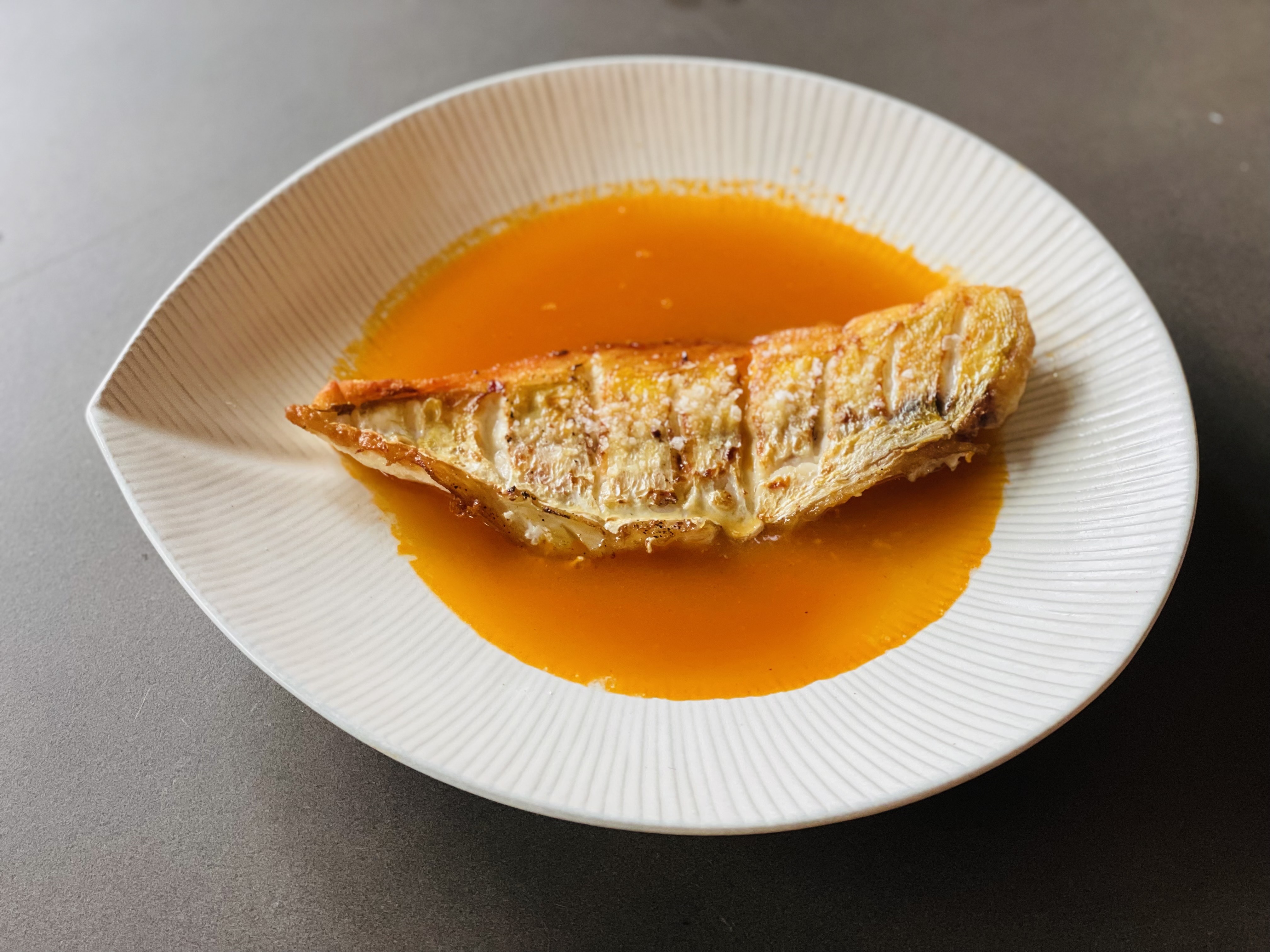
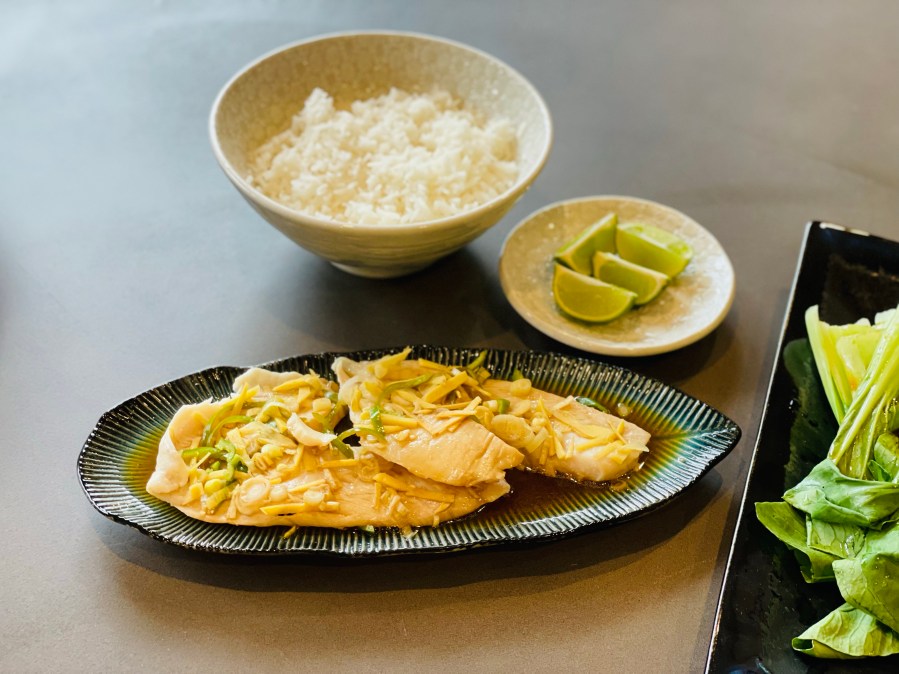
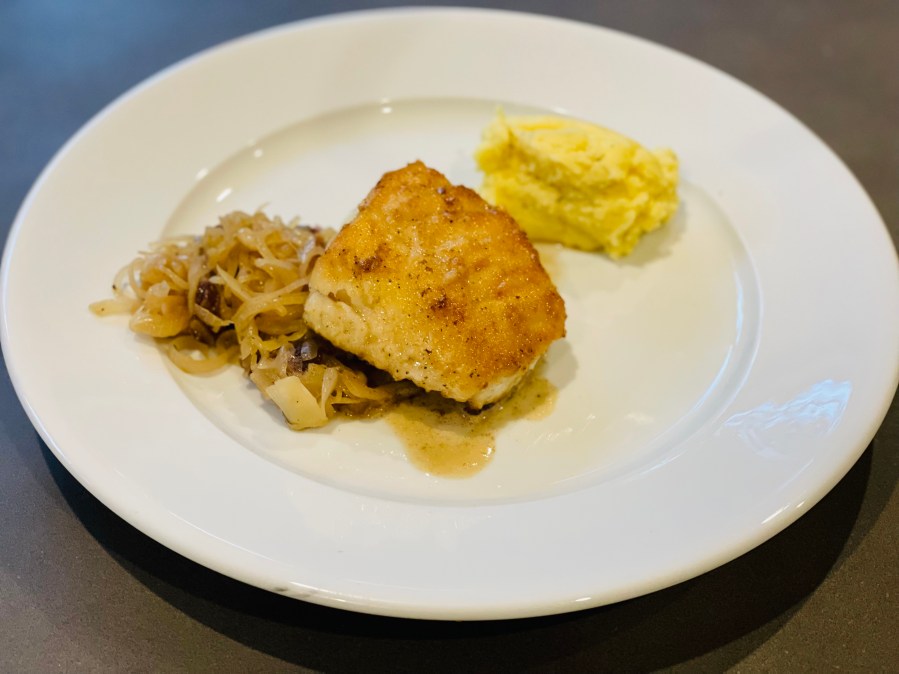
Christine Manfield’s Baked Fish with Mustard Cashew Masala

Serves: 6

The effort in this fish is not to be sneezed at, what with the preparation of tomato kasundi pickle.

Something I am not necessarily entirely convinced you need, though we were left with a jar the pickle and Nat made one of the world’s best cheese toasties the next night with a slathering of the pickle.

The end result of this curry is remarkable, however.

The flavours are gentle and yet so full of layers of flavour. This is not your cheat’s Tuesday night coastal Indian curry.

The evidence of the prep and time in this curry is clear.

This curry is a special keeper. Worth every minute.

Another Christine Manfield homerun.

Ingredients

3 tomatoes, grated
1 tbsp tomato kasundi pickle (see below)
3 tsp sea salt flakes
1 tbsp caster sugar
100ml vegetable oil
2 tsp coriander seeds, roasted and ground
2 tsp cumin seeds, roasted and ground
1 c fish stock
1 tbsp chickpea flour
1/2 c thick plain yoghurt
50ml cream
6 x 150gm mulloway cutlets*
1 tbsp mustard oil
25ml lime juice
2 tbsp chopped coriander leaves
1/2 long green chilli, finely sliced

Mustard Cashew Masala

2 tsp brown mustard seeds
1 tsp ground turmeric
1 tsp chilli powder
60gm grated fresh coconut
1 tbsp minced ginger
4 garlic cloves, chopped
3 small green chillies, chopped
1 brown onion, chopped
2 tbsp raw cashews, chopped
1 tbsp mustard oil

Tomato Kasundi Pickle (Makes 600gm)

1 tbsp brown mustard seeds
160ml malt vinegar
1 tbsp chopped fresh ginger
6 garlic cloves
8 small red chillies, minced
100ml mustard oil
1 tbsp cumin seeds, toasted and ground
1/2 tsp ground cloves
2 tsp ground turmeric
1kg ripe tomatoes, peeled and roughly chopped
50gm brown sugar
1 tbsp sea salt flakes

  1. Kasundi Pickle: heat a frying pan over a low heat. Add the mustard seeds and vinegar and cook for 5 minutes, taking care not to evaporate the vinegar. Set aside to cool.
  2. Place the mustard seed vinegar, ginger, garlic and chilli in a food processor until a smooth paste forms.
  3. Heat the oil in a heavy-based frying pan over a medium-low heat. Add the ground spices and cook for 15 seconds or until just fragrant. Add the mustard paste and tomato, stir to combine and cook, stirring occasionally for 45 minutes or until the tomato has broken down. Add the sugar and salt, stir to combine and cook for a further 5 minutes. Taste and adjust seasoning, if necessary. Transfer to a food processor and pulse briefly to form a coarse paste. Pour into a sterilised glass jar and seal with a tight-fitting lid. Store in the pantry for up-to 1 month and refrigerate once opened.
  4. To make the mustard cashew masala, place all the ingredients together in a food processor and blend to form a paste. Set aside.
  5. Place the tomato and tomato kasundi pickle in a frying pan over a medium heat and cook for 8-10 minutes or until reduced by half. Add 2 tsp of the salt and the sugar, stir to combine and set aside.
  6. Heat the vegetable oil in a wide-based pan over a low heat. Add the ground coriander and cumin and cook for 30 seconds or until fragrant. Immediately stir in the mustard cashew masala, increase heat to medium, and continue stirring for 5 minutes or until aromatic and starting to colour. Add the reduced tomato and the stock and cook for 10 minutes, Reduce heat to low.
  7. Meanwhile, combine the chickpea flour and yoghurt in a bowl, this prevents the yoghurt from splitting during cooking, and stir into the masala sauce. Add the cream and cook for 5 minutes. Remove from the heat while you cook the fish.
  8. To cook the fish, preheat the oven to 200c. Brush the fish skin with mustard oil and sprinkle with a little sea salt. Heat a heavy-based, ovenproof frying pan over medium heat. Add the fish skin-side down, and cook for 3 minutes or until golden and crisp. Turn the fish over, pour the mustard cashew sauce around the fish, transfer to the oven and cook for 4 – 5 minutes depending on the thickness of the fish, or until cooked through. Rest for 2 minutes to allow juices to settle.
  9. Carefully lift the fish from the pan and place on serving plates. Add the lime juice, remaining 1 tsp of salt, coriander and chilli to the sauce in the pan and stir to combine. Spoon sauce over the fish and serve with steamed basmati rice.

* Any deep-sea, firm-flesh fish will do, such as kingfish trevally, trumpeter or groper.

Gourmet Traveller’s Gremolata-crumbed Whiting with Warm Baked Potato Salad

Serves: 4

We love anything from Gourmet Traveller and I found this recipe in one of their books I picked up in a local community library.

And sure, it is a simple recipe though in fairness, the book is called ‘Simple’. Doh!

And excuse the photo which was more about the memory rather than publishing: for the fish is great though my goodness, we both agreed this is one of the best potato salads we have ever had. (And we didn’t see it coming.)

And of course, it is simple!

The next time we are asked to bring a salad to a BBQ, this is it.

Though do the fish as well. Just a cracking and special weekday meal.

Ingredients

1/4 c flat-leaf parsley leaves, chopped
Grated rind of 1 lemon
3 c day-old breadcrumbs, dried in oven until crisp
2 tsp capers, drained and chopped
12 whiting fillets (we used John Dory)
1/2 c plain flour
1 egg, lightly beaten with 1 tbsp water*
Vegetable oil, for shallow frying
Lemon wedges to serve

Dressing

2 tbsp sour cream
2 tbsp whole-egg mayonnaise
1 tbsp Dijon mustard

Warm baked potato salad

800gm chat potatoes, halved
2 tbsp extra virgin olive oil
1 small Spanish onion, thinly sliced
2 tbsp chopped flat-leaf parsley leaves
1 tbsp chopped sage leaves

Method

  1. For dressing, whisk all the ingredients with 1 tbsp water in a small bowl until well combined, then season to taste.
  2. For warm baked potato salad, place potatoes in a roasting tray, drizzle with the olive oil, season to taste, and toss gently to combine. Bake at 200c for 20 minutes, then add the onion, toss to combine and bake for another 10 – 15 minutes or until the vegetables are cooked. Just before serving, toss the potato mixture with dressing, then gently stir the herbs through.
  3. Meanwhile, combine parsley, lemon rind, breadcrumbs and capers in a shallow bowl and season to taste. Dust fish in flour, shaking away excess, and dip in egg mixture, then coat in breadcrumbs mixture, pressing crumbs onto the fish to coat evenly. Shallow-fry crumbed fillets, in batches, in hot vegetable oil for 2 minutes each side or until golden and cooked through, then drain on absorbent paper.
  4. Serve crumbed fish immediately with warm baked potato salad and lemon wedges to the side.

* It is a bit of a bugbear of ours, though you will always need at least twice the egg mixture called for so prepare yourself for this inevitability.

Claudia Roden’s Fried Fish with Cumin and Tahini Sauce

Serves: 4

As I started typing up this recipe, it struck me that there is not a Claudia Roden recipe I haven’t typed.

I am new to her cooking; the only question, is why?

This recipe is just lux.

Total joy.

Total simplicity.

Total genius.

If you served this to friends as part of a long lunch in the sun, there would be smiles all around. It’s just that good.

Ingredients

4 firm white fish fillets, such as bream or sea bass, skinless
3 tbsp plain flour
1 – 1 1/2 ground cumin
2 tbsp olive oil, for frying
1 tbsp chopped flat-leaf parsley
1 lemon, quartered, to serve
Saltt

Tahini sauce

3 tbsp tahini
Juice of 1/2 – 1 lemon, to taste
1 small garlic clove, crushed

Method

  1. For the tahini sauce, stir the tahini in the jar before putting 3 tbsp in a small serving bowl. Gradually add the lemon juice and 2 – 3 tbsp water, beating vigorously with a fork and adding just enough water to get the consistency of a runny cream. The paste with stiffen at first and then become light and smooth. Add a little salt and the garlic.
  2. Season the fish with salt. Put the flour, cumin and a pinch of salt on a plate and mix well. Turn the fish fillets into this to coat them all over, then shake vigorously to remove the excess flour.
  3. Heat a small amount of oil in a non-stick fry pan. Put the fillets in and cook over a medium-heat, turning them over once, for 3 – 10 minutes depending on their thickness, until crisp, lightly browned and just cooked through.
  4. Serve the fish with a sprinkling of parsley and the lemon quarters. Serve with the tahini sauce.

Claudia Roden’s Pan-Grilled Fish with Garlic, Vinegar and Chilli

Serves: 2

This Spanish dish is fabulous.

Read through the ingredients and you’ll immediately get a sense of the simplicity coming.

The lightly golden garlic with sherry vinegar. A beautifully pan-fried piece of fish. And the side of the cannellini beans.

Together with this salad of roasted carrots, it is ironically yet unironically a 1-hat meal.

An absolute joy.

I doubled the recipe and so baked the fish. The sauce doubled perfectly.

Ingredients

2 hake, bream or sea bas fillets, skin on
4 tbs extra virgin olive oil
5 large garlic cloves, sliced
Good pinch of chilli pepper
2 – 3 tsp sherry vinegar or white wine vinegar
1 tbsp chopped flat-leaf parsley
Salt

White Cannellini Beans

1 onion, chopped
3 tbs extra virgin olive oil
400gm tin cannellini beans, drained and rinsed
A few fresh thyme leaves
Salt and pepper

Method

  1. For the cannellini beans, fry the onion in 1 tbs of oil over a low heat, stirring until softened and beginning to colour. Add the cannellini beans. Season, add the thyme, add 100ml water and cook covered for 5 minutes. Set aside and serve with a drizzle of 1 – 2 tbs oil.
  2. Season the fish with salt. Heat 1 tbs of the oil in a heavy non-stick frying pan. Put the fillets in, skin-side down and press them down with a spatula to flatten them as the skin curls. Cook over a medium-heat until the skin is crisp and lightly browned. They will gradually cook through almost to the top. When ready, turn and cook the flesh side for a few seconds more.
  3. For the dressing, in a small pan, gently heat the remaining 3 tbs of oil with the garlic and chilli until the garlic is only just lightly golden and crunchy (do no let it get brown). Take off the heat and add the vinegar, to taste.
  4. Serve the fish very hot, with the dressing poured over, sprinkled with parsley.

Dan Toombs’ Malabar Fish Curry

Serves: 4

I wasn’t sure about this curry at first glance.

Though anyone doubting Dan Toombs when it comes to Indian is brave. And so on I went.

What threw me was that the ingredients are boiled in water. No oil except for the fried shallots which are a garnish.

Conclusion. Brilliant. Aromatic and a delicious sauce.

I simmered the coconut mixture for longer though not intentionally. Perhaps it added to it, perhaps not.

Check your salt though get this right and you have a wonderful, entirely unique fish curry on your hands. Absolutely top notch.

Ingredients

1 1/2 c fresh or frozen coconut*
1/2 ground turmeric
1 tbsp Kashmiri chilli powder
2 tbsp minced ginger
1 green chilli, finely chopped
3 kokum peels or 2 tsp tamarind concentrate
500gm cod or other meaty fish like halibut or ling, cut into medium chunks
1 tbsp rapeseed (canola) oil
1 tsp black mustard seeds
10 curry leaves
3 shallots, thinly sliced
Salt, to taste

Method

  1. Blend the coconut and turmeric into a fine paste or powder and set aside. **
  2. Bring 500ml of water to the boil in a pot (preferably a clay pot). Add the coconut mixture, chilli powder, ginger, green chilli and korum (or tamarind concentrate) and simmer for about 15 minutes.
  3. Add the fish and simmer with the pan covered for a further 7 minutes or until the fish is just cooked through.
  4. Meanwhile, heat the oil in a small pan over a medium-high heat, When visibly hot, add the mustard seeds and when they begin to pop (30 seconds), reduce the heat to medium and stir in the curry leaves and shallots and fry until the shallots are soft and slightly browned.
  5. Pour over the curry; leave as a garnish and/or stir the oil into the curry. Check for season and salt as needed.

* Easily sourced in the freezer of an Indian grocer.

** I didn’t process and left the grated coconut combined with the turmeric. We loved the texture though the smoothness of the curry processed would be an equally lovely experience.

Florence Fabricant’s Greek Fisherman’s Stew

Serves: 4 – 6

Florence Fabricant is a NY Times food writer.

I subscribe to the NY Times Food app (a very worthy $50/annum) and the pro trick is to navigate primarily to those recipes that have hundreds, often thousands and thousands of 5-star ratings.

This is one of them.

Rustic. Easy to prepare. Absolutely moorish, especially as the sriracha mayonnaise breaks up in the juices.

This is definitely the way to kick off the week. Rude not to have a glass of white alongside.

Nat reckons her cheats Bouillabaisse is better. I’m on the fence.

You could cook this for me every week and I’d never be bored of it.

Yum.

Ingredients

3 tbsp extra-virgin olive oil
1 medium onion, diced
6 cloves garlic, sliced thin
1 small head fennel, diced
1/4 tsp red chilli flakes, or to taste
2 large beefsteak tomatoes, cored and chopped with their juices
1 tsp sea salt, or to taste
1 cup dry white wine (or whatever it is you have opened to have whilst you cook!)
500gm potatoes, peeled and diced*
Ground black pepper
1 tbsp lemon juice
1kg bass fillets or similar, cut into 12 pieces
6 basil leaves torn
1 c mayonnaise seasoned with 1 1/2 tsp sriracha or other hot sauce

Method

  1. Warm the oil in a heavy saucepan or casserole over a medium heat. Stir in the onion and garlic until soft but not brown. Add fennel and cook a few minutes, until softened. Stir in chilli flakes. Add tomatoes and salt, cover and cook on medium for about 10 minutes.
  2. Stir in the wine and 2 1/2 c water, bring to a simmer, add the potatoes and cook for another 6 minutes or so, or until potatoes are tender. Season and add the lemon juice.
  3. Season the fish pieces with salt and pepper, place them in the stew and simmer on low, covered, until the fish is just cooked through; about 5 minutes. Warm 6 generous soup plates.
  4. When the fish is done, remove to your it to the warm soup plates. Remove the pot from the heat and stir in the basil to wilt it. Divide soup among the 6 plates and serve with a good dollop of the spiced mayonnaise.

* The recipe asks for Yukon Gold potatoes of which I don’t know if I have seen in Australia. For me, there are white and red potatoes and then there are kipflers.

It seems the recipe is asking for the white or red varieties, though I did kipflers. Always so good.

I can see either working and for different reasons.

Enough potato talk.

Josh Niland’s Gurnard Soup

Serves: 4 – 6

This is a remarkably good dish, though it is from Josh Niland and so no suprises there.

Check out that skin!
Beyond elegant. Clearly restaurant.

The bisque (soup) would be the best I have had, with the addition of lemon juice at the end dialing it up a further notch. The crispy skin fish combined with the bisque is just so, so good.

Worth absolutely every bit of effort.

Big grins.

We ended up using flathead instead of gurnard for both the fish and the bisque and Josh is fine with this.

The most interesting part of the process of this recipe, was really exploring how to achieve an optimal crispy skin, something we have never particularly focused on.

We still have a ways to go though after a few attempts, we are close. (N.B. that in the photos on this recipe, you will note that we have scored the skin, something we have heard a few people recommend, though we’ve arrived at don’t score the skin.)

Anyway, our best results:

  • Heavy, cast iron skillet over a medium-high heat.
  • Lot’s of quality ghee, with the addition of more ghee halfway through. (Josh says to discard the first quantity of ghee though to date we have not done this.)
  • Utilising a fish weight. (Thanks to our mate Josh D for ours.) You could also use a small pan.
  • Not flipping the fish and cooking skin-side down only.
  • After 1 minute, moving the fish with an offset palette knife (an absolute must instrument in your kitchen).

Ingredients

100gm ghee
4 x 80gm boneless red gurnard fillets, skin on (substiture leatherjacket, red mullet or flathead)
Sea salt flakes

Soup base

4 x 300gm whole red gurnard (or substitute), gills, cuts and gall bladders removed
120gm ghee
Large pinch of sea salt flakes
2 onions, finely sliced
8 garlic cloves, crushed
3 small fennel bulbs, finely sliced
2 tbsp tomato paste
3 tomatoes, coarsely chopped
1/4 bunch thyme sprigs
5 lemon thyme sprigs (optional)
2 tsp fennel seeds, lightly toasted
2 star anise
Generous pinchof saffron threads
200ml white wine
1 tbsp Pernod
freshly cracked black pepper
Lemon juice, to taste

Method

  1. To make the soup base, use a sharp cleaver to chop each gurnard into approximately eight small pieces, including the liver and roe.
  2. Heat 100gm of the ghee to a light haze in a large, wide, heavy-based saucepan over a high heat, add the chopped fish and salt flakes and cook for 10 minutes until coloured all over. Transfer to a bowl. Using a wide barbecue scraper, scrape off any caramelised fish from the base of the pan and add to the bowl.
  3. Heat the remaining ghee in the pan over a medium heat. Add the onion and cook for 10 minutes until softened, then increase the heat to high and cook the garlic and fennel for a further 5 minutes. Stir in the tomato paste and cook for 5 minutes, then return the cooked fish to the pan, align with all the remining ingredients except the salt, pepper and lemon juice.
  4. Pour in enough water to cover, then put the lid on and bring to the boil. As soon as it’s boiling, remove the lid and simmer over a medium heat for 20 minutes, or until thickened slightly and the taste is well rounded. Pass the stock through a mouli (or pulse in a food processer), then strain through a fine-mesh sieve, disgarding the pulp. Return to the pan, season well with salt, pepper and lemon juice and keep warm.
  5. To cook the gurnard fillets, heat 75gm of the ghee in a large cast-iron frying pan over a medium-high heat to a light haze. Place the fillets in the centre of the pan, skin side down and making sure they are not touching each other, and put a fish weight or small saucepan on their thickest side. Keeping the pan temperatures quite high, cook for about 1 minute, or until you start to see the colour around the edges of the fillets. Use an offset palette knife to lift the fillets, then reposition them to take on new colour. Now place the fish weights in the centre of the pan, covering the majority of the fillets. This will aid in setting the fillets gently from the rising heat. Cook for another 2 minutes and then remove the weights. Discard the ghee and replenish with 45gm more fresh ghee. (This is just to help temper the pan as at this stage it is important to keep the pan heat high but not so high that the skin burns, leaving the flesh on top raw.) If the flesh still seems cool to the touch at this point, position the weight on top for another 1 – 2 minutes, depending on the thickness of the fillets.
  6. If you find the fillets exceed your pan size, either use two frying pans or cook them in batches, and double the quantity of ghee.
  7. Once the fish is 75 per cent on the way set, the top of each fillet is warm and the skin is crisp from edge to edge, transfer them directly into warm soup bowls, skin side up and season the skin with salt flakes. Pour a generous amount of soup around the gurnard until the sides of the fish are completely submerged though the skin remains dry (and therefore crisp). Serve immediately.

Adam Liaw’s Barramundi Curry with Tomato Coconut

Serves: 4

I’ve previously written about what a big fan I am of Adam Liaw.

Brilliant cook. Funniest Twitter account. Genuinely lovely guy.

And so there I am during Sydney’s Covid lockdown; in-line in a Chinese grocer and who walks up behind me, but Adam Liaw.

So I introduce myself and tell him what a fan I am of his; that I have purchased several of his latest book for friends.

He politely thanks me.

Clutching snake beans, I explain that I accidentally purchased garlic chives the day before and ho ho ho, what an easy mistake that is right?

And he gives me that look: no it isn’t moron. Only you could make that mistake.

Anyway, still a fan and yes, it was a moron mistake.

In keeping with all of Adam Liaw’s recipes, this one is a keeper. A total keeper.

A wonderful coming together of Malaysian and Indian flavours as he puts it.

We had this mid-week as a date night and didn’t we have a great evening! This dish and a bottle of cold white were big contributors.

Ingredients

1/4 c vegetable oil
1 tsp fennel seeds
1 tsp black peppercorns, crushed
4 cardamom pods, bruised
1 cinnamon quill
10 curry leaves
1 onion, peeled and thinly sliced
2 garlic cloves, roughly chopped
2cm ginger, peeled and roughly chopped
2 large green chillies, sliced
2 coriander plants, leaves picked, stalks and roots roughly chopped
2 tsp ground coriander
2 tsp turmeric powder
1 tsp chilli powder
3 tomatoes, roughly chopped
2 tbsp tamarind puree
400ml coconut milk
1 tbsp fish sauce
1/2 tsp sugar
10 okra, trimmed (optional and omitted)
750gm skinless barramundi fillets

Method

  1. Heat a large frypan or saucepan over a medium heat and add the oil. Add the fennel seeds, peppercorns, cardamom and cinnamon and stir for about 30 seconds. Add the curry leaves, and stir for 10 seconds. Add the onion, garlic, chillies, plus the coriander stalks and roots and stir well.
  2. Cook for about 4 minutes until the mix is fragrant but the onion is not yet coloured, then add the ground coriander, turmeric and chilli powder. Stir well, then add the tomatoes, tamarind, coconut milk, fish sauce and sugar plus a splash of water* and simmer for 2 minutes.
  3. Add the okra (if using) and simmer for another 10 minutes, then add the barramundi and simmer until cooked through: about 6 minutes. Taste, adjust seasoning if necessary, then scatter with the coriander leaves and serve.

*Nat and I did a virtual cooking class with Neil Perry during Sydney’s lockdown and the most prominent comment from the 750 or so Instagram participants was “slow down”. And it wasn’t that we did not have the ingredients ready.

The issue was cooking time.

Neil’s induction was putting our gas hobs to shame.

And it is why I assume so many chefs ask for a cup of water to be added to a dish and then reduced in 10 minutes. Because they can… and we can’t.

I’m subscribed to the view that you add water as you go rather than reducing large quantities of it. Because it always takes multiples of what you are told it should take time wise. And with respect to Adam, adding a cup of water at this stage meant another 15 minutes frantically trying to bring this back over a very high heat.

Sophie Wright’s Steamed Sea Bream with Ginger, Chilli and Spring Onion

Serves: 2

Sophie Wright was a star on the British food scene about 10 years ago with two highly regarded cookbooks launched within a few years of each other.

This is one of the recipes from her second book.

Nat served this for lunch and wow did the conversation pivot to why we were not steaming enough Asian fish in our lives.

This is a classic recipe. The ginger, the chilli, the spring onions, the soy and sesame oil… classic.

The only change I would make would be to use a thicker fish such as barramundi, though the subtlety of the sea bream is definitely a thing, especially if serving as part of a banquet.

Monday night, Sunday-lunch banquet, either way… serve this with some rice, lemon wedges and Chinese greens and you will win the night… or the lunch.

Ingredients

2 sea bream fillets, pin-boned
3cm piece of ginger sliced into very thin strips
1 large green chilli, seeds removed sliced at an angle
6 spring onions, trimmed and shredded
2 tbsp light soy sauce
1 tsp toasted sesame oil
1/2 tsp caster sugar
1 tbsp rice vinegar
Handful of coriander leaves
1 lime, cut into wedges
Steamed rice and green vegetables to serve

Method

  1. Place a wok or saucepan with a steamer on the stove and half fill the wok with boiling water. Cover with a lid.
  2. Lay the fish fillets, skin-side down on a plate that fits in the steamer. Sprinkle the ginger chilli and half the spring onion over the fish. Combine the soy sauce, sesame oil, sugar and vinegar in a bowl and pour over the fish.
  3. Place the plate in the steamer and cover with a lid. Leave to steam over a medium heat for about 6 minutes or until the fish is cooked through.
  4. Serve the fish with all the ginger chilli and spring onion on top and sprinkle with coriander leaves and remaining spring onion. Pour any juices that are on the plate over the fish and serve with a wedge of lime, steamed rice and green vegetables.

Gary Rhodes’ Fillet of John Dory and Raisin and Thyme Onions and Bigarade Mashed Potatoes

Serves: 4

This is French bistro at its best.

Such a wholesome, satisfying dish: you’ll be grinning at the end of the meal.

With a good bottle of white as we did, hard to fault this.

The potatoes are called bigarade which in French refers to a bitter orange known as the Seville orange. I susbstituted and it worked well: the absolutely subtle citrus flavour adds just another twist and it pairs perfectly.

Bon appetit!

Ingredients

3 onions, sliced
3 shallots, sliced
50gm raisins
3 tbsp sherry vinegar
1 tbsp brown sugar
3 tbs olive oil
1 scant tsp thyme leaves
Sea salt and freshly ground black pepper
Flour, for dusting
4 x John Dory fillets, each approximately 175gm and skinned
2 tbsp canola oil
Large knob of butter

For the potatoes

675gm flourly potatoes, peeled and quartered
50gm butter
Sea salt
Freshly ground white pepper
150ml crème fraîche
Finely grated zest and juice of 2 (Seville) oranges
1 tsp caster sugar

Method

  1. Boil the potatoes in salted water, approximately 20 – 25 minutes, before draining off the water. The potatoes can now be mashed, adding the butter a little at a time, along with the crème fraîche. Season with the salt and white pepper. (Can I make the quick point that if you are not mashing your potatoes with a ricer, you are strongly encouraged to do so. Perfect mash every time!)
  2. Boil together the orange zest and juice, allowing it to reduce by at least three quarters. Add the caster sugar, stirring the juice into the potatoes which can be rewarmed just before serving.
  3. While the potatoes are cooking, prepare the onions and shallots. Blanch the onion and shallot slices in boiling water for just 15 minutes, then drain in a colander. This softens both, allowing them to be stewed with the olive oil and thyme, rather than fried.
  4. Place the raisins, sherry vinegar and brown sugar in a small saucepan and bring to a simmer then remove from the heat, cover and leave to one side. This opens up the raisins, releasing their quite strong flavour.
  5. Pour the olive oil into a saucepan and add the blanched onions, shallots and thyme leaves. Cook over a low heat for at least 15 – 20 minutes, until completely softened. Add the sherry vinegar and raisins and season. Continue to cook for a further 5 – 10 minutes, until all the flavours have combined.
  6. Lightly flour the fish and season each with a pinch of salt. Heat the oil in a large frying pan. Once hot, place the fish in the pans. Season the fish again. Fry for 3 minutes, until golden brown. Add the knob of butter and continue to fry for a further minute, then turn the fish over. Cook for just 1 more minute and then off the heat. The residual heat of the pan will continue to fry the fish for at least 2 – 3 minutes, providing enough time to plate the garnishes.
  7. Present the raising onions and bigarade mashed potatoes side by side on the plates, then place the John Dory fillets on top of the onions. Any remaining butter in the pan is then spooned over the fish.