Gordon Ramsay’s Roasted Red Onion Vinaigrette with Green Bean Salad

Serves: 4 – 6

This Gordon Ramsay salad is as simple as it is wonderful.

It’s meaty which is at odds with all of the green leaf salads I serve up; making it almost a meal in itself.

Which made sense when paired with a wonderfully delicate gnocchi that Nat served.

The vinaigrette itself would go just wonderfully with green leaves, adding some volume and texture. And of course, the wonderful flavour of the roasted red onions.

I love finding a new vinaigrette and this is the latest. Enjoy.

Ingredients

125gm runner beans
125gm French beans
125gm sugarsnap peas
Roughly chopped mint and parsley

For the Vinaigrette

2 red onions, peeled and halved
150ml extra virgin olive oil, plus extra for roasting
2 thyme sprigs
1 garlic clove, peeled and crushed
50ml sherry vinegar
Sea salt and freshly ground black pepper

Method

  1. First make the vinaigrette. Preheat the oven to 220c. Place the onions in a roasting tray with a little olive oil, the thyme, garlic and a little salt and roast for 25 – 30 minutes until the onions are completely cooked and have a nice roasted flavour.
  2. Remove the onions from the tray and chop into a rough dice (you want the dressing to have a rustic texture). Mix the onions with the 150ml extra virgin olive oil and the sherry vinegar and season with a little salt and pepper to taste.
  3. To make the salad, blanch the beans by plunging them in boiling, salted water for 1 1/2 minutes until their rawness has been removed but they are still crunchy. Refresh immediately in cold water, then remove and out onto kitchen paper to absorb the moisture. Cut each bean into bit-sized pieces. *
  4. Put the chopped beans into a large bowl, stir in the red onion dressing and toss with the parsley and mint. Serve immediately in chilled bowls.

* Or microwave in a suitable container with a little water.
Yotam Ottolenghi’s best aubergine (eggplant) side

Serves: 6-8

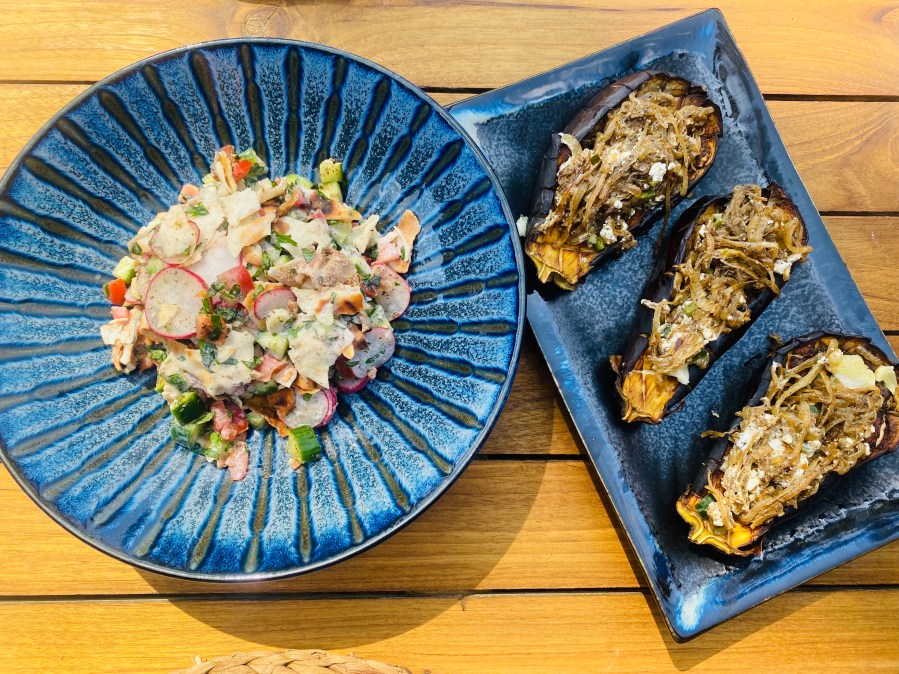
Prepare yourself for the best eggplant dish you have ever had. A big call but a worthy one.

This is from Yotam’s book “Jerusalem”; it was the Jews who are said to have introduced the humble aubergine to the Arab culture, Europeans were quite suspicious of aubergine were and reluctant to use them thinking they were “mad apples” and helped induce insanity. With that being said – this dish is insane.

Ingredients

Roasted aubergine with fried onion and chopped lemon

2 large aubergines, halved lengthways with the stem on
150ml olive oil
4 onions, peeled and thinly sliced
1 1/2 green chillies
1 1/2tsp ground cumin
1tsp sumac
50g feta, broken into chunks
1 lemon
1 garlic clove, crushed
Salt and pepper

Method

  1. Preheat oven to 220C. Score the cut side of the aubergines with a criss-cross pattern, brush with olive oil, salt and pepper and place on a baking tray, cut-side up and roast for 45mins, until the flesh is golden brown and completely cooked.
  2. Add remaining oil to a heavy pan and cook the onions with 1/2tsp of salt, stirring often so that parts of the onion get really dark and crisp. About 15mins in total.
  3. De-seed the green chillies, keeping 1/3 of them seperate. Add 2/3 of the chillies, cumin, sumac to the onions and stir for a few mins. Add the feta and cook for a few mins before removing from the heat.
  4. Cut the flesh out of the lemon, ensuring you remove any seeds and chop the lemon flesh roughly. Add any juices, lemon flesh, the remaining green chilli and garlic to a small bowl.
  5. Assemble the dish by transferring the roasted aubergines to a serving dish, spoon over the lemon mixture and top with the warm onion and feta mixture.
  6. Serve warm or at room temperature.

Darren Purchese’s (Cheat’s) Caramelised Onions

Makes 250gm

Here ye. Here ye.

I will never, even again do caramelised onions in a pan with brown sugar, balsamic vinegar and at least an hour of my life.

This approach to caramelised onions is ridiculous.

Maybe 20, 25 minutes and you have just wonderful caramelised onions.

The addition of the bird’s eye chilli is even more genius.

Add thyme towards the end as I recently did and boom.

Ridiculous.

Ingredients

3 red onions, peeled and sliced
Salt flakes
1 bird’s eye chilli, chopped
1/3 c light olive oil

Method

  1. Place the onions in a 3 litre capacity microwave-safe (glass or plastic) dish with a steam escape lid. Season the onions with salt and stir in the chilli and olive oil. Place the lid on the dish with the steam escape open and place the dish in the microwave. Cook on high (100%) for 10 minutes.
  2. Remove the dish from the microwave and carefully remove the lid, allowing the steam to escape. Use a fork to mix the wet onions ensuring everything is well combined. Replace the lid and cook for a further 4 minutes.
  3. Remove thw dish from the microwave and again mix the onions with a fork. Replace the lid and cook for another 4 minutes. Repeat these steps until the onions start to become thick and jemmy. The onions should be dark in colour and the moisture will have evaporated sufficiently for them to sticky.
  4. Thank me later.

Christine Manfield’s (Indian) Mustard Fish

Serves: 4

Occasionally after cooking a dish we are compelled to immediately type it; even at the table whilst we finish a wine.

This is one such dish.

From the book Christine Manfield’s Indian Cooking Class, this is a knockout.

I chose barramundi rather than Murray cod, though any freshwater white fish would do.

Paste away!
And yoghurt both sides!

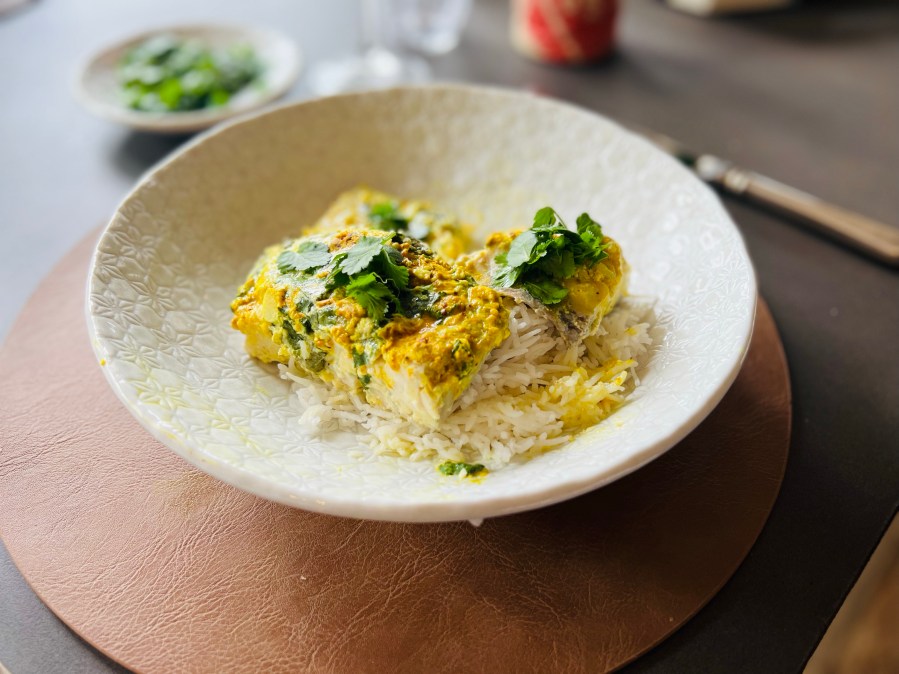
With some steamed rice and lots of coriander, wow. Subtle, sophisticated, just wonderful weekday cooking.

Ingredients

600gm (4 even fillets) of Murray Cod or similar
1 tsp ground turmeric
1 tsp ground cumin
1/2 tsp freshly ground black pepper
1 tsp black mustard seeds, coarsely ground
2 tsp sea salt flakes
2 tsp wholegrain Dijon mustard*
2 tsp chopped ginger
2 garlic cloves
2 small green chillies, chopped
1 cup coriander leaves
1 tbsp mustard oil
100gm thick plain yoghurt

Method

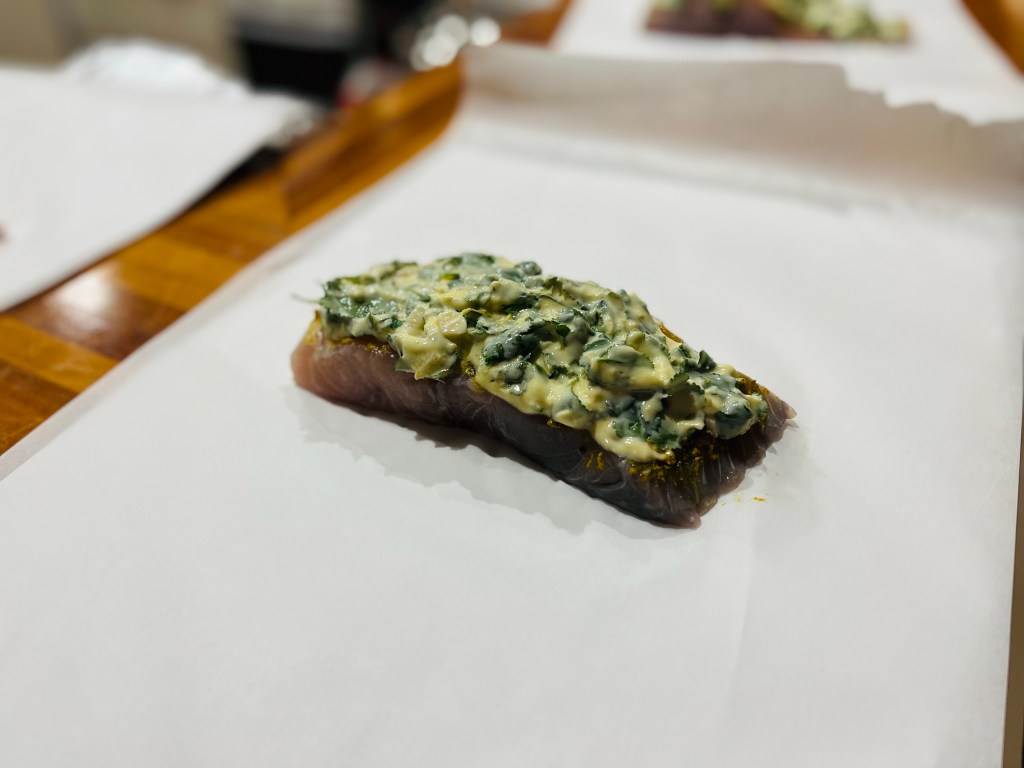
  1. Prepare 4 sheets of foil and 4 sheets of baking paper of the same size, ensuring the sheets are big enough to wrap around the fillets. Place the ground spices, 1 tsp salt and wholegrain mustard in a bowl and mix to combine. Rub spice mixture liberally over the fish and set aside.
  2. Place the ginger, garlic, chilli, coriander leaves, remaining 1 tsp salt and the mustard oil in a food processor and blend to make a paste. Place in a bowl with the yoghurt and stir to combine. Spread the yoghurt mixture over both sides of the mixture. **
  3. Preheat oven to 220c. Place one sheet of baking paper on top of each sheet of foil and top with fish fillet and its yoghurt coating. Wrap the fish in the paper to secure before enclosing with the foil. Don’t wrap too tightly, the parcels can be slightly loose, just make sure they’re sealed tightly at both ends.
  4. Place in an oven side-by-side and bake for 10 minutes or until the fish is tender and just cooked. (Test this.) Remove from oven for 5 minutes to allow the juices to settle. Unwrap the fish, discarding foil and paper. Garnish with chopped coriander and serve with steamed rice.

* I used straight Dijon. Nat feels I should have mixed in some wholegrain mustard. I disagree though will try next time and be found to be wrong.

** I didn’t blend the paste to make it a bit more rustic.

The most delicious healthy (cheats) seafood bouillabaisse

Serves: 6-8

This recipe is a no-brainer. It doesn’t take long and doesn’t involve making your own fish stock but you wouldn’t even know.

It’s healthy, hearty, warm, and delicious. A provincial stable from humble beginnings; the undisputed king of fish stews just got a whole lot easier.

Ingredients

For the stock

6 c fish stock
1tsp aniseed
2 bay leaves
1tsp saffron threads

For the base

8 tomatoes cut into small cubes
6 cloves of garlic minced
2 onions thinly diced
2 salmon fillets (no skin) cubed
2 white fish fillets (no skin) cubed
handful of raw and peeled prawns
1 large bunch parsley chopped

Method

  1. Add the fish stock ingredients to a pan and bring to a boil.
  2. On medium heat, paint olive oil on the bottom of a heavy-based pot and put in tomatoes, garlic and onions.
  3. Lay the seafood on top of the tomatoes, garlic, and onions and leave for about 3 mins (enough to heat up the pot).
  4. Ladle the boiling fish stock into the pot and cover the seafood.
  5. Sprinkle half the parsley on top and cover. Bring to a soft boil for about 10 mins until seafood is cooked.
  6. Sprinkle the remaining parsley on top and serve with warm crusty bread.

Our Thali by Maunika Gowardhan

Serves: 6 – 8

Every time Nat and I jet off on a holiday, I have a tradition of giving her a card and a new cookbook in the lounge.

We were headed to Vanuatu (our favourite place on earth) which oddly has no Indian restaurants of any fame. (Essentially, we have never stepped foot in and trust me, we’ve eaten everywhere in Port Vila.)

So the latest book was Thali by Maunika Gowardhan.

A brilliant, colourful book of dozens and dozens of side, mains and breads to make a Thali: a big plate.

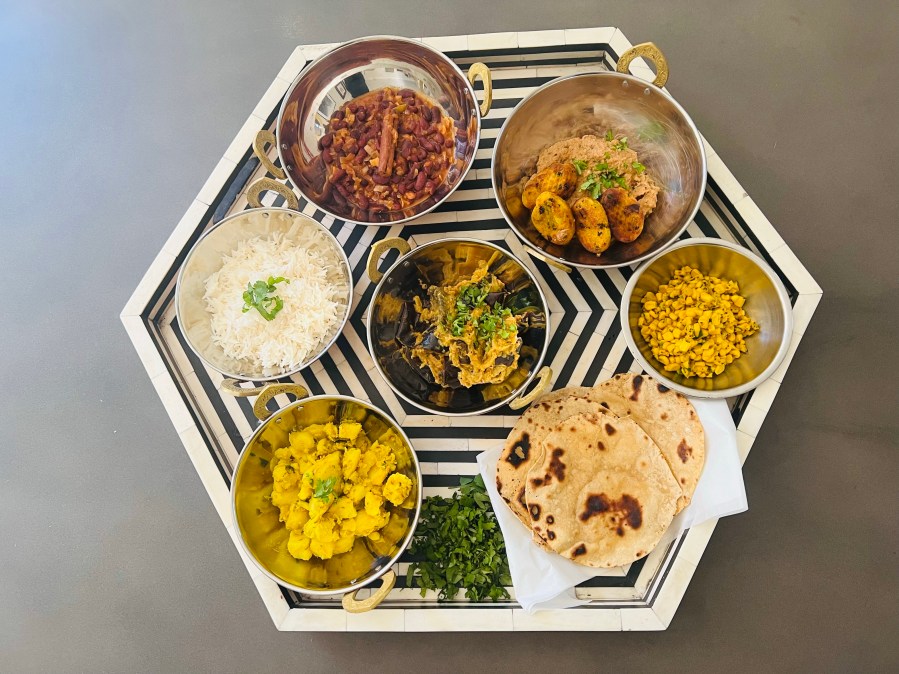
We cooked seven dishes – all vegetarian – and it was a triumph.

Flavours so unique and serious. Each of them complimenting the other. The sum of its parts. So sophisticated.

We didn’t do a sweet, though I really appreciate how you could and probably should.

Start the night before, bring out the tray and your friends will fall off their chairs.

Life’s good.

And the dishes:

Spicy Stir-Fried Garlic Potatoes
Spicy Sweetcorn with Ginger and Green Chilli
Kidney Bean Curry with Cardamom, Ginger and Chilli
Andhra Aubergine, Coconut and Tamarind Curry
Paneer Koftas in a Creamy Spiced Tomato Curry
Wholemeal Flatbreads
Rice to serve

Maunika Gowardhan’s Wholemeal Flatbreads

Makes: 12

These flatbreads – known as Phulkas – are a softer, smaller version of a classic Indian chapatti.

Going forward, they’re a must for any Indian feast we cook.

Though the real takeout is chapatti flour.

The texture of the Phulkas was just so on-point. Something I know (having done some reading at least) cannot be achieved with white or wholemeal flour.

(Read about this dish as part of a grand thali we recently served.)

Ingredients

250gm chapatti flour, plus extra for dusting
2 tbsp ghee, plus extra to serve
Pinch of salt
3/4 c water

Method

  1. Put the flour in a mixing bowl with the ghee and salt. Now add the water a little at a time, mixing with a spoon or your fingers until it starts to come to together. Knead well (we used a Kitchenaid),to form a smooth dough. Cover the bowl with plastic wrap (cling film) and leave to rest for 20 minutes.
  2. Divide the dough int 12 equal size balls. Flatten each ball and dust with a little flour. Using a rolling pin, roll out each one as thinly as possible to around 12.5 cm.
  3. Heat a griddle pan or fry pan over a medium heat, until hot. Add one of the rolled flatbreads and cook for 30 seconds, then turn it on the other side cook for a further minute. As it begins to puff up, turn and cook the first side again for a further 30 seconds, pressing lightly with the back of a spatula.
  4. Remove from the heat and spread over the ghee. Cover with a clean tea towel and keep warm while you make the rest.

Andhra Aubergine, Coconut and Tamarind Curry by Maunika Gowardhan

Serves: 4

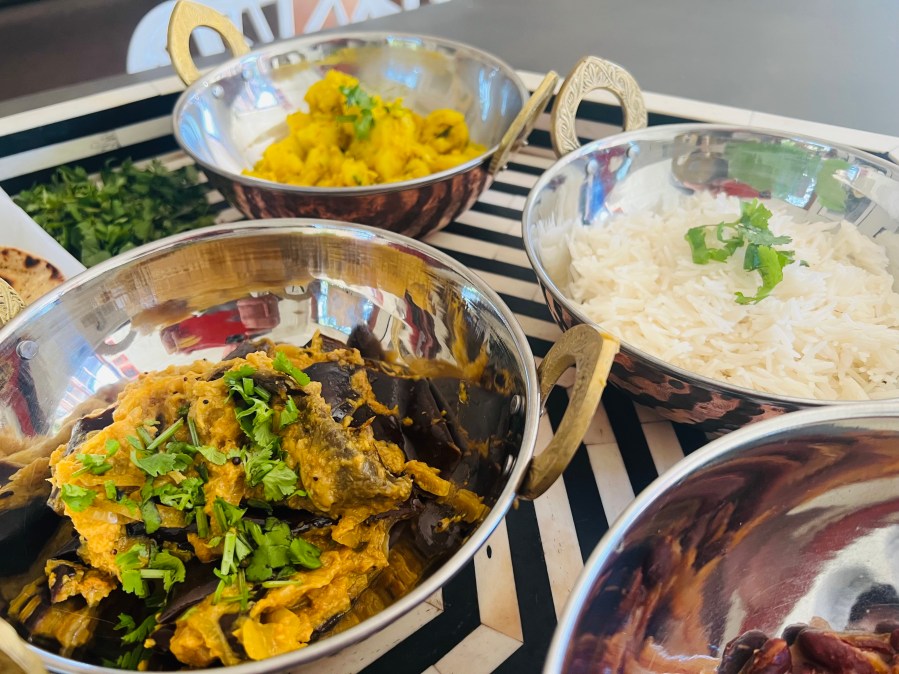
This is a lovely dish to be served alongside an Indian menu. The tamarind brings a sourness that is offset by the creaminess of the baked eggplant underpinned by a subtle nuttiness that the coconut adds.

All around a great side dish that won’t disappoint.

(Read about this dish as part of a grand thali we recently served.)

Ingredients

2 aubergines (eggplants), cut into 1/4 batons lengthways
6 tbsp vegetable oil
1 c cup of grated coconut
2 heaped tbsp Greek yoghurt
1 tsp black mustard seeds
1 cm cinnamon stick
10 curry leaves
1 white onion thinly sliced
3 garlic gloves crushed
1 tsp Kashmiri chilli powder
1 tsp ground coriander
1 tsp ground tumeric
1 tbsp tamarind paste mixed with 250ml water
2 tsp sugar
Salt, to taste
Coriander to serve

Method

  1. Preheat the oven to 180C, put aubergines in a roasting tray and coat with 4 tablespoons of oil coated. Roast for 20mins. Meanwhile, put the coconut and yoghurt in a blender and blitz into a paste. Set aside.
  2. Heat 2 tablespoons of oil in a saucepan on medium heat. Add mustard seeds so they start to crackle then add in the cinnamon stick. Fry for a few seconds then add in the curry leaves and onion, fry for about 10mins so they are soft and starting to turn golden. Add garlic paste and fry for 30 seconds.
  3. Reduce heat to a low and add the coconut paste and remaining ground spices. Fry for 5 mins then add in the tamarind paste/water, sugar and salt.
  4. Bring to a simmer and add the cooked aubergines. Cover and cook over lot for about 8 mins until the sauce is thick and coats the aubergines. Garnish with coriander.

Kidney Bean Curry with Cardamom, Ginger and Chilli by Maunika Gowardhan

Serves: 4

This is pure comfort food.

Like any good bean chilli, honestly, by itself with a dollop of sour cream or yoghurt, on the couch with a glass of red, this dish could help Monday night fly by.

As part of a Thali we prepared from Maunika Gowardhan’s new book – Thali – it was the knockout addition. Compared to the spices and uniqueness of some of the dishes, here came this wonderful, muted comfort in the form of kidney beans and a thick gravy.

A total joy to eat.

(And there is enough left over for Monday night!)

(Read about this dish as part of a grand thali we recently served.)

Ingredients

2.5cm ginger root
5 garlic cloves
3 tbsp ghee or vegetable oil
4 black cardamom pods, whole*
5cm cinnamon stick
1 onion, finely chopped
2 heaped tbsp tomato paste
2 x 400gm tins of red kidney beans, drained and rinsed
2 tsp ginger powder
1/2 tsp mild chilli powder
Pinch of asafoetida (substitute garlic or onion powder)
350ml boiled water
Salt, to taste
Pinch of garam masala
Chopped coriander, to garnish

Method

  1. First, put the ginger root and garlic cloves into a blender with a splash of water, and blend to form a smooth paste.
  2. Heat the ghee or oil in a large, heavy-based saucepan over a low heat. Add the black cardamom pods and cinnamon stick, letting them fry for 1 minute. Add the ginger and garlic paste and fry for 30 seconds as the raw flavours cook through.
  3. Increase the heat to medium, add the chopped onions and cook for 14 – 15 minutes as they soften and go light brown. Stir well, making sure the mixture doesn’t stick to the bottom of the pan.
  4. Add the tomato paste and fry for 2 minutes, then add a splash of water and scrape off any sticky bits from the bottom of the pan. Now add the red kidney beans, along with the ginger and chilli powder, as well as the asafoetida. Stir well and fry for 1 minute, then add the water and season to taste.
  5. Cover and cook over a low heat for 17 – 18 minutes, stirring halfway through. Crush some of the beans with the back of a spoon to thicken the gravy slightly. Finish with the garam masala, garnish with fresh coriander and serve with rice.

* If you can, don’t substitute green Black/brown cardamom pods add a beautiful smokiness.

Paneer Koftas in a Creamy Spiced Tomato Curry by Maunika Gowardhan

Serves: 4

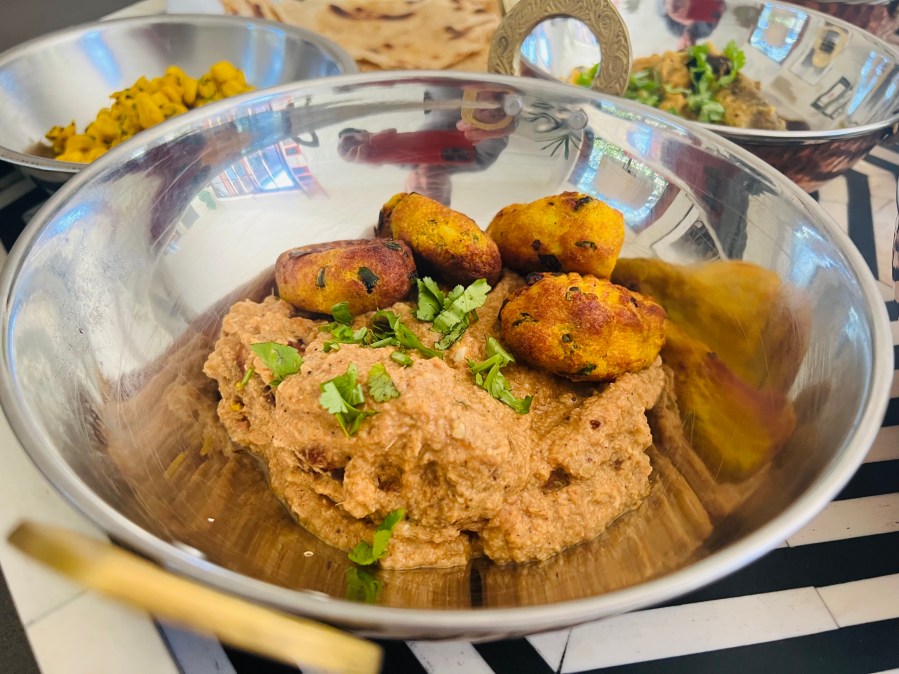
Any vegetarian curry with potato and paneer koftas is going to win your heart, add in a cashew creamy sauce to coat the koftas and boom! The sweetness of the raisins gives the dish a beautiful edge.

It takes a little while but its not complicated and its definately worth it.

We air fried the koftas and would definately do it this way again.

(Read about this dish as part of a grand thali we recently served.)

Ingredients

For the koftas

300gms peeled potatoes boiled
200gms paneer finely grated
1 tsp turmeric powder
1/2 tsp ground cardamom powder
2.5cm piece of ginger finely grated
1 birds eye green chilli finely chopped
Pinch of salt
2 tbsp coriander leaves finely chopped
3 tsp cornflour
2 tbsp raisins

For the sauce

1/2 c cashew nuts
6 cloves of garlic roughly chopped
2.5cm ginger roughly chopped
1 birds eye green chilli
3 tbsp vegetable oil
6 cloves
1” cinnamon stick halved
1 green chilli slit lengthwise
1 white onion roughly chopped
1 tomato roughly chopped
2 tbsp tomato puree
½ tsp chilli powder (mild or Kashmiri chilli powder)
200mls water
1 tsp sugar
½ tsp garam masala powder
2 tsp mango powder (amchoor)
Salt to taste
Coriander for garnish

Method

  1. Add the cashew nuts to a bowl with 50mls warm water and soften for 30 minutes. Blend the garlic, ginger and chilli (only 1) with a splash of water to a smooth paste. Set aside.
  2. Use the same blender to blitz the drained cashews with about 3 tablespoons of the soaking water to form a smooth paste. Set aside.
  3. Add the onion to a blender and blend to a smooth fine paste with 50mls of water. Set aside. In the same blender add the tomatoes, blend to a fine puree and set aside. (At this point you will have four seperate bowls of blended things: (1)Garlic/ginger/chilli, (2)Cashews, (3)Onion, (4)Tomato.
  4. For the koftas; Coarsely grate the potatoes and mash well to a smooth mix. To this add all the kofta ingredients except in a large bowl. Knead lightly to a dough like consistency. Cover and cling film until ready to fry. You can sit them overnight.
  5. To cook the gravy; heat the oil in a heavy bottom saucepan. Add the cloves and cinnamon stick and fry for a few seconds. Add the slit green chilli followed by the onion paste and fry on a medium heat for 5 minutes. Stir well making sure it doesn’t stick to the bottom of the pan as the moisture begins to evaporate.
  6. Add the ginger garlic and chilli paste and fry for 2 minutes. Stir and add blended tomatoes along with the blitzed tomato and tomato puree. Mix and cook for 6-7 minutes. The sauce will begin to reduce and go a deeper red colour
  7. At this stage add the chilli powder and the cashew nut paste. Stir well and cook for a further 2 minutes, lower the heat and add water. Simmer for 2-3 minutes.
  8. Add the sugar, garam masala and mango powder. Season to taste and garnish with coriander. Turn the off and keep warm.
  9. To cook the koftas; Divide the kofta mix into equal portions about a large tablespoon. Take a portion in the palm of your hand and roll into cylindrical shape. Make sure they are shaped well or else they will fall apart while frying so pack them tightly.
  10. Put them in an air-fryer or oven for about 10 mins. Flip them after about 8 mins. (alternatively you can shallow cry them for about 3-4mins in oil).
  11. Add the koftas to the warm gravy to a serving dish and steep the koftas just before serving.