We did a long Sunday afternoon Argentinian lunch this weekend.
A wonderful Beef Empanadas to start.
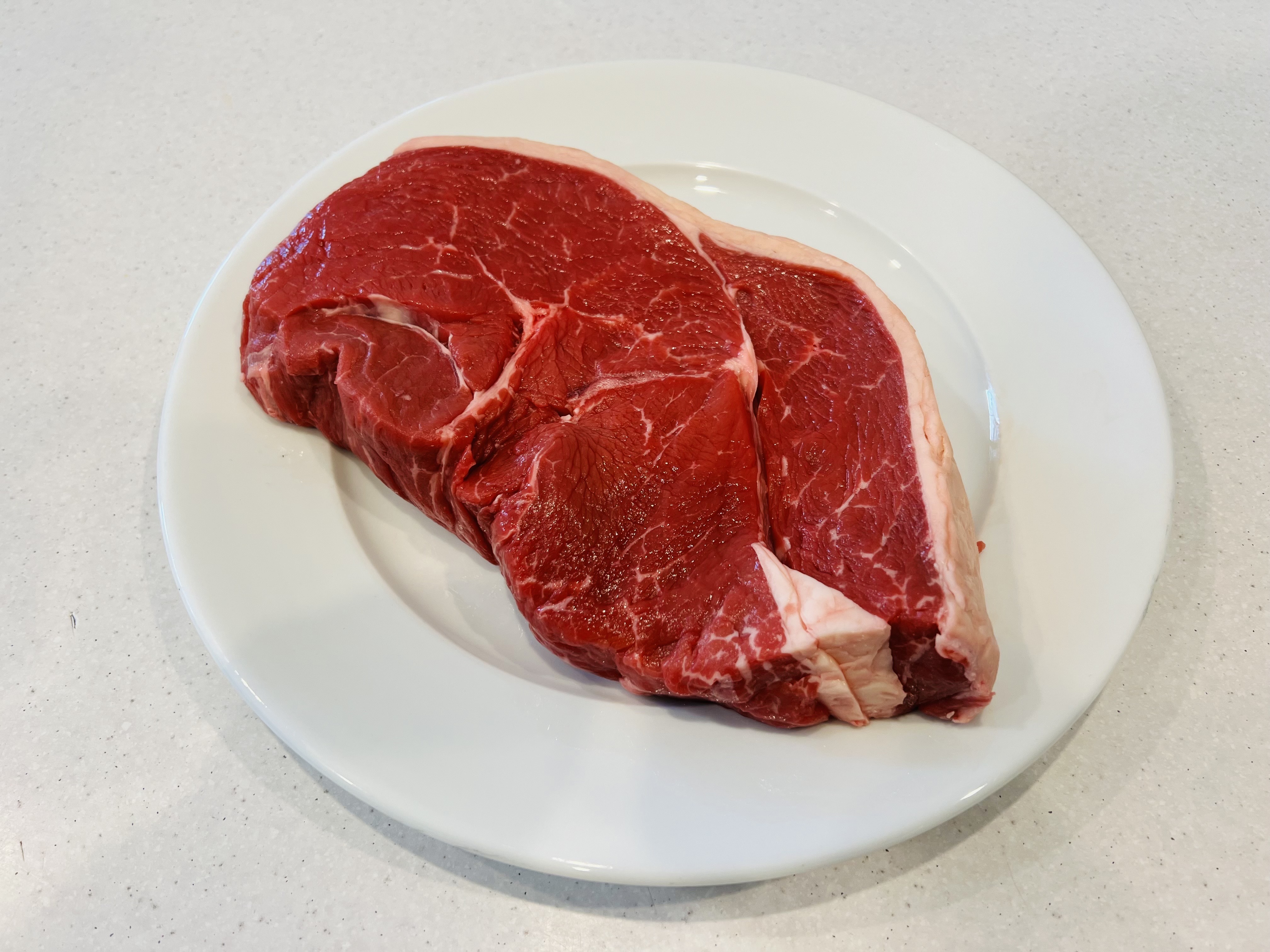
And then rump cooked over charcoal served with Chimichurri. Smashed potatoes.
And these quite wonderful Sweet Corn Tamales. Much better than cornbread in my opinion and far more… well, Argentinian.
It was in itself an absolutely love lunch with some wonderful flavours.
Though wow, these Tameles are just a great side. Chicken, a braise, a wonderful piece of steak: a great, great accompaniment.
The original receipe asks for the Tamale to be cooked within the corn husks, though this didn’t seem practical to me. My husks were not large enough and so I used baking paper which worked the trick.
Just add some kitchen twine.
These won’t win any awards, though as a side – kid-friendly too – they’re great.
Note: the original recipe asked for Masa Harina and Cornmeal, neither of which I had. I substituted plain flour and polenta and this worked perfectly well.
Ingredients
1kg corn kernels (about 5 – 6 corn ears) with husks 1/2 c butter 1/2 c caster sugar 1/2 c Masa Harina (substitute plain flour) 1/2 c cornmeal (substitute Polenta) 1/2 tsp baking soda 1 tsp salt
Method
Cut off the two ends of each corn ear and with a sharp knife, remove the kernels. Working in batches, place the corn kernels in a food processor and grind them until you have a paste.
Drain any liquid from the corn in a colander and place in a large bowl.
Beat the butter and egg until nicely fluffy. Add the buter mixture and the rest of the ingredients to the corn and mix until well combined.
In a large, reserved corn husk – or on baking paper – place several large tbsp of the corn mixture and make into a log. Fold over the sides of the husk/baking paper and roll into a tube, securing with kitchen twine if necessary.
Add the tamales in the rack of a steaming pot, making sure the open side is upwards. Steam for 90 minutes, adding more boiling water as necessary.
“Decident” said Nat. “Marvellous” I said. “I don’t want this to end” said Nat.
And boy, wasn’t that the truth.
Yes, in our pre-baby #4 quest to find the world’s greatest pasta, this is truly, truly in the running.
This pasta separates itself from the wonderful though simple Lidia Bastianich and Antonio Carluccio pastas we have been pushing, taking it up a level in finesse and clarity.
This pasta jumps over this otherwise incredible white ragu, being more sophisticated: less steam train, more race car.
Though in terms of peak genius, this Casoncelli is just so much more refined. Just so much more ‘in the moment’ special.
We used sliced roast beef from the supermarket. Otherwise, everything is straightforward.
Slightly depressed to read this is a common dish in the Bergamo and Brescia parts of Italy, though I guess we’ve always known the Italians have truly the best food lives. I guess we have our beaches here in Sydney however. (I know which I would take!)
If you are like us and want to chase the Saturday-night pasta hit, this my friend is unquestionably the next rung in the ladder.
Make the filling: brown the sausage meat with the butter over a medium heat, then add the roast beef and cook for a few minutes, stirring often, so the flavours can mingle together. Transfer to a bowl, then add the breadcrumbs, egg, Parmesean, amaretti and raisins. Season with salt and pepper and stir to combine.
Roll the pasta in a pasta machine to setting 2. Using a round 7 – 8cm ravioli cutter, cut out as many circles of pasta as you can get.
Place a tsp of the filling at the centre of each circle, then gently fold it over to form a half moon. Press the edges together using a fork.
Bring a large pot of salted water to a rolling boil. Meanwhile, in a frypan set over a medium heat, melt the butter for the sauce. Add the pancetta and sage and fry for a few minutes, until crispy.
Cook the casoncelli in boiling water for a few minutes until they float to the top. Drain with a slotted spoon and transfer to the frying pan with pancetta and butter sauce. Sauté for 30 seconds, until evenly dressed.
Serve immediately with a dusting of grated Parmesean.
Nat started with a freshly baked baguette: cheese, pâté, cured meat.
What a way to start with a cold lager!
And then this dish.
Something to smile about afterwards? You absolutely bet!
This was French Bistro as good as you could imagine. Absolutely impossible to fault.
So Hubert Keller? I’d never heard of him, though he trained under Paul Bocuse, the father of modern French cooking who undisputedly set the benchmark for this style of French cuisine. (Fun fact: my parents went to a dinner he hosted in Sydney and Mr Bocuse signed a menu for me. I still have it!)
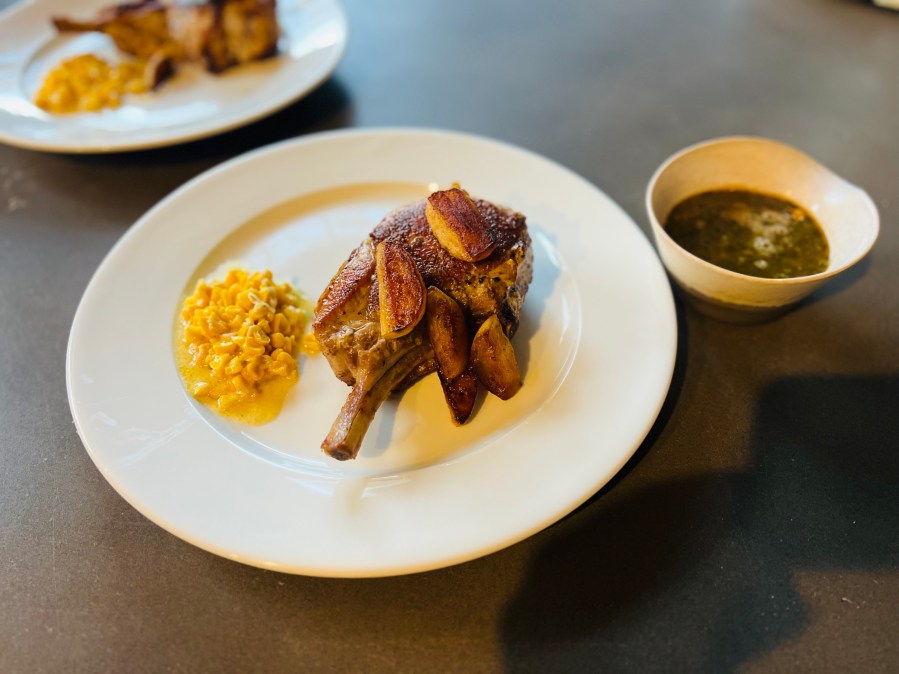
And then this cut of pork. I’ve mentioned our amazing local butcher Hummerstons and a quick text to Steve and he had it under control. 2 double pork chops with 1 bone removed, about 4cm thick. Talk about a dramatic presentation!
Nat and I debated using a thinner pork chop as an easier entry to this dish, though absolutely do not cut corners. If ever there was a time to engage your butcher and have the double chop, it is this.
The roasted cream corn with the spring onions and parmesan is just luxury and pairs perfectly with the pork and the apple. Did I mention smiles?
Occasionally you wander onto a dish that is a hero and this is one of them.
It is rude however to suggest that Nat wanders into anything when it comes to food.
This was always going to be an extraordinary meal and mopped up with a homemade baguette and glass of light red, very hard to argue that life isn’t great.
P.S. Nat says start the corn first.
Ingredients
2 double pork chops with 1 bone removed, 4cm thick 2 tsp salt 1 tsp black pepper 2 tbsp olive oil 4 Fuji apples 2 tbsp butter 3/4 c Calvados apple brandy* 1 c apple cider 1 c chicken stock 2 tbsp chives, thinly snipped
Creamed Corn
2 ears corn, husks removed, both ends trimmed 2 tbsp softened butter Pinch salt Pinch pepper 1 c heavy cream 1/2 c chicken stock 1/2 tsp salt 1/4 tsp pepper 1 tsp fresh ginger, minced 2 stalks spring onion, thinly sliced 1/4 c Parmean cheese grated
Method
Peel the apples and cut each into 6 wdges. Cut out the cores, and trim each wedge into a football shape. Reserve all peels and trimmings.
In a small sauté pan, melt butter and add apple wedges. Coover over a medium heat, stirring occasionally, until apples are browned and softened, 10 – 12 minutes. Set aside. Season both sides of the pork chops with salt and pepper and in a sauté pan large enough to hold both pork chops, heat oil until smoking.
Lay pork chops into hot oil and sear approximately 7 minutes on each side until golden brown and the internal temperature is at 62c. **
Remove from the pan and cover with foil to keep warm whilst you make the sauce. Discard half the fat and trimmings from the pan, then add apple trimmings and sauté over medium-high heat for a few minutes.
Add Calvados and apple cider, and bring just to a boil. Reduce the heat and allow to simmer for 5 minutes, or until it becomes thick, with a syrup-like consistency. Add chicken stock and simmer for 5 minutes. Strain the sauce through a fine mesh strainer, pushing down on the apple trimmings with the back of a spoon to remove all juices.
Put the sauce back in the pan over low heat and add the chives. Taste and adjust for seasonings.
For the creamed corn, heat the oven to 180c. Brush the corn with butter and season with salt and pepper. Warp each corn ear in foil and roast in the oven for 30 minutes, or until the corn starts to brown.
Unwrap the corn and when cool enough to handle, slice off the kernels. In a small saucepan over a medium-heat, combine cream, ginger, salt and pepper and reduce by one-third, 5 – 7 minutes. Add the corn kernels and chicken stock to reduced cream and cook for 10 minutes, or until cream thickens and is absorbed by the corn.
Remove corn from the heat, and stir in the spring onions and Parmesean cheese.
Served the pork, with apple wedges, corn alongside and the sauce ready to pour.
* Substitute 1/2 c brandy and 1/4 c apple juice.
** This will take longer. Potentially finish off in the oven if the internal temperature is rising too slowly.
I almost didn’t cook this dish on account of – wait for it – the photo of the recipe in Adam Liaw’s book Asian After Work though my goodness, I’m glad I did.
Nat and I had a late Sunday lunch on Sydney’s Spit and wanted something easy and yummy for a later supper.
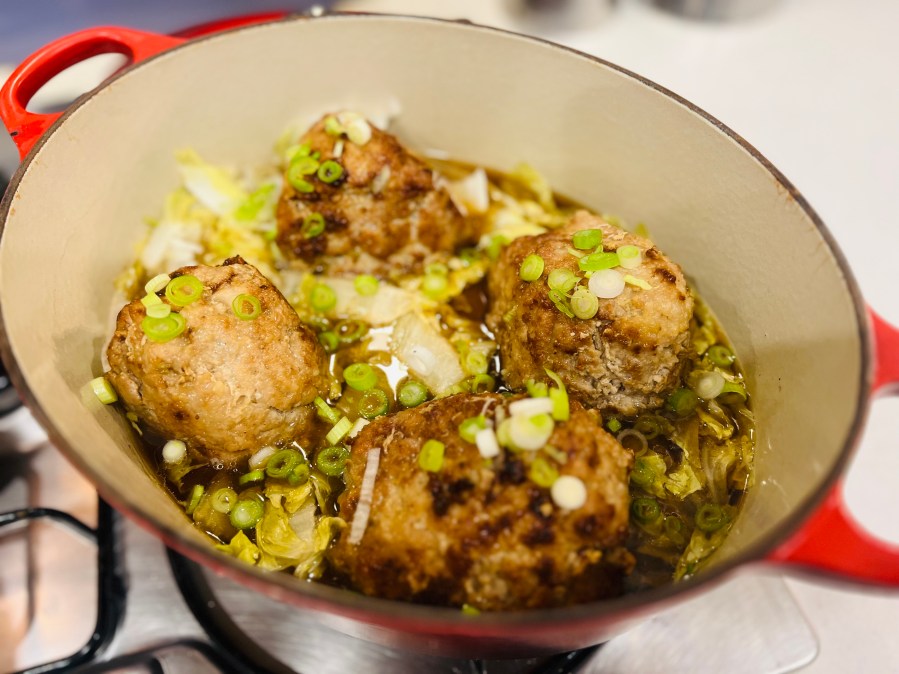
Talk about just god damn moorish. The stock becomes slightly oily and is filled with such a wonderful Chinese flavour. Add in those shiitake muchrooms.
And then the fried and then poached pork balls.
With some rice at the side, this is absolutely Chinese comfort. Curled up on the couch with a beer watching Yellowstone (yes, we are late to the series though how bloody good!), this was the perfect way to end the weekend.
Add this recipe to your backlog. Tick tick tick. It’s brilliant.
Ingredients
8 dried shiitake mushrooms 2 tbsp cornflour 1/2 Chinese cabbage, cut into 5cm lengths Vegetable oil for shallow frying 500ml quality white chicken stock 1 tbsp light soy sauce 1 tbsp Shaoxing wine 1/4 tsp caster sugar 2 spring onions, white and green parts, trimmed and sliced, to serve Cooked Jasmine rice, to serve
Lions’ Head Meatballs
750gm pork mince 2 – 3 spring onions, white and light green partsm trimmed and minced 1 tsp grated sugar 1 eg yolk 1 tbsp cornflour 2 tbsp oyster sauce 2 tsp Shaoxing wine 1 tsp soy sauce 1 tsp sesame oil A pinch of white pepper A pinch of caster sugar 1/4 tsp salt
Method
Rinse the shiitake mushrooms quickly under running water and soak in 1 1/2 c boiling water for at least 20 minutes until softened. Trim and discard the strems, slice the caps, and reserve the liquid.
For the meatballs, mix together all the ingredients and shape into 4 large balls. Sprinkle with the additional 2 tbsp of cornflour to coat, and set aside.
Place the cabbage and shiitake mushrooms in the base of a large casserole dish. Deep or shallow-fry the meatballs in plenty of oil until well browned all over. Place the meatballs on top if the cabbage and pour over the stock, soy sauce, wine, sugar and reserved shiitake steeping liquid. Bring to the boil, then reduce the heat and simmer, covered, for about 30 minutes, or until the meatballs are cooked through and the cabbage is very soft. Scatter with spring onions and serve with rice.
This is an absolutely wonderful way to prepare chicken breast in such a favourful way, ready for pairing with rice maybe some Asian greens.
Make the masterstock the nighr before and it’s set and forget.
And the ginger and spring onion oil? So simple, so beautiful.
For a casual, Asian feast (is casual and feast mutually exclusive?), this is a must.
Our boys kept taking leftovers from the fridge all the next day, a sure sign you’ve nailed it.
Ingredients
Faster Master (Stock) – 2 litres
1 1/2 ltrs quality white chicken stock 250ml dark soy sauce (or substitute light soy sauce if you prefer) 250ml Shaoxing wine 4 cloves garlic, unpeeled but bruised 1 small brown onion, peeled and roughly chopped 5 thick slices, ginger, unpeeled 1 cinnamon quill 3 star anise 1/2 tsp fennel seeds 1/2 tsp black peppercorns 1/2 c caster sugar
Chicken
2 ltrs Faster Master 2 chicken breasts, skinless A handful of coriander to serve Cooked rice to serve Steamed greens to serve
Ginger & Spring Onion Oil
2 tbsp grated ginger 4 medium spring onions, white and light green parts, trimmed and thinly sliced 1/2 tsp sea salt 3 tbsp peanut oil
Method
Faster Master (Stock)
Place all the ingredients in a large saucepan and simmer for 30 minutes. Allow to cool, then strain out all the solids.
When you use this liquid for poaching meat or fish, bring it to the boil for a minute or two after you have removed the meat or fish to kill bacteria, strain it, allow to cool, transfer to a freezer-proof container and freeze until you need to use it again.
Chicken and Ginger & Spring Onion Oil
Bring the Faster Master to a simmer in a medium-sized saucepan. Remove from the heat, add the chicken breasts and cover tightly. Allow to stand for 10 minutes and test the internal temperature, and either continuing poaching (possibly over a low heat depending on where you are in cooking terms) or rest for 2 minutes.
Pound the ginger, spring onion and salt in a heatproof mortar to a rough paste. Heat the oil in a pan over a high heat until smoking hot, then pour onto the mixture. Once the sizzling stops, mix the sauce and allow to stand until ready to serve.
Slice the chicken, scatter with coriander and serve with the ginger and spring onion oil, rice and greens.
This incredibly simple ice cream doesn’t even require an ice cream machine, though I did use our churner and the result was wonderful.
We had Nat’s parents over for a mid-week meal and so a streamlined menu was a must.
This ice cream absolutely nailed the brief.
Ingredients
1 – 2 shots of strong espresso per person*
Condensed Milk Ice Cream
1 can (395hm) sweetened condensed milk 600ml thickened cream
Method
To make the ice cream, pour condensed milk and cream into the bowl of an electric mixer and whip to stiff peaks. If not using an ice cream maker, transfer to a container and freeze for a least 4 hours or until firm.
Place a large scoop of the ice cream in a chilled glass and serve with a shot of espresso in a glass on the side. Pour the coffee over the ice cream and eat immediately with a spoon.
* Substitute Frangelico or similar to really dial it up!
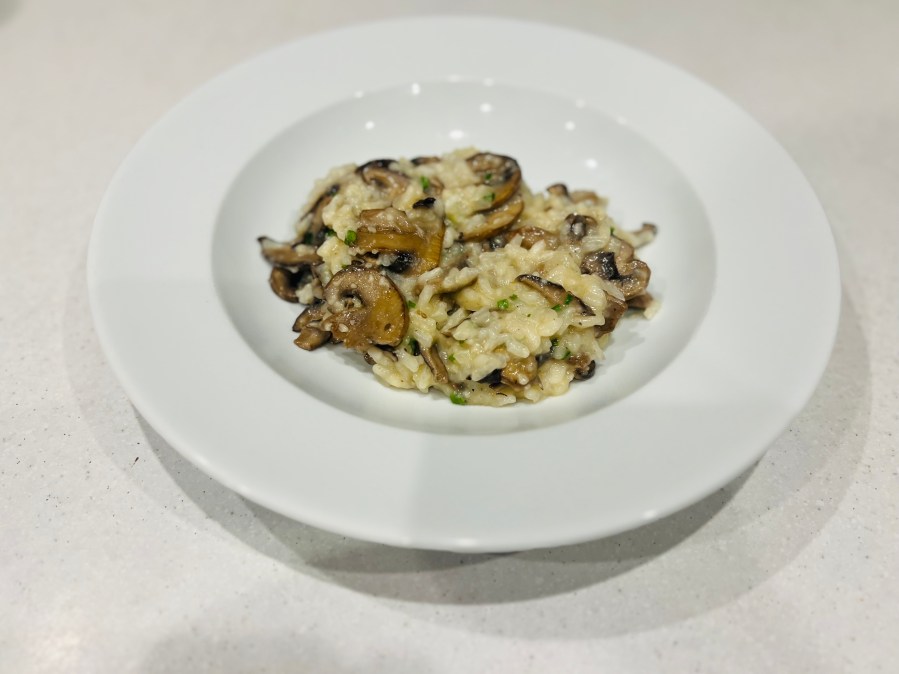
When I was a much younger man, I used to make mushroom risotto all the time.
In hindsight, I used too much white wine and not having the waiting, scalding stock was truly counterproductive.
I also didn’t used reserved mushrooms which are half the mushrooms in this recipe, a suggestion of Nat’s and one that just adds meat, epecially with the cup of reserved soaking water. And set aside at least 30 minutes to saute the mushrooms.
Quiet winter Saturday lunch with a glass of white?
I think I am going to get back into mushroom risotto. Nat said it was the best she has had and that for me is the door ajar!
Ingredients
6 c chicken stock or broth, heated in a pan 3 tbsp extra virgin olive oil 500gm brown or other mushrooms, thinly sliced 100gm dried shiitake mushrooms, soaked in boiling water for an hour, then sliced; reserve 1 c of the soaking water 2 eschallots, diced 1 1/2 c Arborio rice 1/2 c dry white wine 4 tbsp softened butter 3 tbsp finely chopped chives 1/3 c grated Parmesean cheese Sea salt and freshly cracked black pepper
Method
Heat 2 tbsp of the oil in a large frypan and saute the mushrooms for a good 20 – 30 minutes, seasoning to taste. Set aside.
At the same time, add the remaining 1 tbsp oil to a saucepan over a low-medium heat and saute the eschallots for a minute or two. Add the rice, coat with the oil and slowly toast until their colour is pale, golden. About 2 minutes.
Pour in the wine and stir until the wine is full absorbed. Laddle 1/2 c of the hot stock and stir until combined. Continue this process – adding the reserved soaking liquid at some point – until the risotto is creamy.*
Stir in the reserved mushrooms, butter, Parmesan and chives and stir through. Season and serve immediately. With white wine!
* It is a personal preference, though I prefer a creamy risotta and not one with bite. Obviously, cook it to your preference.
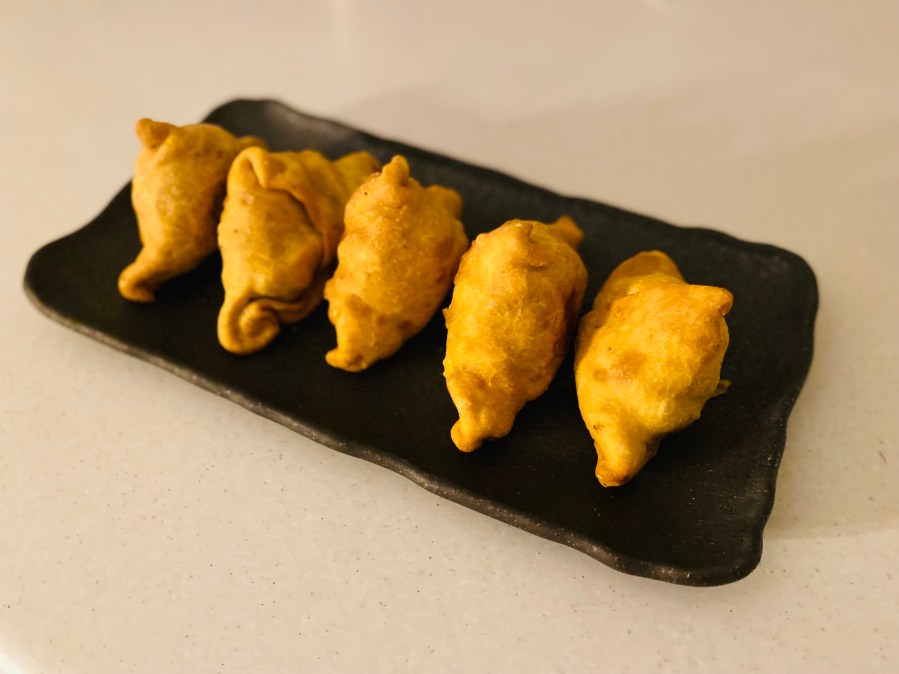
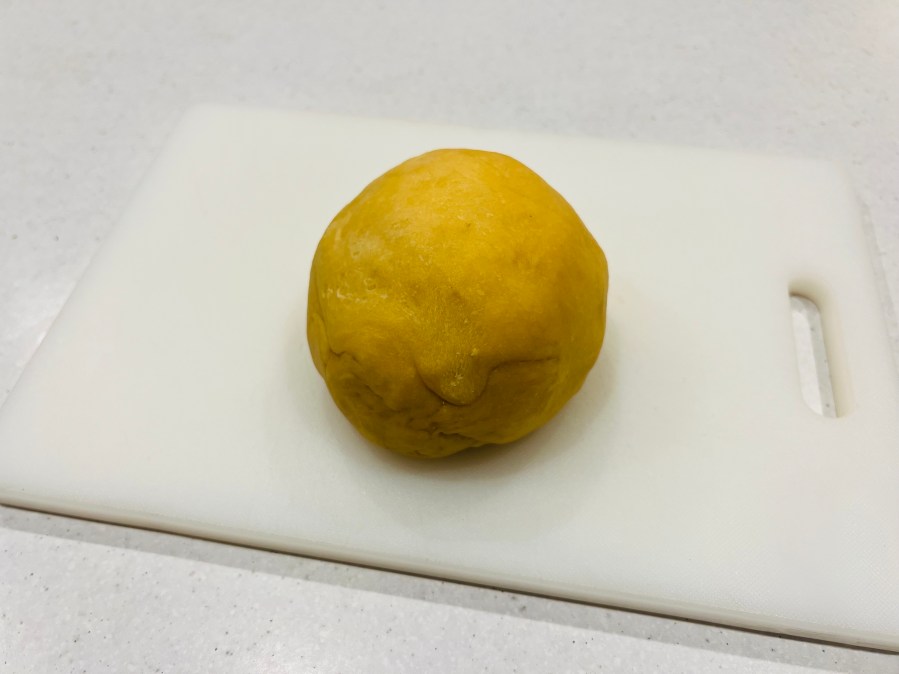
I’ve included the dough that comes with this recipe, though Nat makes a shortcrust pastry which when fried, is absolutely lovely.
As with all Pushpent Pant recipes, you know this is as traditional as it gets. As an alternative, if you are looking for a meat-based samosa, this Dan Toomb’s Keema Pau Samosa is just as excellent.
(Note, I have adapted this recipe by reducing the fresh and powdered chilli. You would blow people’s heads off with the original measurement. Trust me, we know!)
Ingredients
500gm all-purpose flour plus extra for dustingz Vegetable oil, for deep frying
For the filling
100gm (2 small) potatoes, unpeeled 1 c peas, shelled if fresh 4 tbsp ghee 1 tsp cumin seeds 1 x 5cm piece fresh ginger, peeled and finely grated 1 – 2 green chillies, de-seeded and chopped 1/2 tsp chilli powder (you can always add more) 1/4 tsp ground turmeric 1 tsp ground coriander 1 tsp pomegranate seeds 1 tbsp chopped coriander leaves Salt
Method
Put the flour in a large bowl and mix with enough water to form a stiff dough. Divide the dough into 10 equal portions and roll into balls. Cover with a damp cloth.
For the filling, cook the potatoes in a pan of boiling water for about 20 minutes, or until soft, then drain and allow to cool. When cool, peel of their skins, return to the pan and roughly mash. Cook the peas until soft.
Heat the ghee in a deep, heavy-based pan, add the cumin seeds and fry over a medium heat for about 15 seconds. Add the ginger, chilies, chilli powder, turmeric, coriander and season with salt. Stir-fry for about 1 minute, then add the mashed potatoes and peas and stir-fry for another minute. Add the pomegranate seeds and chopped coriander and stir. Taste and adjust the seasoning, if necessary, then remove from the heat and allow to cool. When the filling is cool, divide it into 10 equal portions.
Place the balls of dough on a lightly floured surface and roll into rounds of about 12cm diameter. Moisten the edges with water, then place a portion of the filling in centre, fold over and press all around to seal the edges.
Heat enough oil for deep-frying in a deep heavy-base pan to 180c or until a cube of bread browns in 30 seconds. Working in batches, add the samosas carefully to the hot oil and deep fry for about 2 – 3 minute, or until golden brown. Remove with a slotted spoon and drain on paper towels.
If you need a great Kitchenaid pasta dough recipe, bookmark this one.
Just don’t lose faith. It needs 8 – 10 minutes of kneading in the machine, though at that point, you’ll have a ball of delicious pasta dough, ready for resting, rolling and cooking.
Ingredients
2 c 00 flour 3 large eggs 1/2 tsp salt 1/2 tbsp extra-virgin olive oil
Method
Place the flour in the mixing bowl and make a well in the centre. Add the eggs, salt and olive oil into the well and use a fork to gently break up the eggs.
Knead the dough on a low setting for 8 – 10 minutes, ensuring all of the flour is pushed off the walls of the bowl. Once the dough is smooth, roll into a ball. If the dought is too dry, ad a few sprinkles of water. Wrap in plastic wrap and let rest at room temperature for 30 minutes.
When Nat and I were last in New York, we visited the famous Sylvia’s Restaurant in Harlem. An absolute institution serving soul food since 1963.
Obama at Sylvias.
We had an amazing meal of shrimp, fried chicken and grits and walked away with the cookbook. A book we hadn’t cooked from until today.
We almost always cook to a theme and this menu of soul food was absolutely on-point and so much fun. We even found a playlist of banjo ballads!
The boys loved it; especially the beans which alongside fish or a steak would be an excellent, contemporary meal. Don’t let the ingredients, process or sheer simplicity of it throw you.
Add some hot sauce, some mayonnaise and of course, BBQ sauce and well, this is a meal that is just good for your soul.
The Absolute Best Southern Fried Chicken by Julia Pressley
I have slightly adjusted this recipe by using chicken tenderloins rather than jointing a whole bird. Just a bit easier and healthier.
Ingredients
1kg chicken tenderloins 1 1/2 tsp salt 1 1/4 tsp freshly ground black pepper, divided 1/2 tsp garlic powder 1/2 c all-purpose flour 1/4 tsp paprika 1 c vegetable oil
Method
Pat dry the chicken. In a small bowl, combine the salt, 1 tsp black pepper and the garlic powder. Sprinkle over the chicken and let stand for 20 minutes or even better, overnight in the refridgerator.
Place the flour, remaining 1/4 tsp black pepper and paprika into a heavy plastic bag. In batches, add the seasoned chicken and shake until each piece is covered with flour.
In a large skillet, heat the oil over high heat until it bubbles when a little flour is sprinkled in. Add the chicken pieces and reduce the heat to medium. Cook for 7 minutes or until the chicken is browned on the bottom, flip and repeat. Remove from the skillet and drain on paper towels before serving.
String Beans with New Potatoes by Sylvia Woods
Ingredients
4 slices bacon 1/2 c chopped onion 250gm red potatoes cut into chunks 1 tsp sugar 1 tsp salt 1 tsp freshly ground black pepper 1 c boiling water 500gm string beans, ends trimmed
Method
In a large skillet, cook the bacon until browned; remove from the skillet and crumble. Discard all but 2 tbsp of the bacon fat.
Add the onion to the skillet and cook until softened. Stir in the potatoes, sugar, salt, pepper and water and bring to a boil. Reduce the heat to a simmer, covered, for 10 minutes.
Add the strinf beans. Simmer, uncovered, for 15 minutes longer or to desired doneness, stirring occasionally.
Golden Brown Macaroni and Cheese by Mattle Wilson
I’ve types up a few mac and cheese receipes and this one is equally as deserving a type. It isn’t deconstructed or containing truffle. It’s as bare bones as it gets and that’s why it’s so good.
Ingredients
500gm uncooked macaroni 4 tbsp butter 2 1/2 c grated mild Cheddar cheese, divided 2 large eggs 1/2 c milk Paprika, for the top
Method
Cook the macaroni until done, drain pour into a greased baking dish. Stir in the butter and 2 c of the Cheddar cheese.
In a bowl, beat the eggs and then beat in the eggs. Add the mixture to the macaroni and stir through. Sprinkle the remaining 1/2 c Cheddar cheese on top and dust with paprika. Bake, uncovered for 30 minutes or until the cheese has melted and the casserole is hot throughout.