Lidia Bastianich’s Onion and Potato Gratin

Serves: 8

This is a classic, if slightly inelegant gratin.

And that’s what I love about it.

Thicker slices or potato and onion when compared to the far thinner slices of potato when we cook a French gratin.

The addition of the sage and bay leaves and the two types of cheese just adds to the comfort.

Nothing revolutionary here, though as a side, you’re just going to make people very happy.

Ingredients

2 tbsp unsalted butter plus more for the baking dish
2 large white onions, thickly sliced
Sea salt
8 large, fresh sage leaves
1 c heavy cream
1 c whole milk
2 fresh bay leaves
1 kg medium potatoes, peeled and sliced 1cm thick
170gm Italian Fontina, grated (I substituted Gruyère)
3/4 c freshly grated Grana Padano or Parmesan

Method

  1. Butter a large baking dish and set it aside. Preheat the oven to 200c.
  2. Melt the 2 tbsp butter in a medium pan over medium heat. When the butter is melted, add the onions, season with 1 tsp salt and cook, stirring occasionally, until the onions are wilted, about 10 minutes.
  3. Add the sage leaves, let them sizzle for a minute, then add the cream, milk and bay leaves. Bring to a simmer and season with 1 tsp salt. Add the potatoes, and simmer just to combine, 3 – 4 minutes.
  4. Add the cheeses to a medium bowl and toss to combine them. Transfer half of the potato-cream mixture to the baking dish and spread in an even layer. Sprinkle with half of the cheese mixture. Repeat with the remaining potatoes, then the cheese. Cover the baking dish with foil, and bake until it’s bubbly and the potatoes are tender, about 30 minutes. Uncover, and bake until the top is golden brown and crusty and the potatoes have absorbed the cream and are no longer soupy (it will thicken up more as it cools as well), about 30 minutes. Discard the sage and bay leaves. Let cool for 10 minutes before serving.

Valeria Necchio’s Casoncelli – Pork, Beef, Raisin and Amaretti Ravioli

Serves: 6

Holy shit, this recipe is just incredible.

“Decident” said Nat. “Marvellous” I said. “I don’t want this to end” said Nat.

And boy, wasn’t that the truth.

Yes, in our pre-baby #4 quest to find the world’s greatest pasta, this is truly, truly in the running.

This pasta separates itself from the wonderful though simple Lidia Bastianich and Antonio Carluccio pastas we have been pushing, taking it up a level in finesse and clarity.

This pasta jumps over this otherwise incredible white ragu, being more sophisticated: less steam train, more race car.

And look, this Rodney Dunn Mushroom Cannelloni with fresh pasta sheets was one of the best pastas we have cooked.

Though in terms of peak genius, this Casoncelli is just so much more refined. Just so much more ‘in the moment’ special.

We used sliced roast beef from the supermarket. Otherwise, everything is straightforward.

Slightly depressed to read this is a common dish in the Bergamo and Brescia parts of Italy, though I guess we’ve always known the Italians have truly the best food lives. I guess we have our beaches here in Sydney however. (I know which I would take!)

If you are like us and want to chase the Saturday-night pasta hit, this my friend is unquestionably the next rung in the ladder.

Ingredients

Pasta dough

Make my Kitchenaid Pasta dough

Filling

1 tbsp unsalted butter
150gm Italian sausage meat, crumbled
100gm roast beef, minced
120gm breadcrumbs
1 medium egg
70gm Parmesean, grated
10gm Amaretti biscuits (about 3), crushed
10gm raisins, soaked, squeezed and then chopped
Fine sea salt
Freshly ground black pepper

Sauce

80gm unsalted butter
80gm pancetta, cut into thin strips
4 sage leaves
80gm Parmesean, grated

Method

  1. Make the pasta per my Kitchenaid Pasta Dough Recipe.
  2. Make the filling: brown the sausage meat with the butter over a medium heat, then add the roast beef and cook for a few minutes, stirring often, so the flavours can mingle together. Transfer to a bowl, then add the breadcrumbs, egg, Parmesean, amaretti and raisins. Season with salt and pepper and stir to combine.
  3. Roll the pasta in a pasta machine to setting 2. Using a round 7 – 8cm ravioli cutter, cut out as many circles of pasta as you can get.
  4. Place a tsp of the filling at the centre of each circle, then gently fold it over to form a half moon. Press the edges together using a fork.
  5. Bring a large pot of salted water to a rolling boil. Meanwhile, in a frypan set over a medium heat, melt the butter for the sauce. Add the pancetta and sage and fry for a few minutes, until crispy.
  6. Cook the casoncelli in boiling water for a few minutes until they float to the top. Drain with a slotted spoon and transfer to the frying pan with pancetta and butter sauce. Sauté for 30 seconds, until evenly dressed.
  7. Serve immediately with a dusting of grated Parmesean.

Pork Shoulder cooked in Milk

Serves: 6 – 8

As a teenager, every year for my birthday I would request my mother cook pork shoulder in milk.

It is a classic Italian dish and it cannot be beaten.

The milk keeps the pork incredibly moist and breaks down the meat. As it reduces, you’re left with a wonderful gravy.

It is also so simple to do. One pot, so little prep.

Served with some mash and some steamed beans then sautéed with some butter and toasted, slivered almonds.

Good Lordy.

This version of the classic dish I found online adds slices of lemon and genuinely, it is a world-beater.

Our kids could not believe themselves. They’ve asked several times since if I could cook it again.

It’s summer in Sydney so it might be a few months, though I cannot wait.

The first hint of cold in Autumn and this dish is back.

Ingredients

1kg deboned pork shoulder, rind scored
Extra Virgin olive oil
1 head of garlic, split in half horizontally
4 sage leaves
3 sprigs thyme
5 thin slices lemon, seeds removed
4 cups full fat milk
1/2 cup cream

Method

  1. Decant a good bottle of red. You’re going to need it!
  2. Dry the skin of the pork shoulder and dry well. Sprinkle with salt and leave in the fridge uncovered for a day.
  3. Heat the over to 180c. Heat a large, heavy pot/casserole over a medium heat, add some oil and crisp up both the skin of the pork and brown the pork on all sides.
  4. Place the pork skin-side up and add the garlic, sage, thyme, lemon and 3 cups of the milk ensuring that milk does not go on the skin. Roast for 45 minutes, uncovered, until the crackling is golden.
  5. Place the lid on the pot and cook for 2 hours 15 minutes, adding the additional cup of milk halfway through.
  6. When done, stir in the cream and season. Enjoy!
Sicilian Roast Chicken - As good as it gets

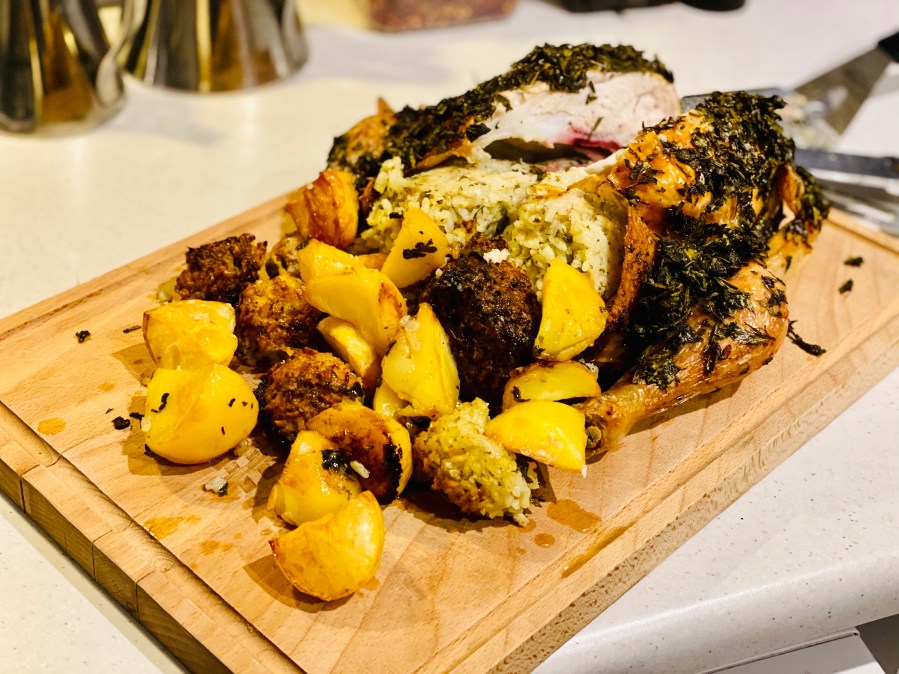
Nonna’s Rice-Stuffed Chicken

Serves: 4 – 6

This recipe by Mattel Tine of Bar Carolina in Melbourne, is a brilliant example of Sicilian home cooking.

One of the best chicken dishes ever. Blow-away good.

Cooked by Nat last Sunday night, this was just genius. I literally sat back and watched and wow, was I impressed.

With all of the fresh herbs and the lemon, it is such an aromatic dish. The risotto – especially the risotto dumplings – are amazing. And despite my misgivings about roast potatoes, they just work in this dish.

Line this up for Sunday night. Open a Pinot. Dim the lights, put on some music and enjoy the Covid lockup in style.

Ingredients

1.8kg chicken
100ml olive oil
1 cup each courses chopped flat-leaf parsley, rosemary and sage
Juice of two lemons
5 roasting potatoes, peeled and quartered

Rice Stuffing

60ml (1/4 cup) olive oil
1 onion, finely chopped
2 garlic cloves, finely chopped
300gm ( 1 1/2 cups) quality risotto rice
600ml chicken stock
80gm (1 cup) Parmigiano-Reggiano or Grana Padano, finely grated
50gm (1/2 cup) fine breadcrumbs
1 egg
Zest and juice of 1 lemon
1 tbsp each finely chopped oregano and flat-leaf parsley

Method

  1. For rice stuffing, heat oil in a casserole over low-medium heat. Add onion and garlic and stir until translucent and aromatic (4 – 6 minutes). Add rice and stir (1 minute, then add chicken stock and cook stirring continuously, until rice has absorbed the liquid and is al dente (6 – 8 minutes; you want the rice to be undercooked).
  2. Spread the rice over a tray to cool (15 minutes). Add remaining ingredients and mix well to combine.
  3. Preheat over to 200C. Stuff rice stuffing into chicken cavity to fill completely, then roll remaining stuffing into walnut-sized balls.
  4. Combine oil, herbs and lemon juice in a bowl. Season to taste. Place the chicken in the baking dish and then place the potatoes and dumplings around the chicken. Brush the chicken all over with the herb dressing. Pour 5mm of water into the pan and roast until the chicken is cooked through (1 1/2 hours). Set aside to rest (30 minutes) then carve and serve.

P.S. This post is dedicated to Alexa Donovan. I’ve known her since she was born, I’ve watched her grow up into a wonderful, thoughtful young woman, she has babysat my three kids plenty of times… and she can cook. (And cooks (or at least reads) this blog. I’ll see if she can do a guest post!)

Abbacchio Alla Romana (Roman Roast Lamb)

Serves: 4

A leg of lamb together with anchovies was a revelation to me quite some years ago when I cooked a Matt Evans dish where the lamb was liberally smothered in garlic and anchovies.

And so you have this recipe, where you really can make a ding on the otherwise great – though boring – leg of lamb.

I’d do it on the BBQ next time because chargrilled lamb is just so wonderful, though I wouldn’t change the paste. Or the anchovies.

Serve with some roast potato wedges and maybe some beans, tossed with butter, Parmesan and breadcrumbs.

Live the lamb life.

Ingredients

1 x 2.5kg lamb leg, bone in
¼ cup rosemary leaves

¼ cup sage leaves
8 garlic cloves, roughly chopped
4 anchovies in oil, drained
¼ cup red wine vinegar
2 tbsp extra virgin olive oil, plus extra to drizzle
1 cup dry white wine
Sea salt and freshly cracked pepper

Method

  1. Using a sharp knife, make deep cuts into the lamb leg, 3cm apart. Cut almost to the bone and set aside.
  2. Combine herbs, garlic and 1 tsp salt in a mortar and pestle and grind to a fine paste. Add the anchovies, grind into a paste and then stir in the vinegar and remaining oil.
  3. Place the lamb in a large bowl and rub the paste over the lamb, pushing as much into the incisions as possible. Cover and refrigerate overnight.
  4. Preheat the oven to 220c. Remove the lamb from the refrigerator 1 hour prior to cooking. Place the lamb in a deep roasting pan, pour in the wine, drizzle with extra oil and season with pepper.
  5. Roast for 20 minutes and then reduce the heat to 180c and cook for 1 hour for medium or until your liking.
  6. Set aside to reset, loosely covered in foil, for 20 minutes.
  7. Slice and enjoy!

Hasselback Potatoes with Sage

Hasselback Potatoes with Sage 

How good are Hasselback Potatoes?

The addition of sage makes them even better.

Ingredients

16 small/medium white potatoes
½ cup unsalted butter, melted, plus more for brushing
32 fresh sage leaves
Flakey sea salt

Method

  1. Preheat the oven to 200c.
  2. If you know your Hasselback, prepare as normal, brush with butter and slip 2 sage leaves into each potato. Season with salt.
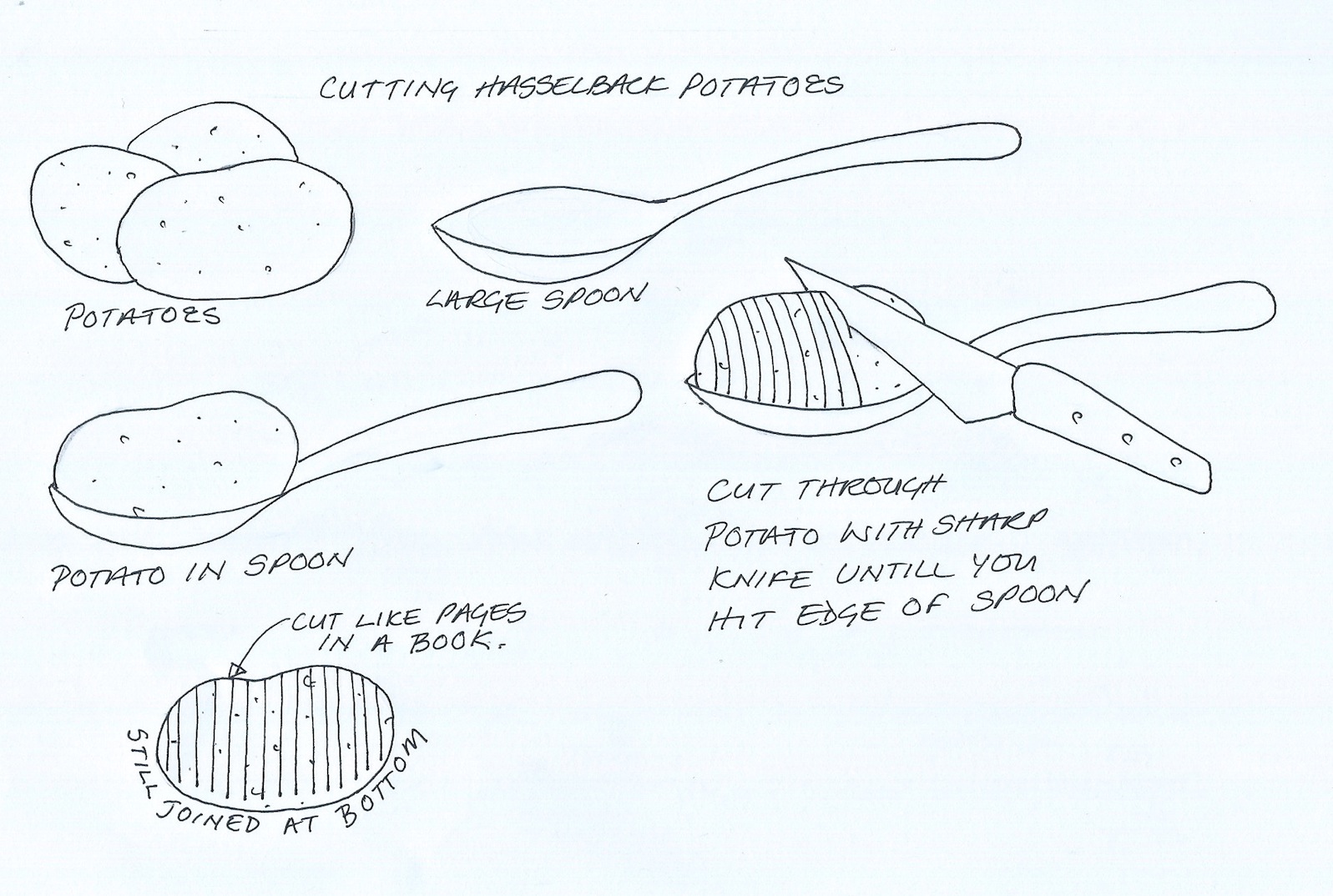
  3. If you don’t know your Hasselback, peel the potatoes. Place in a medium-depth cooking spoon and slice down thinly, ensuring you do not cut the entire way. You want to create a fan:

    CUtting-Hasselback-Potatoes.jpeg

    Brush with butter, slip in 2 sage leaves into 2 fans of potato and season with salt.

  4. Roast the potatoes, brushing occasionally with (more) butter until fork-tender, golden brown and tender. 30 minutes or so.

Credit for the fine illustration where illustration credit is due: http://glamorousglutton.com/hasselback-potatoes-stuffed-bacon/