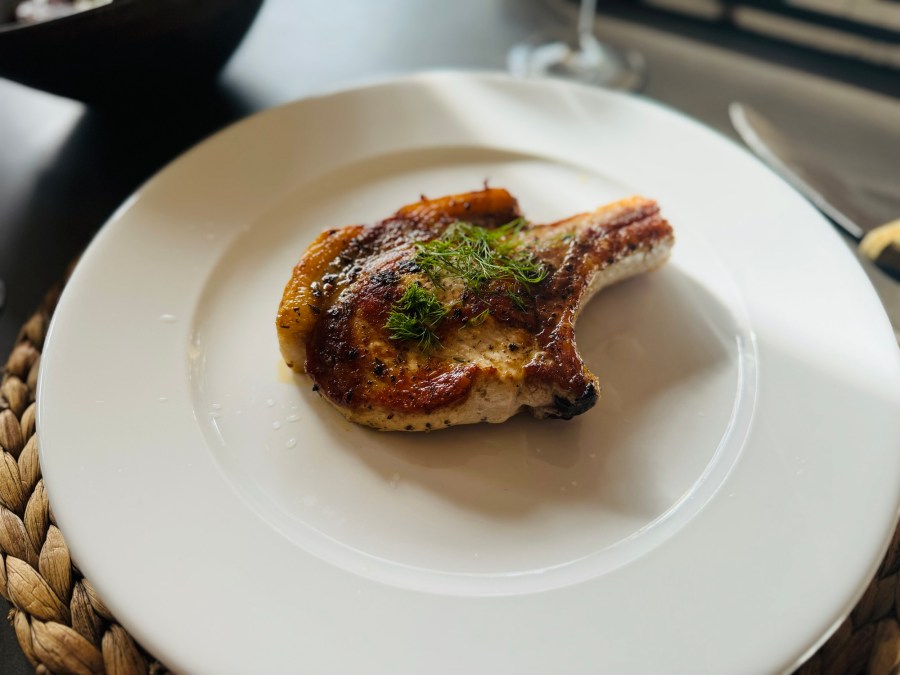
Melissa Clark’s Porchetta Pork Chops (New York Times)

Serves: 2

I absolutely love porchetta: stuffed, rolled and roasted pork belly.

What isn’t to love?

Unfortunately, Nat doesn’t share my love for pork belly and so when we cook really any form of pork belly, it’s a treat: probably how it should be anyway.

Anyway, it was my turn to cook a late, Italian lunch and I nominated that a pork chop be at the centre. And I managed to get my nomination over the line!

Then I found this recipe on the New York Times: thousands and thousands of five-star reviews, always a reliable omen.

An absolutely excellent cheat’s porchetta. 1-hat Italian sort of stuff.

The flavour of porchetta, essentially the ease of cooking a pork chop.
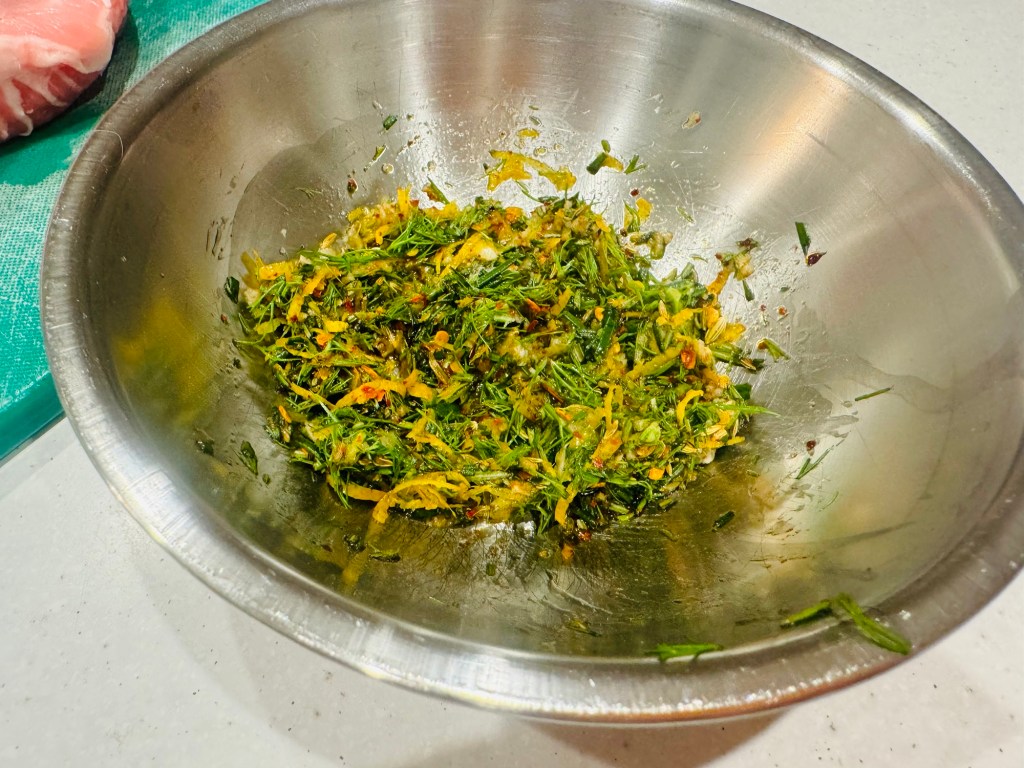
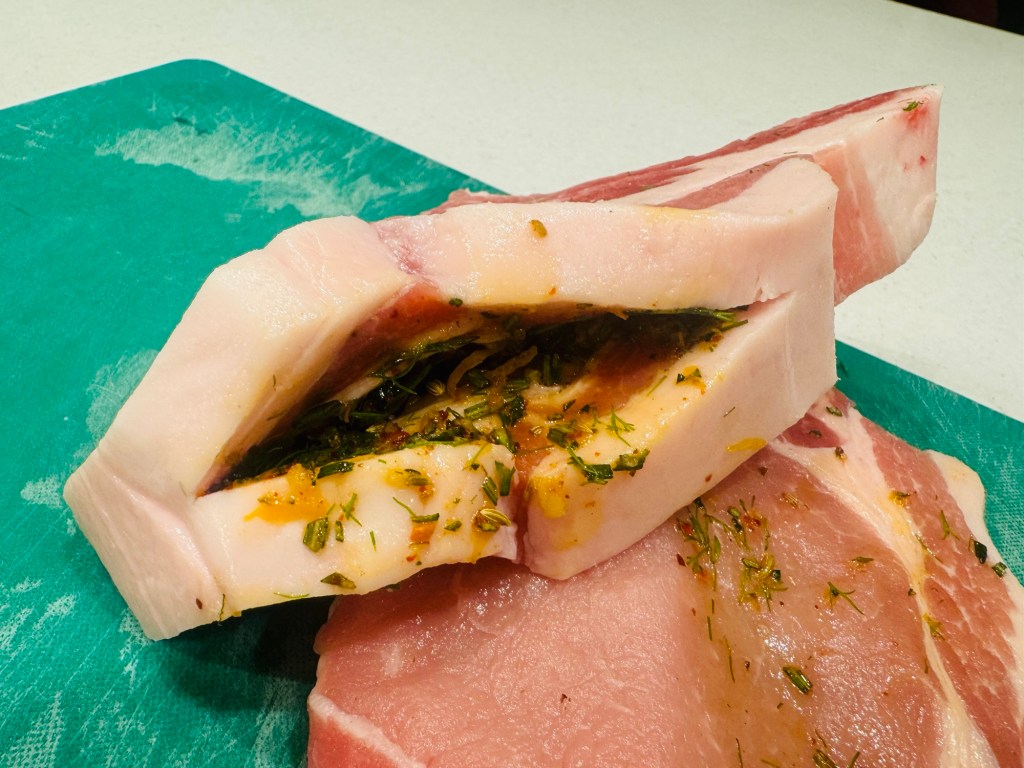
Such a classic porchetta filling.
Stuff and rub those pockets!
Ready to cook.
25 or so minutes later, you’re ready to plate.

An absolute treat. A must cook. Especially alongside these incredible brussels sprouts and this Lidia Bastianich onion and potato gratin.

Ingredients

2 bone-in pork chops, 3cm – 4cm thick
1 tsp sea salt, plus a pinch
1 lemon
2 garlic cloves, minced
2 tbsp chopped rosemary
Large pinch red pepper flakes
1/2 tsp fennel seeds, lightly crushed
2 tbsp chopped fennel fronds, more for garnish
2 tbsp olive oil

Method

  1. Heat the oven to 180c. Pat the pork chops dry and using a very sharp paring knife, cut a large pocket into the fat-covered edge of the pork chop. Season chops all over with 1 tsp salt including inside the pockets.
  2. Finely grate zest from the lemon and put in a small bowl. Cut lemon in half ready to juice over the cooked pork.
  3. Using a mortar and pestle or the flat side of a knife, mash the garlic with a pinch of salt until you get a paste. Add to the bowl with the lemon zest and stir in the rosemary, pepper flakes, fennel seeds, 2 tbsp fennel fronds and 1 tbsp olive oil.
  4. Divide the filling between the pork chops, filling the pockets and rubbing the rest on the outside.
  5. Heat a large ovenproof skillet over a high heat and add 1 tbsp olive oil. Sear pork chops on one side for 5 minutes, or until golden brown. Gently turn over the chops and cook for a further 1 minute, and then transfer the skillet to the oven. Cook until the meat is just done, 5 – 10 minutes. Remove from the oven, tent with foil and let rest for 10 minutes before serving. Garnish with fennel fronds and a good squeeze of lemon juice.

Jamie Oliver’s 12-hour (overnight) Roasted Pork Shoulder

Serves: 12

I don’t cook a lot of Jamie Oliver recipes.

His stuff is always great though a little mass-market for what we are often aiming for on a Saturday night. (Please, don’t get me wrong here: he is amazing! We just try to stretch a bit further when given the opportunity.)

Though lordy, when it comes to a roast – which I rarely do, grumbles Nat – Jamie Oliver and his Italian roasts are in an incredible league. This Arrosto Misto I typed up years ago is a testament to the point.

This particular roast was even more outstanding.

A labour of love – and time – it was the sort of 1-hat roast you would die for in a great Italian restaurant on a ‘Sunday roast’ afternoon. Add in the crackling and this is bravo level.

I embellished the gravy component over what Jamie called for.

I served up steamed green beans on the side.

An extra serving of those incredible potatoes and wow.

Play with the apple cider vinegar though get it right and this is just an epic meal. Sunday lunch or dinner, this is what I am talking about.

Ingredients*

* I halved the recipe successfully.

5kg shoulder of pork, bone-in, skin removed and reserved
Olive oil
4 onions
2 – 3 eating apples
3 sticks of celery
1 bulb of garlic
1 bunch fresh sage
4 fresh bay leaves
500ml bottle of cider
2 tbsp fennel seeds
2 whole cloves
2 dried chillies
Salt and freshly cracked pepper
Steamed green beans to serve

Fennel and Potato Gratin

1.5kg potatoes
5 bulbs of fennel
4 cloves of garlic
4 anchovy fillets
4 sprigs fresh rosemary
1 whole nutmeg, for grating
100gm Parmesan cheese
400ml double cream
200ml single cream
Salt and freshly cracked pepper

For the Gravy

1 c chicken stock
3 tbsp plain flour
1 tbsp apple cider vinegar
Salt and freshly cracked pepper
Reserved drippings from the cooked pork

Zingy Salsa

2 eating apples
1 tbsp cider
4 tbsp extra virgin olive oil
1/2 bunch mint
Salt and freshly cracked pepper

Method

  1. Preheat the oven to 250c. Toss the reserved pork skin in a little oil and sea salt, lay it flat on a tray and roast until golden and crisp. Set aside. Reduce the oven to 130c.
  2. Peel the onions and cut them into wedges with the apples. Trim and roughly chop the celery and slice the garlic bulb in half horizontally. Scatter it all in your largest roasting tray with the sage and bay leaves, pour in the cider and add a good splash of water.
  3. Bash the fennel seeds, cloves, dried chillies and 1 heaped tsp salt into fine dust in a mortar and pestle, then massage all over the pork with a drizzle of oil. Sit the pork in the tray, cover tightly with a double layer of foil, place in the oven and roast for 10 – 12 hours, or until the meat pulls easily away from the bone. Drain the drippings from the tray and set the pork aside, covered in a couple of clean tea towels to keep warm. Turn the oven up to 200c.
  4. Whilst the pork is cooking, peel the potatoes and cut lengthways into wedges along with the fennel. Parboil the potatoes for 7 minutes and the fennel for 6 minutes, then drain and leave to steam dry completely. Place in a large roasting tray. Peel the garlic and blitz until fine with the anchovies, rosemary leaves and a good splash of boiling water in a blender. Finely grate in half the nutmeg and most of the Parmesan and pour in the cream. Add a pinch of pepper and salt, blitz again and pour over the vegetables. Sprinkle over the remaining Parmesan and bake for 45 – 50 min, or until golden and bubbling.
  5. For the gravy, in a small saucepan, heat the chicken stock, apple cider vinegar and reserved drippings. Stir in the flour, combine and season.
  6. For the salsa, chop the apples into fine matchsticks and toss in a bowl with 1 tbsp apple cider vinegar and 4 tbsp of extra virgin olive oil. Finely slice the mint leaves and toss into the bowl with salt and pepper
  7. Serve the pork with the gravy and the salsa on top, potatoes and beans at the side. If you haven’t had a wine by this point, pour a double. You have earnt it!

Damien Pignolet’s Grilled Tuna with Pistou & Tomato Aioli, with Fennel and Kipfler Potato Salad

Serves: 6

This very much 80s, very much Southern French dish is still absolutely in vogue.

Mayonnaise (aioli) and fish has never, ever dated.

Especially in the warmer months.

The whole thing is just sublime. The olives and fennel with the potato.

The wonderful tomato aioli with the tuna and pistou.

You would knock people’s socks off with this dish and it isn’t that hard to prepare.

Indeed, other than the salad and cooking the fish, the rest could be done in advance.

This is lux, 80s, 1-hat eating.

Just add sunshine and a good, cold white.

I just love it when a dish like this works just so, so well.

Ingredients

6 x 200gm portions tuna fillet
Olive oil
Salt and freshly ground white pepper

Pistou

2 small cloves garlic, pelled
20 large basil leaves
3 – 4 tbsp extra virgin olive oil

Tomato aioli*

3 ripe tomatoes, quartered
A drizzle of olive oil
2 cloves garlic, unpeeled
2 egg yolks
100ml extra virgin olive oil
60 – 80ml grapeseed oil
A little lemon juice

Fennel and kipfler potato salad

8 – 10 medium kipfler potatoes
60ml extra virgin olive oil
1 medium-sized fennel bulb
A touch of aged balsamic vinegar
24 Ligurian olives (we used half this amount)

Method

  1. Make the pistou: finely chop the garlic, then work to a paste with a pinch of salt, using the flat of a knife. Transfer to a mortar and then add the basil and grind to a paste, adding a few drops of oil. When smooth, work in the remaining oil and season to taste.
  2. For the tomato aioli, preheat the oven to 250c. Toss the tomatoes with the olive oil and season with salt and pepper. Roast in a shallow dish until the tomatoes are scorched and very soft, then pass through a fine sieve and set the juice aside.
  3. Cover the garlic with cold water and bring to the boil. Drain and repeat, cooking this time until the cloves are tender when pierced with a small knife, then drain the garlic, remove the skin and crush with a small spoon in a small mixing bowl. Add the egg yolks and a pinch of salt and gradually add the oils in a thin stream, just a few drops to begin with, whisking constantly. The aioli should be very thick; if not, work in a little more oil.**
  4. Work in enough of the reserved tomato puree to flavour the aioli but retain the consistency of thick cream. Adjust the seasoning, adding lemon juice to taste.
  5. Next, make the salad. Peel the potatoes, cut intp 1cm thick slices then steam until tender, about 15 minutes. *** While the potatoes are still hot, dress them with the oil and vinegar, add the olives and season to taste.
  6. Trim the the base and top of the fennel. Shave the fennel bulb into 2mm-thick slices, preferably with a mandoline, then combine with the warm potatoes and olives. Mix well and do not worry if the potatoes break up – this is meant to be rustic food.
  7. Using a thin paring knife, cut a pocket in the side of each piece of tuna and work in the pistou.
  8. Heat a cast-iron grill or a large, heavy based frying pan until very hot but not smoking then lightly brush with olive oil. Brush one side of each tuna portion with oil and season this side only. Sear for about 2 minutes or until the edges of the fish just begin to change colour. Brush the raw side with oil, season, then flip over and cook for another minute or so. Transfer the tuna to warm plates, coat with the tomato aioli and garnish with the salad.

* A dish like this calls for a homemade mayonnaise/aioli, though I also very much get the merits of cheating. Simply follow the tomato step, do this cheat aioli and voila.

** Hats off if you whisk mayonnaise and aioli by hand, though seriously, consider a food processor as has been the norm since the 70s.

*** Microwave container. Splash of water. 8 minutes. Job done.

Josh Niland’s Gurnard Soup

Serves: 4 – 6

This is a remarkably good dish, though it is from Josh Niland and so no suprises there.

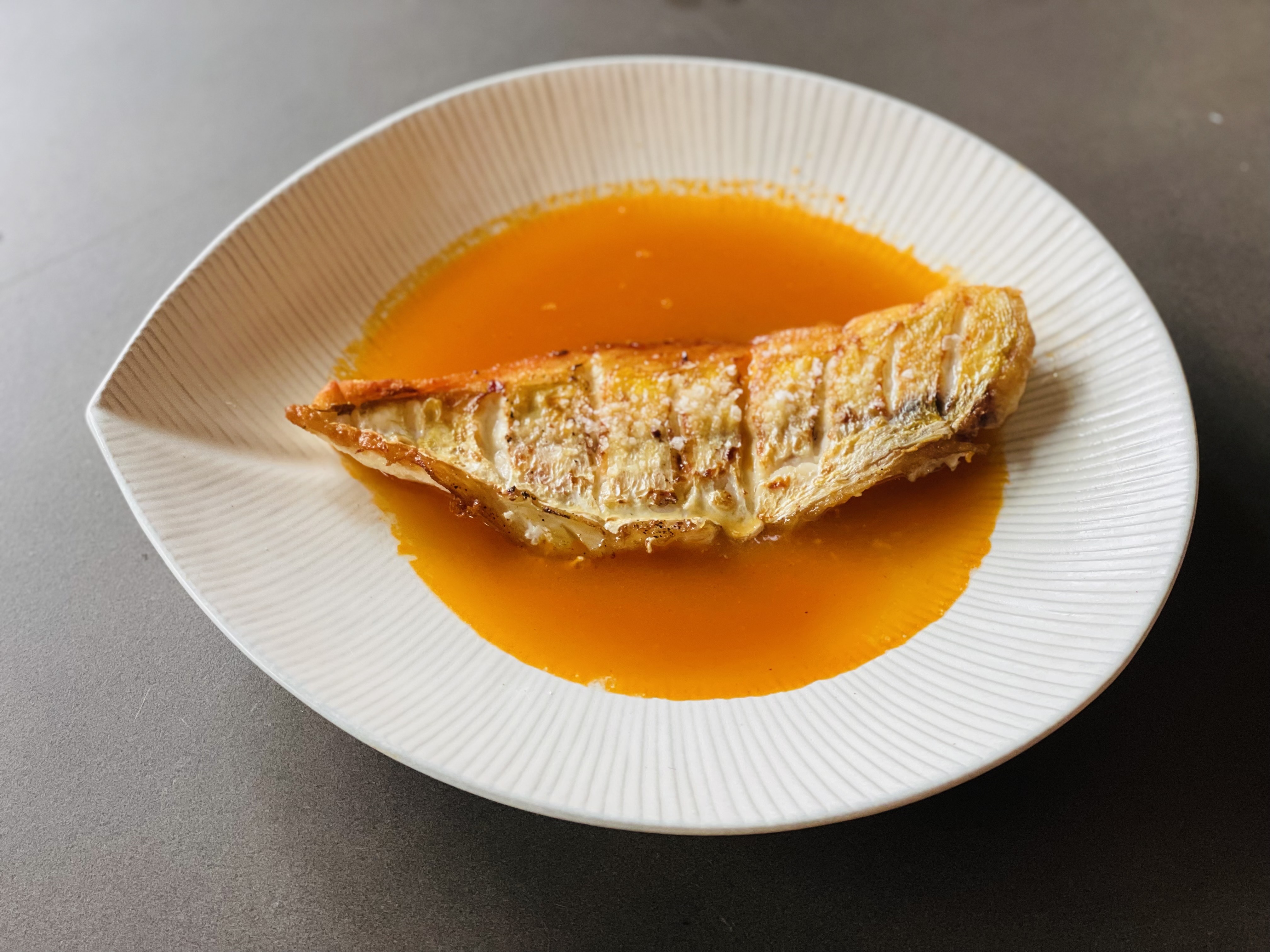
Check out that skin!
Beyond elegant. Clearly restaurant.

The bisque (soup) would be the best I have had, with the addition of lemon juice at the end dialing it up a further notch. The crispy skin fish combined with the bisque is just so, so good.

Worth absolutely every bit of effort.

Big grins.

We ended up using flathead instead of gurnard for both the fish and the bisque and Josh is fine with this.

The most interesting part of the process of this recipe, was really exploring how to achieve an optimal crispy skin, something we have never particularly focused on.

We still have a ways to go though after a few attempts, we are close. (N.B. that in the photos on this recipe, you will note that we have scored the skin, something we have heard a few people recommend, though we’ve arrived at don’t score the skin.)

Anyway, our best results:

  • Heavy, cast iron skillet over a medium-high heat.
  • Lot’s of quality ghee, with the addition of more ghee halfway through. (Josh says to discard the first quantity of ghee though to date we have not done this.)
  • Utilising a fish weight. (Thanks to our mate Josh D for ours.) You could also use a small pan.
  • Not flipping the fish and cooking skin-side down only.
  • After 1 minute, moving the fish with an offset palette knife (an absolute must instrument in your kitchen).

Ingredients

100gm ghee
4 x 80gm boneless red gurnard fillets, skin on (substiture leatherjacket, red mullet or flathead)
Sea salt flakes

Soup base

4 x 300gm whole red gurnard (or substitute), gills, cuts and gall bladders removed
120gm ghee
Large pinch of sea salt flakes
2 onions, finely sliced
8 garlic cloves, crushed
3 small fennel bulbs, finely sliced
2 tbsp tomato paste
3 tomatoes, coarsely chopped
1/4 bunch thyme sprigs
5 lemon thyme sprigs (optional)
2 tsp fennel seeds, lightly toasted
2 star anise
Generous pinchof saffron threads
200ml white wine
1 tbsp Pernod
freshly cracked black pepper
Lemon juice, to taste

Method

  1. To make the soup base, use a sharp cleaver to chop each gurnard into approximately eight small pieces, including the liver and roe.
  2. Heat 100gm of the ghee to a light haze in a large, wide, heavy-based saucepan over a high heat, add the chopped fish and salt flakes and cook for 10 minutes until coloured all over. Transfer to a bowl. Using a wide barbecue scraper, scrape off any caramelised fish from the base of the pan and add to the bowl.
  3. Heat the remaining ghee in the pan over a medium heat. Add the onion and cook for 10 minutes until softened, then increase the heat to high and cook the garlic and fennel for a further 5 minutes. Stir in the tomato paste and cook for 5 minutes, then return the cooked fish to the pan, align with all the remining ingredients except the salt, pepper and lemon juice.
  4. Pour in enough water to cover, then put the lid on and bring to the boil. As soon as it’s boiling, remove the lid and simmer over a medium heat for 20 minutes, or until thickened slightly and the taste is well rounded. Pass the stock through a mouli (or pulse in a food processer), then strain through a fine-mesh sieve, disgarding the pulp. Return to the pan, season well with salt, pepper and lemon juice and keep warm.
  5. To cook the gurnard fillets, heat 75gm of the ghee in a large cast-iron frying pan over a medium-high heat to a light haze. Place the fillets in the centre of the pan, skin side down and making sure they are not touching each other, and put a fish weight or small saucepan on their thickest side. Keeping the pan temperatures quite high, cook for about 1 minute, or until you start to see the colour around the edges of the fillets. Use an offset palette knife to lift the fillets, then reposition them to take on new colour. Now place the fish weights in the centre of the pan, covering the majority of the fillets. This will aid in setting the fillets gently from the rising heat. Cook for another 2 minutes and then remove the weights. Discard the ghee and replenish with 45gm more fresh ghee. (This is just to help temper the pan as at this stage it is important to keep the pan heat high but not so high that the skin burns, leaving the flesh on top raw.) If the flesh still seems cool to the touch at this point, position the weight on top for another 1 – 2 minutes, depending on the thickness of the fillets.
  6. If you find the fillets exceed your pan size, either use two frying pans or cook them in batches, and double the quantity of ghee.
  7. Once the fish is 75 per cent on the way set, the top of each fillet is warm and the skin is crisp from edge to edge, transfer them directly into warm soup bowls, skin side up and season the skin with salt flakes. Pour a generous amount of soup around the gurnard until the sides of the fish are completely submerged though the skin remains dry (and therefore crisp). Serve immediately.

Giana De Laurentiis’ Caremalised Pancetta and Fennel Salad

Serves: 4

In the family, I known for my green salads.

I’m known for plenty of other things too 🥴, though pulling together vinaigrette and a bowl of greens and leaves, is definitely my thing; with pasta, with grilled meat, by-itself.

Shaved parmesan, toasted, sliced almonds, French shallots, plenty of avacado… or just leaves.

Yum.

Which is why when I find a new salad that hits it out of the park, it makes me so excited.

We did a lockdown date-night last night and I did a Giana De Laurentiis lemon spaghetti and this salad.

The pasta was good.

This salad was brilliant.

Cook the pancetta until it crumbles. And don’t hold back on the salad greens.

Because trust me, none will be left.

Ingredients

1 fennel bulb, halved and cut into 1cm wedges
6 slices pancetta
2 cloves garlic, minced
2 tbsp brown sugar
1 tbsp extra virgin olive oil
1/4 tsp salt
1/8 tsp fresh ground blac pepper
6 – 7 c mixed salad greens
Red wine vinaigrette
Bottle of cold, crisp white ready for big pours

Red Wine Vinaigrette

2 tbsp red wine vinegar
1 tbsp lemon juice
1/2 tsp honey
1/2 tsp salt
1/8 tsp fresh ground black pepper
1/4 c extra-virgin olive oil

Method

  1. Preheat the oven to 200c and line a baking sheet with baking paper.
  2. In a medium bowl, toss together fennel, pancetta, garlic, brown sugar, olive oil, salt and pepper. Place the ingredients on the baking sheet in a single layer. Cook until the pancetta is crisp and fennel is caramelised: about 20 – 30 minutes. Remove from the oven and let cool.
  3. For the Red Wine Vinaigrette: mix the vinegar, lemon juice, honey, salt and pepper in a blender. With the machine running, gradually blend in the oil. Adjust the seasoning as necessary.
  4. In a large bowl, place the salad greens, crumbled pancetta and caremlised fennel. Toss with the Red Wine Vinaigrette.

The Bourke Street Bakery Pork and Fennel Sausage Roll – An adaptation

Makes: 24 half sausage rolls

For a family picnic today, I was assigned sausage rolls.

I know it’s easy to love sausage rolls, though is it in reality?

It’s so hit and miss.

The ones from petrol stations are terrible.

And patisseries can sometimes nail their brief, though so often they’re over the top. Too clever by half, too complicated, too much to process.

Sausage rolls are about comfort and flaky, oily pastry. Not something excessively gourmet and challenging: I have a hangover, I just want a coffee and sausage roll amazing-ness.

Bourke Street Bakery – a bit of a Sydney institution – is famous for its pies and sausage rolls. Their pork and fennel sausage roll is pretty amazing.

Though it is on the gourmet end of sausage rolls. The beef bourguignon end of pies if you know what I mean.

Which is why this adaptation of their sausage roll is genius!

It just rolls. It nails true brief.

It is what every patisserie should have on offer from 8am on Sunday morning.

I’d order 6. And several coffees.

I really wanted to cook something special when given the sausage roll brief for today’s picnic.

Why?

My sister in law Court (Coco, CD) and her husband Greg (Gweggy) pulled the broader family together for a post-Christmas BBQ; and a casual gender reveal.

Yep, they’re having baby #1.

And it’s a girl!

Nat and I love these guys.

They make us so happy. Long lunches, late autumn nights by the fire, plenty of wines, too much laughing. (Dancing with Court last year at my 40th, I was pushed fell down and limped for a week: didn’t even blame her!)

We are so proud of you guys. We are so happy for you. You have babysitters for life.

As I’ve previously said, these guys love their food though assume that during the first few weeks of babydom these sausage rolls will make an appearance at their doorstep. Plus curries, pastas and even a pork shoulder.

Go nail this Team K!

We love you.

Ingredients

1tsp fennel seeds, plus extra to sprinkle
1 tbsp vegetable oil
3 medium brown onions, peeled and diced
4 cloves garlic, peeled and finely chopped
8 sprigs sage, picked and finely chopped
3 sprigs rosemary, leaves picked and finely chopped
5 sprigs thyme, leaves picked and finely chopped
20gm unsalted butter
2 tbsp caster sugar
2 tbsp white wine vinegar
2 Granny Smith apples, peeled and diced into 1/2 cm
1.5kg pork mince
100gm breadcrumbs
1 egg, beaten
Puff pastry
Sea salt and freshly ground pepper

Method

  1. Toast the fennel seeds in a large frying pan over a low heat for 2 minutes until fragrant. Crush lightly in a mortar and pestle and set aside.
  1. Using the same pan, heat the vegetable oil over a low heat. Sweat the onion and garlic until lightly caramelised. Take as long as you can. This is where the flavour is! Add the toasted fennel seeds, sage, rosemary and thyme and set aside to cool.
  2. In a separate pan, melt the butter over a medium-high heat: add the apples and toss gently in the butter for a few minutes until softening. Add the sugar and cook, stirring constantly, until the sugar is lightly caramelised. Add the vinegar to deglaze the pan and set aside.
  3. Combine the mince, breadcrumbs, apples and onion mixture. Season well and mix through with your hands until well combined.
  4. Thaw your puff pastry from the freezer. You’ll need around 7 – 8 sheets based on the quantity of pork mixture. Divide the pork mixture evening and roll your sausage rolls, with the mixture being a cylinder about 1/3 of the way down each sheet. Ensure that the seam sits under the meat.
  5. Make a few fork punctures at the top of each sausage roll. Cut the the sausage roll in half or quarters depending on what you are catering.
  6. Beat your egg and egg wash all over the pastry. Sprinkle with fennel seeds.
  7. Bake on baking trays lined with baking paper at 180c for 30 – 40 minutes or until golden brown.

Casarecce with Pork Sausage, Cavolo Nero and Chilli

Serves: 4 – 6

It has been a busy couple of months for us.

Moving house, overseas, work, kids, weddings, kids and more kids.

We’ve also been super calorie focused, with no meal exceeding 300 calories. No kidding!

But now we’re done.

And with a new courtyard, a new kitchen and Spring finally feeling like Spring, we’re back into cooking wonderful weekend lunches.

Like this one, which is as good as you would get in a restaurant.

It is surprisingly light, with the garlic, chilli and fennel creating a really sophisticated base. The casarecce is a great pasta (found at Harris Farm) and the cavolo nero (kale) fills the whole thing out in a really clever way.

This is definitely a pasta you should try and one that we would cook again.

9 out of 10.

Ingredients

2 tbsp olive oil
6 thick pork and fennel sausages, skins removed, broken into bite-sized pieces
6 garlic cloves, finely chopped
1 tbsp finely chopped rosemary
1 1/2 tsp fennel seeds
1 1/2 tsp dried chilli flakes
1/2 cup dry white wine
1/2 cup chicken stock
4 cups (firmly packed) roughly torn cavolo nero (1 bunch)
500gm dried casarecce (or penne or rigatoni)
50gm finely grated Parmesan plus extra to serve
1/4 cup coarsely chopped flat leaf parsley

Method

  1. Heat olive oil in a large casserole over a high heat, add the sausage and cook, stirring occasionally until well browned. Remove from the pan with a slotted spoon and set aside.
  2. Add the garlic, rosemary and spices to the pan, season to taste and stir for a minute or two until fragrant. Deglaze with the wine and reduce until almost evaporated, then return the sausage to the pan together with the stock and cavolo nero. Cover with a lid and cook until the the cavolo nero is just wilted.
  3. Meanwhile, cook the pasta until al dente. Toss with with the sausage sauce, Parmesan and parsley, season to taste and serve, topped with extra Parmesan.
  4. And wine.

Rigatoni with Chicken Ragù and Green Sauce

Serves: 4 – 6

I really didn’t see this one coming, though what a great – and unique – pasta.

This recipe from Gourmet Traveller is excellent and something you’d find in a good Italian restaurant. It has a quality, a richness and yet a dryness: it is hard to put your finger on why it is just so moorish: could be the butter, could be the contrast with the green sauce, could be that you’re eating pasta, something we don’t do as often as we would like.

We are always on the lookout for unusual, restaurant-quality pastas and this one definitely ticks that box.

As Nat put it, served alongside a red pasta, this would make for a really fun lunch.

So much so that Tom (7) asked us to make sure we typed this recipe up so he could have it handy for when he was cooking for his girlfriend in due course.

You should try.

(We upped the mince to 1kg and we’d do it again. And very minor changes to the original recipe which we have reflected below.)

Ingredients

2 tbsp olive oil
1 onion, finely chopped
1 baby fennel bulb, finely chopped
3 garlic cloves, finely chopped
600gm coarsely minced chicken
2 tbsp coarsely chopped rosemary
1/2 tsp ground nutmeg
250ml dry white wine
300ml hot chicken stock
20gm butter, diced
20gm Parmesan
400gm dried rigatoni
200gm kale leaves, roughly chopped

Green sauce

1 garlic clove crushed
1 tbsp coarsely chopped parsley
1/2 cup flat-leaf parsley, coarsely chopped
1/2 cup basil, coarsely chopped
Finely grated rind and juice of 1 lemon
2 tbsp olive oil

Method

  1. Heat the oil over a medium heat in a large saucepan and add the onion, garlic and fennel and sauté until starting to soften: 2 – 3 minutes. Add the chicken mince – increasing the temperature to high – and fry until starting to colour: 5 – 7 minutes.
  2. Stir in the rosemary, nutmeg and the wine and bring to a simmer; add the stock, reducing the heat to medium and simmer until slightly reduced: 5 – 7 minutes. You only want a little liquid remaining.
  3. Stir in the butter and Parmesan and season to taste.
  4. For the green sauce, combine all the ingredients in a bowl and season to taste.
  5. Cook the pasta in boiling water until al dente; a minute before finishing, add the kale to the pasta and wilt.
  6. Drain and combine the pasta and kale with the sauce.
  7. Serve, topped with the Green sauce and extra Parmesan.

Rosenstrach’s Pork Shoulder Ragu

Serves: 6

Bit of a no brainer this one.

Some weekends call for a ragu. A slow roasted pork shoulder ragu.

Where of course, the longer you cook it, the better it is.

And there you have the Rosenstrach’s pork shoulder ragu: one I found online and one that nailed the note the moment we served it.

It is simply an excellent, down-the-line, rich, warm, wholesome, screw-you ragu. With a glass of red and a green salad at the side… this is as good as things get.

Cook it the night before and serve at a dinner party the next day.

Cook it the night before and serve it on the couch on Sunday.

Cook it whenever you want and eat it whenever you want.

However you do it, this is a winter win.

Ingredients

1 ½kg boneless pork shoulder
1 small onion, chopped
1 garlic clove, minced
Salt and freshly cracked pepper
2 tbsp olive oil
80gm butter
2 cans tomatoes (800gm)
1 cup red wine
5 sprigs fresh oregano
Small handful of fennel seeds
1 tbsp hot sauce
Pappardelle
Freshly grated parmesan cheese
Roughly chopped flat leaf parsley

Method

  1. Heat the oven to 180c. Liberally season the pork with salt and pepper.
  2. Add the olive oil and butter to a large, heavy saucepan over  medium heat until the butter melts. Add the pork and brown on all sides: around 10 minutes.
  3. Add the onion and garlic and saute for 1 minute. Add the tomatoes, wine, thyme, oregano, fennel and hot sauce and bring to the boil. Cover and put in the oven.
  4. Braise for 4 hours, turning every hour or so and adding more liquid (water and wine) as is needed. When the meat is literally falling apart, remove, break apart and return to the pan. Cook until thickened and back the seasoning.
  5. Serve on the pappardelle with plenty of parmesan and parsley on top. And plenty of red wine at the side.

Porteno’s (Christmas) Porchetta

Serves: 8

This is a wonderful Argentinian recipe from Porteno, an equally as wonderful Sydney restaurant.

I’m not sure how you could go wrong with this one: pork belly, chilli, herbs and plenty of cooking time. Go further and over a high heat on your grill, crispen the skin even further for 15 minutes once you’re done with the oven.

Even better than the night before, the pork is incredible on a roll the next day with a bit more of the chimichurri, butter and some of the crackling.

It doesn’t have to be Christmas to enjoy this one though at the very least, you would be mad not to do this at Christmas during that crazy time between Christmas Day and New Years.

This is what it is all about.

Ingredients

3 – 4kg pork belly, deboned, skin on
1 tbsp fennel seeds
1 tbsp fine salt
1 tsp chilli flakes
1 tsp black peppercorns
4 cloves garlic, roughly chopped
2 tbsp fresh rosemary leaves, roughly chopped
Extra fine salt

Chimichurri
1 cup flat-leaf parsley (firmly packed)
½ cup olive oil
½ cup red wine vinegar
¼ cup coriander (loosely packed)
3 garlic cloves, finely chopped
1 tsp dried chilli flakes

Method

  1. For the pork: Start preparing the pork belly the day before cooking. Using a mortar and pestle, pound the fennel seeds, salt, chilli flakes, peppercorns, garlic and rosemary together to make a paste. Rub the paste on the inside of the pork belly.
  2. Roll the pork belly lengthways and using butcher’s twine, tie the meat at 2 ½cm intervals to hold it together. Wrap tightly in cling wrap and leave in the fridge overnight.
  3. Remove the porchetta from the fridge and uncover. Season with fine salt all over the skin. Leave for 1 to 2 hours to draw out the moisture. Wipe with a clean, damp cloth to remove the salt.
  4. Heat the oven to 150c. Place the porchetta on a rack inside a baking tray. Put in the oven and cook for 2 ½ to 3 hours. Increase the heat to 200c for 15 minutes to crackle the skin.
  5. For the chimichurri: Pulse the ingredients in a food processor until you have a paste.
  6. Serve the pork with the chimichurri.