Gordon Ramsay’s Pan-fried Sea Trout, Peas & Chorizo Fricassée

Serves: 2

This is simply a great, 1-hat bistro lunch.

Nat took a day of work – as we all really need to do during this endless Sydney lockdown – and presented this with a glass of Krinklewood Verdelho (if in the Hunter Valley, visit their vineyard: it is wonderful as are the wines) and as we sat in the sun, we agreed that it was moments like these that made the long weeks and routine bearable.

The fricassée gives the dish a rustic, moorish backbone – chorizo, potato, paprika and peas – and the warm caper dressing just finishes it.

We have never cooked a disappointing Gordon Ramsay recipe and this lunch just continued that tradition.

This dish would be perfect for any Saturday lunch though my pro tip: have it on Monday and beat the lockdown!

And vino of course!

Ingredients

2 fillets of sea/ocean trout (or use salmon)
2 tbsp butter
Sea salt and freshly ground black pepper
1 lemon, halved

For the fricassée

100gm cured chorizo (1 small chorizo), diced
350gm waxy potatoes (we used kipflers)
Large pinch sweet smoked paprika
125ml fresh chicken stock
150gm cooked peas

For the warm caper dressing

3 tbsp olive oil
2 tbsp small capers, drained
1 red onion, finely chopped
1 tbsp red wine vinegar
Small bunch tarragon, chopped

Method

  1. For the dressing: Heat 1 tbsp of the oil in a small saucepan. Add the capers as well as the onion and cook for 3 minutes until softened. Add red wine vinegar and cook down until evaporated. Add in the rest of the oil plus the tarragon and leave to infuse.
  2. For the fricassee: heat the oil in a saute pan, add the chorizo and fry for two minutes until crisp and the red oil has rendered out. Add the potatoes and paprika and cook for 5 minute until the chorizo is starting to get browned edges.
  3. Add the chicken stock, bring to a boil; and then simmer for 10 minutes or until the stock has evaporated and the potatoes are tender. Stir in the peas and cook for another two minutes. Set aside and keep warm.
  4. For the fish: Score the skin of the trout and season generously.
  5. Heat the butter inside a non-stick frying pan. When it begins to sizzle. cook the fish skin-side down. Gently fry for 8 minutes until the skin is crisp and golden and the fish on its way to being cooked.
  6. Turn the fish and squeeze over the juice of half a lemon, basting the fish with all the lemony pan juice for a 1 minute whilst it cooks. Set aside in the pan.
  7. To plate: Spoon a pile of the fricassee into the centre of each plate. Gentley sit the fish on-top, skin side up (if using). Spoon the caper dressing around the outside and serve.

Justin North’s Blue Eye and King Prawn Bourride

Serves: 4

I first tried Justin North’s food at Becasse, a totally insane 25-seat restaurant in the top floor of the new Westfield Sydney.

I recall the first dish I ever tried being something like a parakeet egg with volcanic ash and citric something and from there, the crazy show rolled on. A waiter tapped a triangle as the first dish was presented. (I’m not kidding or more the clearer about what it all meant.)

I only ever ate at Becasse – maybe three times – with a great client and friend Paul and it was the food and theatre plus the sheer over-the-top plating that amused and impressed us so much.

Wine plus this theatre went to much laughter.

North’s food empire – which employed 180 people at its peak – collapsed as sadly they all do, though bloody credit. This man can cook.

Think genius.

My mother shared this recipe with me and it is unquestionably 2-hat.

It is breakthrough stuff like where you’re at a running race with your kids and that freak headed for the Olympics is also in the race. Love ya son, though who the hell is that kid that just clocked in 11 seconds flat?

That’s this dish, out of the blocks – wow.

We had the bourride with a wonderful green salad and thus far in this never ending Sydney lockdown, the bourride wins gold. (And don’t think we’re not trying to give the cooking a nudge!)

Just, bloody wow.

Ingredients

Herb dressing

1/2 cup basil leaves
1/2 cup coriander leaves
1/2 cup chervil (or parsley if you absolutely must)
2 – 3 tbsp olive oil
Pinch of sea salt flakes

For the bourride

2 tbsp olive oil
1/2 tsp fennel seeds
1/2 tsp coriander seeds
2 cloves garlic sliced
1 c sliced brown onion
1/2 c sliced fennel
Pinch of sea salt flakes
Pinch of saffron threads
1 c chopped ripe juicy tomatoes
1 strip orange peel
1/2 large chilli
1 c white wine
2 c fish stock
4 x 80gm blue eye fillets (skinned, pinned etc)
12 large king prawns (heads and tails removed)

To finish

1 cup mixed baby herbs such as coriander and basil

Method

  1. Preheat the oven to 180c. Heat the olive oil in a oven proof casserole dish. Add the seeds, garlic, onion, fennel, salt, saffron and cook gently over a medium heat for 8 – 10 minutes until the vegetables are soft, juicy and aromatic.
  2. Add the tomatoes, orange peel, chilli and white wine and continue to cook for a few minutes until pulpy, then add the fish stock, bring to the boil and add the fish fillets and prawns, season with a pinch of salt flakes, cover with a lid and place in the oven for 5 minutes to cook the fish and prawns.
  3. Remove from the over, take the seafood out of the pan and blitz the pulpy sauce for a few seconds to a rustic chunky saucy consistency.
  4. To finish: Spoon the bourride sauce into warm serving bowls, top with the seafood, drizzle over the herb dressing and decorate with the baby herbs and serve.

Sean Connolly’s Crab Linguini

Serves: 4

Nat and I have a great tradition on those public holidays where the gathering of family isn’t a prerequisite: Labour Day, Queens Birthday, Boxing Day etc.

We lock in a babysitter for the kids and we have lunch at The Morrison, a Sydney-city institution by Sean Connolly.

Clean, crisp seafood. Great wine list. Great buzz looking out onto the street at all the trams going backwards and forwards.

The oysters are a must. The prawn cocktail is a must.

Though the biggest must is the Crab Linguini.

We order it every time and I know of at least one other mate that does the same.

And here is the receipe.

Simple as one would expect from a chef that heros simplicity.

To really go the extra mile, Nat made fresh linguini and my word, what an awesome dinner we had:

If you really want to bowl your guests over, this is how you do it!

Paired with Rodney Dunn’s Leaf Salad with an Anchovy Cream and a great bottle of Chardonnay, nobody ate better in our part of that night.

(And when this Sydney lockdown ends, book a table at the Morrison. It really is a fun afternoon.)

Ingredients

500gm thickened cream
300gm fresh crab meat
50gm unsalted butter
Sea salt and freshly ground black pepper
Juice of 1 lemon
1 tbsp canola oil
1 red chilli, finely chopped
Handful mint leaves, torn
Handful of Italian parsley leaves, chopped

Method

  1. Heat the cream in a large pan, bring to a simmer and reduced until thickened.
  2. Remove from the head, add the butter and a pinmch of salt, combining vigorously.
  3. Once combined, return to the heat and add the lemon juice. Bring to a gentle simmer and reduce for a further 2 minutes.
  4. Cook the linguini al dente and set aside.
  5. In a heavy saucepan, heat the oil and once hot, warm through the crab and chilli. Add the mint and then the cream sauce. Season, stir through the parsley and serve.

Prawn & Cannellini Bean Salad

Serves: 4

This is just a great salad.

Like surprisingly great.

Saturday lunch is served!

Ingredients

500gm green prawns peeled
400gm canned cannellini beans, rinsed and drained well
2 inner celery stalks, sliced, leaves torn
20 pitted Ligurian olives
8 basil leaves, torn
Crusty bread, to serve

Red Wine Dressing

100ml extra virgin olive oil
1 tbsp red wine vinegar
2 tbsp oregano leaves, roughly chopped
Salt flakes and freshly ground black pepper

Ingredients

  1. Make Red Wine Dressing: combine oil, vinegar, oregano, salt and pepper in a screw top jar and shake well to emulsify. Pout into a bowl.
  2. Bring a large saucepan of water to the boil with 2 tbsp of salt per litre of water.
  3. Add the prawns to the boiling water and cook for a minute or two. Allow to cool somewhat and then cut into chunks and add to the Red Wine Dressing.
  4. Add beans, celery, celery leaves, olives and basil and toss until well combined.
  5. Serve at room temperature with crusty bread.

Crab and Preserved Lemon Risotto

Serves: 6 as an entree

Just before Sydney’s lockdown, Nat and I did one of the Sydney Seafood School classes: a well received Mother’s Day present.

At their best, these classes are a lot of fun. An hour in the auditorium watching the chef cook and then two hours cooking at a workstation with another couple, knocking over the various dishes.

Then it’s lunch with a glass of wine. (You can even order an additional bottle of wine which of course, I commend firmly.)

The Italian Seafood class we attended did not push us particularly in terms of technique or complexity, though Nat cooked one of her first risottos (I am the resident risotto cooker) and I cleaned a squid for only the second time. And hey, we had fun!

And of course, I only type up recipes that are great and genuinely, this risotto is great.

I overheard someone saying that the preserved lemon was a little overpowering and lemon zest would be better.

Wrong.

It works and if you love crab and/or preserved lemon, this risotto is definitely for you.

Ingredients

300gm raw crabmeat*
1.25 litres quality chicken stock
1/4 c extra virgin olive oil
1 small brown onion, chopped
Salt flakes and freshly ground white pepper
250gm risotto (do not rinse)
1/2 cup dry white wine
1 preserved lemon, rinsed and dried, skin only finely diced
50gm salted butter
3 tbsp freshly grated Parmesan
2 tbsp snipped chives

Method

  1. Heat stock in a saucepan until simmering, then maintain at that temperature.
  2. Heat oil in a large pan over medium heat, add onion and a good pinch of salt and fry until soft but not coloured.
  3. Add the rice and stir over a high heat until grains are well coated in oil and warmed through.
  4. Add white wine and stir until most of the liquid has been absorbed.
  5. Reduce the heat to medium, add stock, a ladleful at a time, stirring constantly and allowing each ladleful to be absorbed before adding the next.
  6. Continue until rice is tender, with a slight bite, and has a creamy consistency (about 18 minutes): you may not need all of the stock.
  7. Add a final ladle or 2 of stock, preserved lemon, crabmeat, butter, Parmesan, salt and pepper and beat vigorously with a wooden spoon until all the butter is incorporated and the grab has broken into thin wisps. The finished risotto should be quite soupy. (The Italians call it all’onde which translates to wave-like.)
  8. Taste, season, stir through chives and serve immediately on a flat plate, tapping the bottom of the plate to spread the risotto out.

* Look, maybe it needs to be said, maybe not. We need to be buying only local, sustainable seafood. Australian for me. The time is up on imported seafood, please.

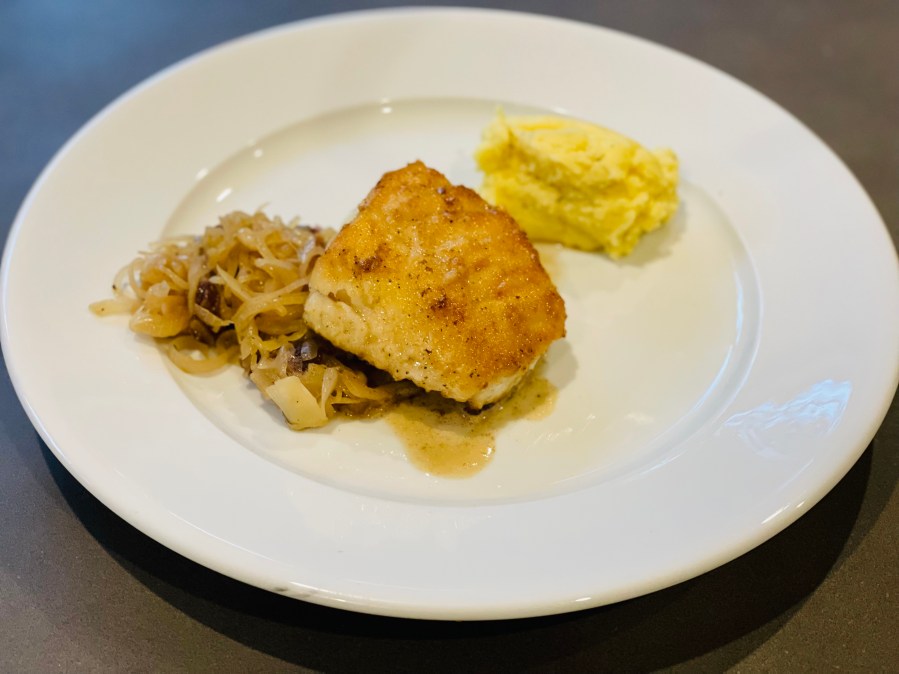
Gary Rhodes’ Fillet of John Dory and Raisin and Thyme Onions and Bigarade Mashed Potatoes

Serves: 4

This is French bistro at its best.

Such a wholesome, satisfying dish: you’ll be grinning at the end of the meal.

With a good bottle of white as we did, hard to fault this.

The potatoes are called bigarade which in French refers to a bitter orange known as the Seville orange. I susbstituted and it worked well: the absolutely subtle citrus flavour adds just another twist and it pairs perfectly.

Bon appetit!

Ingredients

3 onions, sliced
3 shallots, sliced
50gm raisins
3 tbsp sherry vinegar
1 tbsp brown sugar
3 tbs olive oil
1 scant tsp thyme leaves
Sea salt and freshly ground black pepper
Flour, for dusting
4 x John Dory fillets, each approximately 175gm and skinned
2 tbsp canola oil
Large knob of butter

For the potatoes

675gm flourly potatoes, peeled and quartered
50gm butter
Sea salt
Freshly ground white pepper
150ml crème fraîche
Finely grated zest and juice of 2 (Seville) oranges
1 tsp caster sugar

Method

  1. Boil the potatoes in salted water, approximately 20 – 25 minutes, before draining off the water. The potatoes can now be mashed, adding the butter a little at a time, along with the crème fraîche. Season with the salt and white pepper. (Can I make the quick point that if you are not mashing your potatoes with a ricer, you are strongly encouraged to do so. Perfect mash every time!)
  2. Boil together the orange zest and juice, allowing it to reduce by at least three quarters. Add the caster sugar, stirring the juice into the potatoes which can be rewarmed just before serving.
  3. While the potatoes are cooking, prepare the onions and shallots. Blanch the onion and shallot slices in boiling water for just 15 minutes, then drain in a colander. This softens both, allowing them to be stewed with the olive oil and thyme, rather than fried.
  4. Place the raisins, sherry vinegar and brown sugar in a small saucepan and bring to a simmer then remove from the heat, cover and leave to one side. This opens up the raisins, releasing their quite strong flavour.
  5. Pour the olive oil into a saucepan and add the blanched onions, shallots and thyme leaves. Cook over a low heat for at least 15 – 20 minutes, until completely softened. Add the sherry vinegar and raisins and season. Continue to cook for a further 5 – 10 minutes, until all the flavours have combined.
  6. Lightly flour the fish and season each with a pinch of salt. Heat the oil in a large frying pan. Once hot, place the fish in the pans. Season the fish again. Fry for 3 minutes, until golden brown. Add the knob of butter and continue to fry for a further minute, then turn the fish over. Cook for just 1 more minute and then off the heat. The residual heat of the pan will continue to fry the fish for at least 2 – 3 minutes, providing enough time to plate the garnishes.
  7. Present the raising onions and bigarade mashed potatoes side by side on the plates, then place the John Dory fillets on top of the onions. Any remaining butter in the pan is then spooned over the fish.

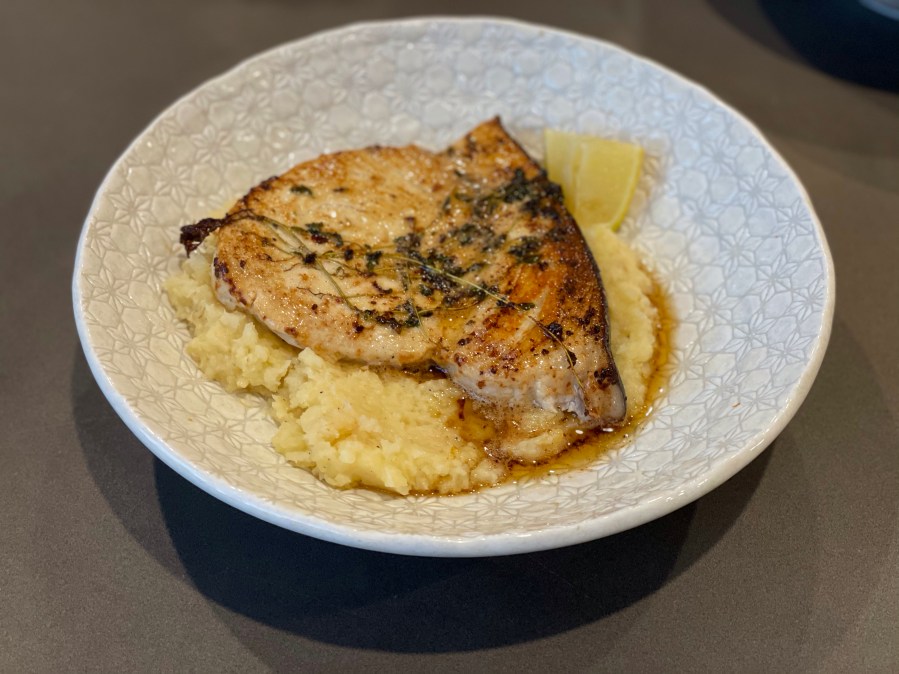
Pan-fried swordfish with celeriac purée by Neil Perry

Serves: 4

We did this dish twice we loved it so much. The brown butter on the swordfish brings out the flavours of the fish and the thyme literally gets chucked in the pan to infuse. The celeriac puree works so well as it lightens the dish against the butter. 

Ingredients

4 x 200g skinless swordfish steaks
sea salt
100ml olive oil
60g butter
½ bunch thyme
lemon wedges, to serve

Celeriac puree

300g celeriac, peeled, roughly chopped
200g pink-eye potatoes, peeled, roughly chopped
1 granny smith apple, peeled, roughly chopped
100ml extra virgin olive oil
1 tbsp lemon juice
sea salt and black pepper

Method

  1. To make the celeriac purée, place the celeriac and potatoes in a steamer over simmering water and steam for 20 minutes. Add the apple and steam for a further 10 minutes. Remove when they are soft. Pass the celeriac, potato and apples through a food mill, or press through a sieve. Place in a bowl and slowly stir in the extra virgin olive oil, lemon juice, salt and pepper. Keep warm.
  2.  Season the fish to taste. Place a heavy cast-iron pan large enough to fit the 4 steaks on medium heat. Add oil, butter and thyme. As soon as this starts to foam add the swordfish steaks and cook, spooning the foaming butter over the fish from time to time. Cook for about 4 minutes, until golden brown. Turn, cooking for a further 4 minutes until golden brown. Cook a little longer if you don’t want the fish medium-rare. 
  3. Spoon the celeriac purée onto four plates, top with swordfish, then spoon the thyme-flavoured burnt butter over the fish and garnish with the thyme sprigs. Serve with lemon wedges.

Neil Perry’s Roast Whole Snapper with Fennel and Olives

Serves: 4

This is a smashing Neil Perry dish, delivered by Nat as a late, slow lunch this past week between Christmas and NYE.

Served alongside with an amazing avocado salsa (I know!), potatoes with salsa verde, broccolini sautéed with garlic and chilli and a bottle of Champagne, this was a post Christmas super-treat.

So fresh, so aromatic, so Mediterranean.

I have a particular affection for people that cook and serve whole fish.

It says a lot about them.

And it dials up any meal. It makes for a special meal.

(Explains my affection for Nat.)

Dive into this one Sunday lunch and you’ll have smiles all around.

Dedication

We’re dedicating this recipe to our great friends Josh and Leesh and especially their new son. Congratulations on your new, little man Charlie:

Josh is the avid fisherman and Leesh is a kitchen wizard.

No couple would seem to catch or cook so many whole fish as these two. Looking forward to a long lunch – and whole fish – once Charlie’s a little bit older.

We’ll bring some solid whites!

Ingredients

4 small whole snapper (400 – 500gms) or 1 large (1.5kg – 2kg)
1 red onion, finely sliced
1 fennel bulb, finely sliced
2 tbsp oregano, chopped
2 tbsp thyme, chopped
1/4 cup extra virgin olive oil
1 red capsicum, cut in half and finely sliced
1 green capsicum, cut in half and finely sliced
3 vine-ripened tomatoes, peeled, deseeded and quartered
2 tbsp salted baby capers, rinsed and drained
6 anchovies
150gm Ligurian olives (Nat used green olives)
Sea salt
1 cup white wine
2 tbsp chopped flat-leaf parsley
Freshly ground pepper

Neil’s Avocado Salsa

1 avocado, ripe though not mushy
1/2 red onion, finely diced
1 vine-ripened tomato, peeled, deseeded and finely diced
2 spring onions, cut into rings
1 red capsicum, cut in half, core removed and finely diced
2 tbsp finely shredded flat leaf parsley
Juice of 1 lemon
Sea salt
Freshly ground pepper
1/3 cup extra virgin olive oil
10 drops Tabasco sauce

Method

  1. Preheat the oven to 200c. Take a roasting tin and check that it fits your fish. (Use two tins if necessary.) Scatter the onion, fennel, oregano and thyme over the bottom of the tin and drizzle with half the extra virgin olive oil.
  2. Put the fish on top and cover with the capsicum, tomato, capers, anchovies and olives. Salt liberally and pour the rest of the oil and wine over. Cook smaller fish for 25 minutes or until cooked, basting every 5 minutes or a larger fish for 1 hour.
  3. Place the fish on individual plates or a platter. Spoon the sauce and vegetables over and add the parsley and pepper.
  4. Serve with a big dollop of the salsa. (Plus potatoes of some variety, a green of some variety, Champagne, white wine and plenty of cold beer!)

Avocado Salsa

  1. Cut the avocado in half, remove the stone and cut the flesh into a fine dice; put in a stainless steel bowl.
  2. Add the remaining ingredients, stir together, check the seasoning and enjoy.

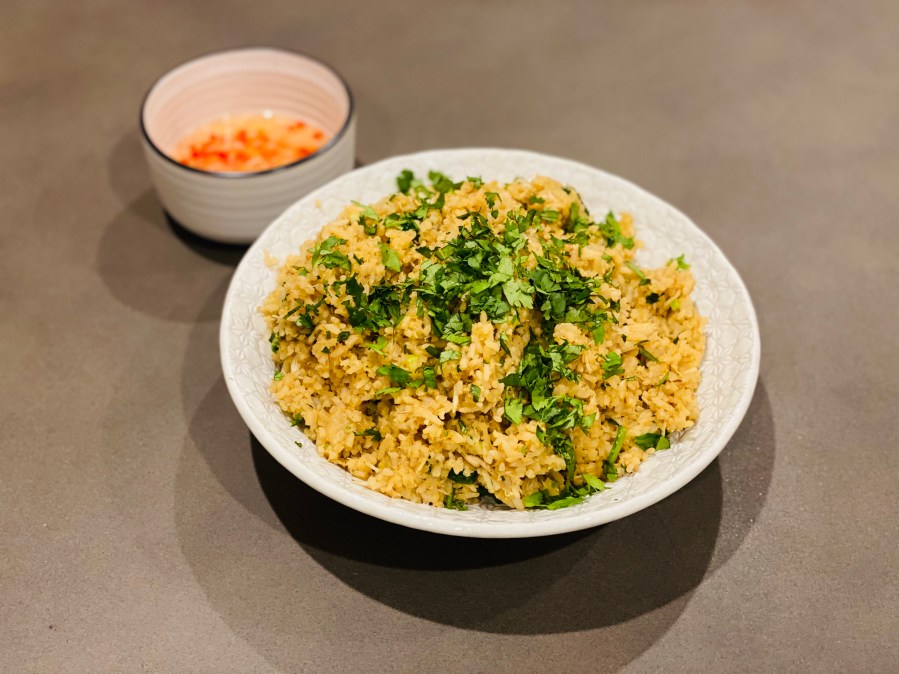
Brendan Pang’s Special Crab Fried Rice

Serves: 4

We both agreed, this is a next notch up Fried Rice.

1-hat, super-subtle Chinese cooking.

A definite addition to a home-cooked Chinese banquette.

Clearly not your local Chinese take away fried rice.

The key is the Chilli and Garlic dipping sauce. Poured on top just prior to serving, it adds a cracking zing on top of the crab and egg.

Wonderful.

Well done Brendan Pang!

Ingredients

Chilli and Garlic dipping sauce

1/4 cup white vinegar
Pinch of salt
1/2 tsp superfine sugar
2 Birdseye chillies, finely chopped (including seeds)
1 medium clove garlic, finely chopped

Fried Rice

4 tbsp vegetable oil
6 tbsp finely grated fresh ginger
2 cloves garlic, minced
2 spring onions, chopped and divided
4 cups cold, cooked short-grain rice
Pinch of ground white pepper
Pinch of superfine sugar
3 tbsp light soy sauce
Salt
2 large eggs, beaten
2 tbsp finely chopped preserved mustard greens (I substituted baby spinach)
1 cup cooked crabmeat
Handful of chopped fresh coriander, plus more for serving

Method

  1. Make the dipping sauce: in a small bowl, stir together all the sauce ingredients until the sugar has dissolved and the mixture is well combined. Cover and refrigerate until needed.
  2. Make the fried rice: in a wok, heat the oil over a medium-high heat,. Add the ginger and cook, stirring for 30 seconds, followed by the garlic and one of the green onions. Stir-fry for an additional 30 seconds or until aromatic.
  3. Add the rice, increase the heat to high and toss with a spatula to combine. Use the spatula to flatten the rice and break up any clumps. Add the white pepper, sugar and light soy sauce. Toss and season with salt to taste.
  4. Using your spatula, spread out the rice into an even layer along the surface of the wok. Pour the beaten egg evenly over the rice and stir until all the egg is cooked and broken into pieces. (Nat reckons cooking the egg separately should be the way to go and I don’t necessary disagree with this.)
  5. Add the preserved mustard greens and crab and toss until combined and the crab is warmed. Add the remaining green onion and coriander and toss until well combined. Serve immediately with the dipping sauce and additional coriander.

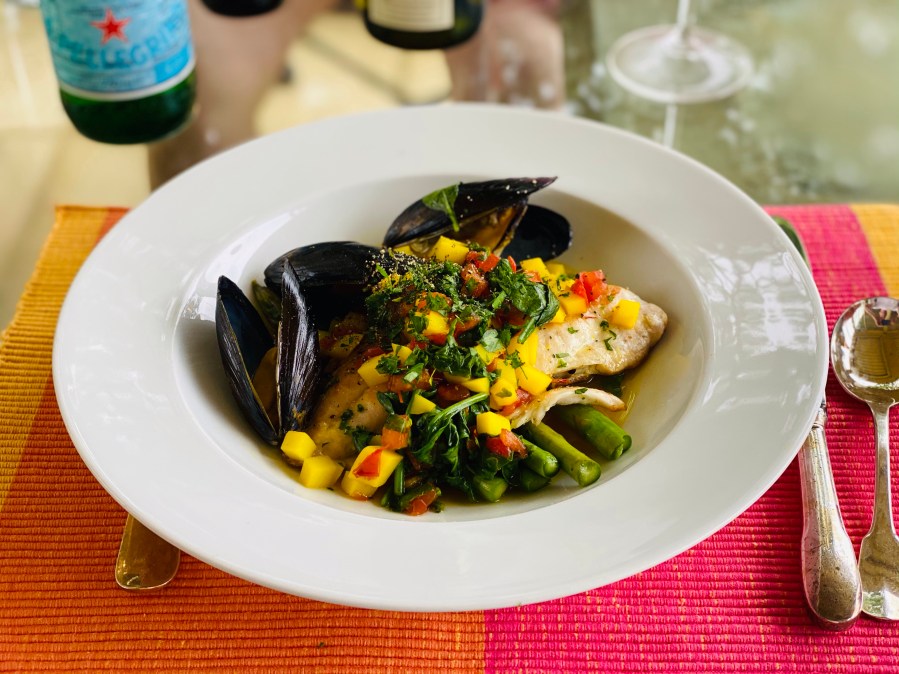
Thomas John’s Snapper with Saffron Broth

Serves: 4

This is such a delicate, Spanish, summer-lunch: a recipe my mother shared with me.

Seafood, saffron, fish stock and petite vegetables. How could you go wrong?

Open a white wine. Pour the wine. Tear some crusty bread.

Time is on your side.

Enjoy.

(And pour more wine! It’s summer!)

Ingredients

100ml olive oil
1 stalk celery, thinly sliced
1 small leek (white only), thinly sliced
2 shallots, thinly sliced
12 black mussels, cleaned
2 1/2 tbsp white wine
2 cup fish stock
1 tsp saffron threads
4 snapper fillets, skin scored
1 large tomato, peeled, seeded and diced
1 potato, peeled, cubed and cooked
20 asparagus spears, blanched
1 bunch English spinach, stalks trimmed
Sea salt and pepper
Parsley sprigs

Method

  1. Preheat the oven to 160c.
  2. Cook the celery, leek and shallots in half the olive oil for 1 minute, increase the heat to high, add the mussels and wine and cover for 3 minutes or until the mussels open.
  3. Strain the mixture and return the liquid to the pan and reduce by 1/3.
  4. Add the stock and saffron and simmer for 5 minutes.
  5. Sauté the fish skin side down in the remaining oil for 2 minutes, turn over and cook for 1 minute and then place in the oven for 2 minutes.
  6. Add the potato and tomato to the broth and heat through and season.
  7. Add the asparagus, spinach and mussels and simmer until the spinach is just wilted.
  8. Divide the spinach and asparagus among bowls and pour over the broth.
  9. Scatter the mussels, tomato and potato around and then top with the fish and garnish with parsley.