Osso Buco Alla Milanese

Serves: 4

Osso Buco is typically associated with a robust tomato sauce, though that is not how it is traditionally done. Osso Buco is in fact a Northern Italian dish and tomatoes do not feature nearly as prominently as they do in the South.

This dish is served with gremolata and is much more delicate than the tomato variety. I love gremolata and this dish is clean and fun, especially without the tomatoes.

Serve with some sautéd brussel sprouts and some Parmesan mash and you’re onto a winner.

Ingredients

12 pieces of veal shank
Plain flour, seasoned with salt and pepper
¼ cup olive oil
60g butter
1 garlic clove, finely chopped
1 lemon, zest peeled, finely chopped
Good handful of parsley, finely chopped
250ml white wine
1 bay leaf
Pinch of allspice
Pinch of ground cinnamon
Thin lemon wedges to serve

Gremolata

2 tsp grated lemon zest
6 tablespoons finely chopped parsley
1 garlic clove, finely chopped

Method

  1. Dust the veal with the seasoned flour.
  2. Heat the oil, butter and garlic in a large heavy saucepan big enough to hold the shanks in a single layer. Put the shanks in the pan and cook for 12 to 15 minutes until well browned.
  3. Arrange the shanks, standing them up in a single layer, pour in the wine and add the bay leaf, allspice and cinnamon. Cover the saucepan.
  4. Cook at a low simmer for 15 minutes and then add ½ cup of water. Continue cooking for between 45 mins and 1 hour, until the meat is tender. Check the volume of the water from time to time and add water if needed.
  5. Transfer the veal to a plate and keep warm. Discard the garlic clove and bay leaf.
  6. To make the gremolata, mix together the lemon zest, parsley and garlic.
  7. Increase the heat under the saucepan and stir for 1-2 mins until the sauce is thick, scraping up any bits off the bottom of the saucepan. Stir in the gemolata and season, and return the veal to the sauce.
  8. Heat through and then serve with lemon wedges.

Easy ricotta lasagne

IMG_6884.JPG
Thanks ladies and hen!

Serves: 8

The Internet probably doesn’t need another lasagne recipe though I cooked this up for Lauren’s (Nat’s sister) Hens weekend and it was really successful.

The recipe is an adaptation of a few recipes with the view of making this an easy dish to prep and cook.

The key point is the cheese sauce or lack thereof.

Not only is the ricotta-version here much easier to prepare when you have literally run out of stove space, it tastes amazing.

Ingredients

Extra virgin olive oil
2 onions, finely chopped
2 carrots, shredded
2 cloves of garlic, crushed
500gm pork mince
500gm veal mince
10 tbsp tomato paste
4 can of tomatoes
4 c chicken stock
2 tsp dried oregano
Bunch of basil, torn
500gm mozzarella, shredded + a handful to sprinkle at the end
1 kg ricotta
250gm parmesan, shredded
2 eggs, beaten
Pinch of nutmeg
(Instant) lasagne sheets
Salt and pepper to taste
Butter for greasing the cooking dish

Method

Meat Sauce

  1. Heat the oil in a large saucepan and slow cook the onions, garlic and carrots until soft.
  2. Add the mince and cook until browned and the water has evaporated.
  3. Stir in the tomato paste, canned tomatoes, chicken stock and oregano.
  4. Season and simmer for 40 minutes until the liquid has reduced.
  5. Take off the heat and stir through the basil.

Cheese sauce

  1. Combine the cheeses, eggs and nutmeg and season.

Assembly

  1. Heat the oven to 180c.
  2. In a greased cooking dish, layer a small amount of meat, then a layer of lasagna sheets, then more meet, cheese mixture and repeat.
  3. Finish off with a layer of mozzarella.
  4. Cover with foil, cook for 40 minutes and then remove the foil and cook for a further 10 minutes.

Parmigiano Sformato with Piquillo Peppers and Almonds

Serves: 8

Wow these are good!

This recipe by Anne Burrell is awesome and was one of the dishes we had when our parents – Deb and Rob/Ellen and Bill – met for the first time. A dish, awesome in not just in how elegant and sophisticated it all looks but in the nutty yet beautifully creamy textured taste.

(The meeting of the parents was a complete success for what it’s worth!)

People will know you’re a cooking star and you’ll put the leg-of-lamb-rosemary-garlic crowd to shame when you show them some real preparation, cooking and style.

Move over braised meat. This is preparation and sophistication and it shows.

Do it as a starter and start it right!

(Tip: the cayenne is the zinger here: don’t overdo it though it is the zinger…)

Oh… fast forward two years: we cooked this for our long lunch/wedding and it was THE standout dish. Well. Done. Ellen.

Ingredients

Nonstick cooking spray
2 cups heavy cream
4 eggs
1 cups grated Parmigiano-Reggiano
Salt
1 pinch cayenne
1 jar piquillo peppers, julienned
1/4 c sliced almonds, toasted
2 c arugula or mesclun
Extra-virgin olive oil
4 tbsp sherry vinegar
2 tbsp chopped chives

Method

  1. Heat the oven to 180c. Spray your ramekins with nonstick spray.
  2. In a medium bowl, add the heavy cream, eggs and Parmigiano and whisk to combine. Season with salt and cayenne. Divide the egg, cream, cheese mixture between the ramekins.
  3. Place the filled ramekins in a baking dish and fill halfway with hot tap water. Cover with aluminum foil and bake in the preheated oven for 20 to 25 minutes. Remove from oven and let cool on racks.
  4. Place the cooled sformato in a warm oven for 10 minutes to reheat.
  5. While the sformato is reheating toss the peppers and almonds with the greens and a sprinkle of oil, vinegar and salt.
  6. Arrange some of the pepper mixture on individual serving plates. Unmold the sformato on the serving plate and arrange the peppers against the sformato. Drizzle with olive oil.
  7. Sit back and observe your slightly stunned guests.

My Arrabiata

FullSizeRender (11).jpg
So hot. So good.

Serves: 4 – 6

This dish has real significance for me.

It was the first meal I cooked when I moved out of home, a recipe I adapted from Neil Perry and adapt every time depending on what is in the pantry and the fridge. Try it with torn basil, a pinch of sugar, freshly chopped chilli, whatever you want.

The key is in the length of cooking. The longer you can sweat the onions and the more slowly you can reduce the sauce, the better and better it will be. Forget that stuff from the local pizza shop, add lots of chilli and two hours over the stove and this takes on a new dimension.

Add this recipe to your repertoire and know it like the back of your hand. It will make clear to your lady friend that you can turn a pack of bacon and a few things from the cupboard into an amazing, hot and smoky pasta: it worked for me!

Ingredients

Extra virgin olive oil
2 red onions, thinly sliced
4 cloves garlic, finely chopped
4 good pinches chilli flakes
2 ripe tomatoes, chopped
8 cherry tomatoes, halved (half a punnet)
1 can tomatoes
1 tbsp capers, drained
2 tbsp black olives, pitted and roughly chopped
Good handful of ham, roughly chopped
10 rashers of bacon cut into lardons
Salt and pepper
Penne, spaghetti, whatever
Ground parmesan
Chopped Italian parsley

Method

  1. Heat the oil in a pan over a low heat and add the onions, garlic, chilli flakes and good pinch of salt and sweat as slowly as you can without letting stick to the bottom of the pan; around 20 – 30 minutes.
  2. Separately, cook the bacon in a pan until golden. Drain and set aside.
  3. Add the tomatoes, ham, capers and olives, combine with the onion mixture and cook for a minute. Add the bacon and can of tomatoes as well as a can of water.
  4. Bring to the boil and then drop to a low simmer.
  5. Cook for an hour to an hour and a half and longer if you can. The key is to removing as much liquid from the sauce as slowly as you can.
  6. Check the seasoning and chilli and adjust as necessary.
  7. Cook the pasta, drain and combine with the sauce.
  8. Serve with plenty of grated parmesan and parsley.
  9. Enjoy your reward.

Giada De Laurentiis’ White Bean Dip

Serves: 4 – 8 snacking guests

Another fantastic recipe from Giada De Laurentiis; I recently wrote up her Linguini with Green Beans, Ricotta and Lemon and this dip gets the same superlatives I used for her pasta recipe:

    • Great
    • Unassuming
    • Simplicity
    • Clean
    • Healthy
    • Tasty

I’m really into dips at the moment and I did this one up on the week alongside a few others. It will easily last the week it will take to dip away at it and it is just so fresh to be able to have a few mouthfuls of dip anytime you get hungry.

As long as you’re not telling yourself that you are hungry all the time because then dip could become a problem!

Ingredients

4 pita breads, split horizontally and cut into 8 wedges
Olive oil
Salt and pepper
Dried oregano
1 tin cannellini beans, rinsed and drained
¼ c parsley leaves
2 tbsp lemon juice
1 clove garlic

Method

  1. Preheat the oven to 200 C.
  2. Process the beans, parsley, garlic, and lemon juice with salt and pepper until coarsely chopped, and then gradually mix in 1/3 cup olive oil until creamy.
  3. Brush the pita bread wedges with some olive oil, and then sprinkle with oregano and salt and pepper.
  4. Bake until crisp and golden.
  5. Serve the bean dip with the pita wedges.

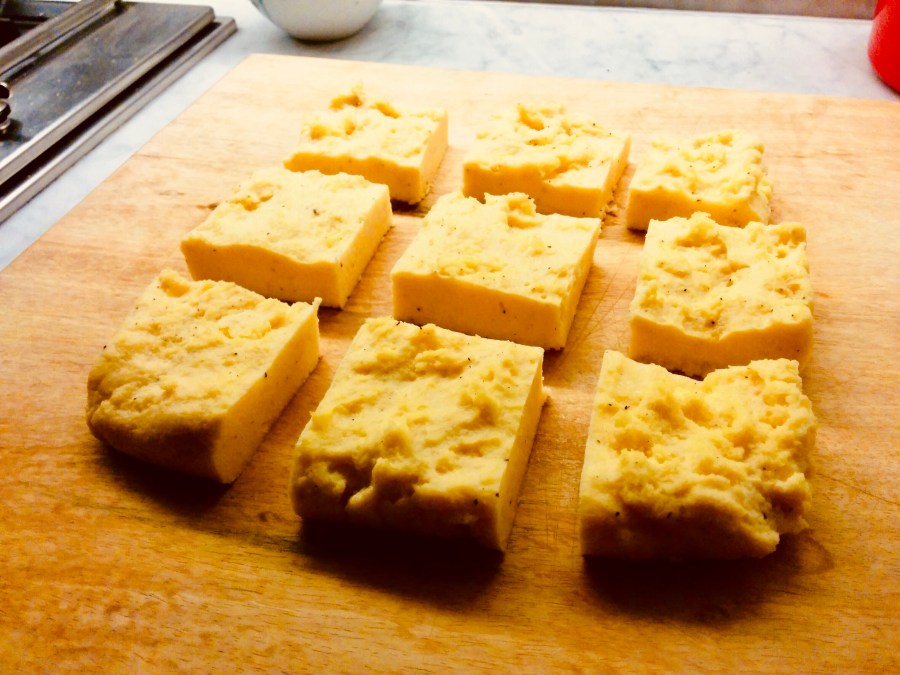
Neil Perry’s Pan-fried Polenta

Serves 4

If you cook this and serve it with a roast or a braise, it will replace mash as your go-to side. Hands down, money on it.

It is a Neil Perry dish (tick) and it continues (as far as I know) to be served in Qantas First and Business Class (tick). It can be prepared beforehand (tick) and people’s eyes light up when they taste it (tick).

It’s creamy, it tastes great, it sops up all the juices on the plate and it can be reheated the next day.

Tick tick tick.

None of us cook enough polenta. This dish will resolve that for you.

Ingredients

2/3 cup (100g) polenta
1 1/2 cups (375ml) milk
1 cup (250ml) chicken stock
1 teaspoon sea salt
1/2 cup (50g) finely grated Parmesan
50g unsalted butter, chopped well
Freshly ground pepper
Extra virgin oil

Method

  1. Lightly grease a rectangular baking tin (or small baking dish as I did). Line the tin with baking paper.
  2. Bring the milk, stock and sea salt to scalding point (just below boiling point) in a large saucepan.
  3. Gradually shower the polenta into the milk mixture, stirring continuously with a whisk.
  4. Simmer, still stirring for about 40 minutes, or until the polenta is very thick and pulls cleanly away from the side of the pan.
  5. Remove from the heat, stir in the parmesean, butter, salt and pepper to taste.
  6. Spread the polenta immediately into the tin and allow to cool slightly. Cover and refrigerate for about 3 hours, or until firm.
  7. Run a sharp knife around the edges of the tin and gently turn out the polenta. Cut into eight slices thick.
  8. Quickly pan-fry the polenta slices in a little olive oil on both sides until lightly browned.

Jamie Oliver’s Arrosto Misto with Gravy

Serves: 8

This is a really cool roast, bringing together two meats – lamb and duck – and roasting them side by side.

Cool right?

Better still, the gravy that is produced as part of the process is rich and flavoursome and it really is a pillar unto itself in the meal.

The last time I served this up, I served it with pan-fried parmesan polenta and pan sautéed asparagus with balsamic.

Next time, I’d try a cabbage gratin to cut through the richness of the roast; perhaps some buttered beans.

Whatever you serve this with, people will know it is going to be special and that means they’ll bring better wines to dinner.

Cool right?

Right.

Ingredients

4 celery stalks, roughly chopped
4 carrots, roughly chopped
2 red onions, roughly chopped
A head of garlic broken into cloves
A few bay leaves
A small bunch of fresh rosemary separate into sprigs
1.5kg shoulder of lamb
Olive oil
Bottle of red wine (750ml)
1 large (2kg) free-range or organic duck
1 thumb sized piece of ginger
2 tbs of flour

Method

  1. Preheat the oven to 170c.
  2. Divide the chopped vegetables, garlic cloves and bay leaves between two roasting pans. Scatter half the rosemary over the vegetables in one pan, retaining the other half of the rosemary for stuffing in the duck.
  3. Season the lamb shoulder and duck and drizzle with olive oil.
  4. Slice the ginger and stuff inside the duck with the remaining rosemary.
  5. Place the lamb on top of the vegetables in the roasting pan with the rosemary, and the duck on top of the vegetables in the roasting pan without the rosemary. Pour a third of the wine over the lamb, a third of the wine over the duck, retaining a third for the gravy.
  6. Place the lamb in the oven for two hours, checking periodically to see if it is drying out. If so, add a little water; this is important as the vegetables in the lamb roasting dish will make the gravy and so must be moist.
  7. After two hours of cooking, add the duck to the oven and cook for a further two hours. After four hours, the meat should be falling off the bone of the lamb and the duck will be golden and cooked.
  8. Remove the meat from the oven and set aside covered in foil. Add the remaining wine and flour to the sauce and vegetables in the lamb’s roasting pan, and place the roasting pan directly over a medium heat, stirring to combine into gravy. Try to mash up the vegetables. Do not use the duck’s roasting dish for the gravy as it will be too fatty.
  9. Shred the meats and combine on a platter. Serve the gravy in a bowl.

12 Hour Pork

Serves: 8 – 10

My mother first made this dish for the family when I was about 21. It was a revelation!

I had never had such slow cooked meat (remember, this was 15 years ago when slow cooking wasn’t a thing in Australia) and rather than being dry or inedible, it is incredibly moist and succulent.

And unlike all of the pulled porks and beefs out there, this one isn’t just a slab of slow cooked meat. Not at all; the fennel and garlic and chilli transform it into the most unique and extraordinary flavor, unlike anything you have ever tasted.

On one occasion that I cooked it for my flatmate Aaron and our friend Nilhan, we agreed not to eat all day and even spent a few hours in the sun playing tennis (in between bastings) to build up our hunger. I served it with a truffle mash and sauteed beans and I swear to God, it was the most unbelievable eating moment of my life as we stuffed it down with our fingers, eyes closed, heart rates at 110.

It is a bit of a ritual cooking this because you have to start early in the morning and keep basting all day.

Though a few hours in and the house smells amazing. The excitement starts.

People ask to peek the meat at around 8 hours. Start your truffle mash and pour a wine at hour 10 and the excitement is palpable. People refuse cheese and snacks in order to have as much room for the pork when it is served.

It is a long runway but it is worth it. Oh, only use a pork shoulder. Pork neck – as experience told me earlier this year – just will not cut it.

Ingredients

3 – 4kg Pork Shoulder Roast, no bone
4 tbs fennel seeds
5 tbs chopped garlic
3 tbs dried chili pepper flaked
1 tsp sea salt
¾ tsp pepper
Juice of 6 lemons
3 tbs olive oil

Method

  1. Preheat the oven to 250 celcius.
  2. Mix the together fennel seeds, chopped garlic, chili pepper and salt and pepper and set aside. Mix lemon juice and olive oil and set aside.
  3. Stab the Pork Shoulder deeply all over; around 7 times on east side including edges.
  4. Massage the fennel seed mixture into all sides of the roast and place it in a roasting pan. Roast for 30 minutes.
  5. Turn the oven down to 120 celcius.
  6. Take the Pork Shoulder out of the oven and loosen from the bottom of the pan. Pour half the lemon mixture over the roast, loosely cover with foil and out back in oven.
  7. Roast for 12 hours or so, adding the rest of the lemon mixture after 6 hours and basting the pork every hour.

Zuppa Di Pesce (Italian Seafood Stew)

Serves: 4

Mama mia! Every time I have cooked this, it gets better and better. The flavours, the experience, the fun of eating anything that you get to mop up with crusty bread.

The recipe is from Armando Percuoco of Buon Ricordo Restaurant in Paddington, famous for his truffle egg pasta and long lunches.

I swear that if you cook this once, you will cook it again the next weekend, inviting friends around for it.

It looks the part, it tastes so goddam good and it’s fun to share with some salads, maybe some potatoes, some chargrilled asparagus with chilli and garlic and plenty of bread.

No excuses, cook it!

Ingredients

3 cloves of garlic, sliced thinly
½ cup of olive oil
1 rock cod (250gm) (substitute with leatherjacket)
Blue eye (150gm piece)
Kingfish (150gm piece)
6 mussels (I used 10)
2 baby octopus
8 rings of calamari (obviously, more can be used and I would)
½ Blue Swimmer Crab
8 clams
1 cup of white wine (I used 1 ½ cups)
½ punnet cherry tomatoes (halved)
4 tablespoons chopped Roma tomatoes
1 bunch of Italian parsley, chopped
Sea salt and pepper
Grilled crusty bread to serve

Method

  1. Preheat the oven to 180.
  2. In a heavy saucepan or casserole, sauté the garlic in the olive oil until it is just about to go golden.
  3. Add the calamari (and octopus) and toss.
  4. Add the balance of the seafood, and the white wine.
  5. Cook until the white wine has effectively evaporated.
  6. Remove all the seafood except for the calamari (octopus) and add the tomatoes.
  7. Place in the oven for 10 minutes, stirring once.
  8. Add the rest of the seafood, and place in the oven for a further 10 minutes, again stirring once.
  9. Sprinkle with parsley and serve.

Armando Percuoco’s Truffle Egg Pasta

Serves: 4 as an entree

This is a brilliant recipe for so many reasons.

It is the signature dish of Armando Percuoco of Buon Ricordo and typifies his wonderful, modern Italian cuisine; this dish served alongside his deep fried zucchini flowers together with a glass of chilled white wine is simply magic. I few years back, I replicated this combo at least once every summer and seriously, you win smiles and nods.

You just look better in everyone’s eyes!

The truffle egg pasta is a very simple dish to accomplish though it is one where no corners can be cut; the best pasta, full cream and proper butter are the point of the recipe, not merely the base. There is no question that bang for buck, this recipe is way up there.

The few times I have cooked this, I have used truffle oil though when I have had it at Buon Ricordo, it has been with truffled egg. There is a difference in flavour, though not better or worse; just different. Frankly, I’m not sure I can be bothered truffling eggs in my amateur kitchen.

You probably won’t be able to lie to your lady friend about the ingredients or the calories, though life is short and you’re only going to whip this up once a year right?

Do it and thank Armando later.

Ingredients

280g fresh or dry Fettuccine
1 tablespoon Butter
1 cup Cream
4 tablespoons grated Parmesan
4 Truffle Eggs or 1 tablespoon truffle oil
Extra Parmesan for serving

Method

  1. Boil fettuccine for about six minutes if dry, or four minutes if fresh. Drain.
  2. To a frying pan add butter and cream and simmer for three minutes over medium heat to reduce the mixture.
  3. If using ordinary eggs and truffle oil, add truffle oil now.
  4. Add cooked pasta and toss, then add parmesan and stir.
  5. Divide pasta into four serves on plates.
  6. In the meantime smear frying pan with butter and fry egg until whites are firm, but yolks are still runny. Do not burn or allow a brown under-crust to burn; it is not Sunday morning.
  7. Place egg on pasta.
  8. Add more parmesan, salt and pepper and toss egg into pasta.