Jennifer Segal’s Slow Roasted Salmon (Ocean Trout) with French Herb Salsa

Serves: 6

I hate to admit it – and rarely do – though there are go-tos I have when the cooking pressure is on and we have guests for lunch. (Generally speaking we don’t cook many dishes twice.)

This is one of them.

It’s a winner on every level.

It is simple.

It looks incredible: looks that betray its simplicity. Think elegant, yet rustic: provincial.

And predictably: it tastes awesome.

As a starter. As a side. With a salad. With baby potatoes. With dressed-up fries.

Really anyway you can serve it, it’s genius.

There is a reason I’ve plated this half a dozen times at least.

(Which is all I am admitting to!)

Ingredients

1kg salmon (I use ocean trout) filet with skin, pin boned
1 tbsp extra virgin olive oil
3/4 tsp sea salt flakes

French Herb Salsa

3 tbsp finely diced shallot
3 tbsp white wine vinegar
2 tbsp finely chopped Italian parsley
1 tbsp finely chopped chervil
1 tbsp finely chopped chives
1 tbsp finely chopped basil
1 tsp finely chopped tarragon
5 tbsp extra virgin olive oil
1/4 tsp sea salt flakes
Freshly ground pepper

Method

  1. Preheat the oven to 105c.
  2. Place the salmon on a baking sheet. Drizzle with olive oil and sprinkle the salt evenly over the top. Place in the oven and roast for 40 – 50 minutes, until the fish begins to flake in the thickest part of the filet.
  3. For the salsa, combine the shallot and vinegar for 15 minutes. In a separate bowl combine the herbs, olive oil, salt and a few grinds of pepper.
  4. Flake the salmon into large rustic chunks (on the skin); combine the herb mixture with the shallot mixture, testing the amount of vinegar you need.
  5. Dress over the fish and serve warm.

Paul Ainsworth’s Cornish Cod Loin with Spaghetti, Wild Garlic Pesto, Crispy Pancetta and Pangrattato

Serves: 4

It’s been a while since my last post, though this one is worth it. (We’ve been super busy with work and also travel – India and Fiji for four and a half weeks!).

Nat first cooked this pasta as part of a pasta-cook-off during Covid.

Judged by Nat’s sister Court and husband Greg, I was confident my pasta – Gordon Ramsay’s Lobster Ravioli with Lemongrass Veloute – was a shoe-in.

I almost felt sorry for Nat.

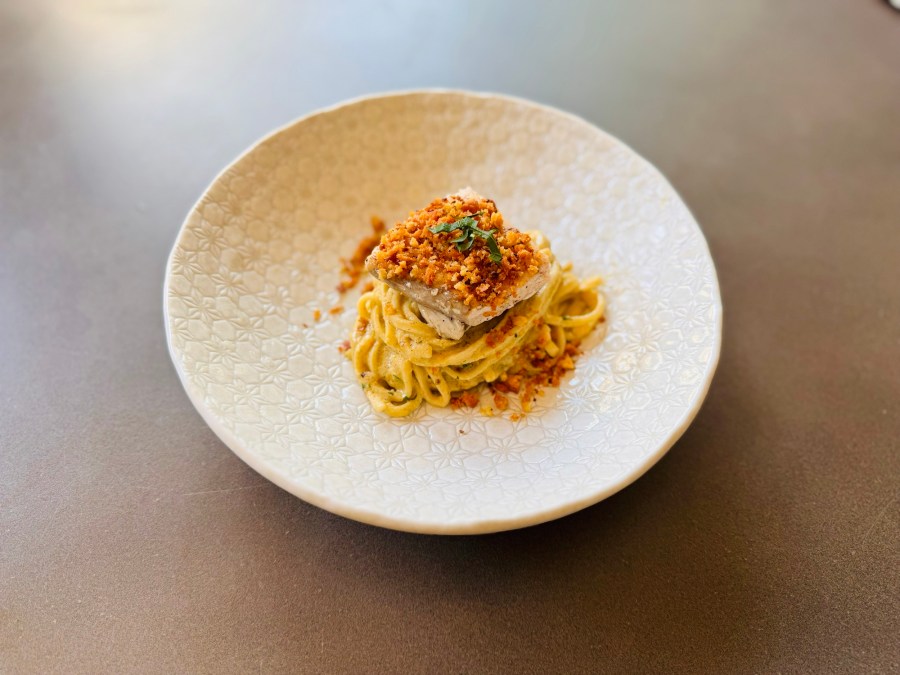
White fish piece perched on top of spaghetti. I of course urged her on, preparing myself for the accolades and retention of my crown in the kitchen.

It didn’t go to plan.

Court and Greg looked at each other and then me. We knew.

My abdication had in fact occurred years prior, though like that 46-year old guy still partying at Ibiza, I thought my old moves might reconquer. (46-year old RobbyDog should know by now he is on the wrong side of the slope.)

My pasta was excellent. A fine dining Gordon Ramsay recipe from his book ‘3 Star Chef’.

The only problem being the book was written in the 90s. (About the time I should have been in Ibiza).

I was bringing a 24 year old dish to a knife fight.

Nat’s dish – this pasta – was just so youthful in comparison. Subtle, fun, real 1-hat if not 2-hat cooking. It is sublime.

Nat can’t cook omelettes (something Gordon Ramsay uses as his baseline test of cooking) so maybe there is hope.

Truth is, I know Nat can cook omelettes. She is just humouring me.

(Nat just cooked this for a second time for a late Sunday lunch and wow – it’s still a complete winner!)

Ingredients

Cod Loin

600gm cod loin, cut into 4 equal portions
400gm of spaghetti
100gm of pancetta
200ml of fish stock (or vegetable stock)
60gm of pine nuts, toasted
1 lemon, juiced
100gm of crème fraîche
20gm of basil, chopped
20gm of parsley, chopped
20gm of wild garlic, chopped
50gm of butter, plus extra for greasing
25ml of vegetable oil

Wild Garlic Pesto

30gm of basil
30gm of wild garlic
100gm of pine nuts, toasted
10ml of lemon juice
30gm of Parmesan, grated
100ml of olive oil
Salt, to taste

Pangrattato

250gm of sourdough bread, broken into pieces
4 garlic cloves, finely grated
20gm of thyme leaves
1 lemon, zested
Salt, to taste
50gm of butter

Method

  1. To begin, make the pesto. Place the basil, garlic and pine nuts in a pestle, grind to a coarse paste then gradually grind in the rest of the ingredients until you reach a pesto consistency.
  2. To make the pangrattato, add all of the ingredients to a food processor and blitz until broken into fine breadcrumbs.
  3. Place a pan over a medium heat, add the butter and once foaming, add the breadcrumb mixture. Roast until the breadcrumbs are golden brown and have a nice crunch. Place on a tray and set aside.
  4. Preheat the oven to 180c.
  5. Place a large pan of salted water over a high heat and bring to the boil.
  6. When ready to cook, lightly season the cod loin and place on a buttered baking tray. Bake for 10 – 12 minutes, then remove from the oven and allow to rest in a warm place.**
  7. Cook the pasta. Meanwhile, add the vegetable oil to a heavy based pan and fry the pancetta until crispy and brown. Add the butter for an extra crisp finish, then deglaze with the stock. Allow to reduce slightly, then add 300gm of the pesto, the pine nuts, lemon juice and crème fraîche.
  8. Add the fresh herbs to the sauce. Drain the spaghetti, tip into the sauce and stir until everything is well coated.
  9. To serve, divide the spaghetti between plates and top with the baked cod. Add an even layer of pangrattato to the cod.

* You can’t really buy this in Australia. It’s widely regarded as a weed and banned in some States. Substitute garlic.

** Nat pan fried with a fish weight to get the skin super crispy.

Gordon Ramsay’s Grilled Salmon with Garlic Mushroom and Lentil Salad

Serves: 4

This blog has never been about anything but obtainability and this recipe is proof of that.

Nat offered a late mid-week lunch (with a Champagne) if I crunched a tonne of work in the morning (and then again post-lunch) and who was I disagree with the offer to good to refuse.

I initially thought I was up to cook, so headed straight to Gourmet Traveller: I am after all a kid of the 80s.

Nat of course headed straight to Gordon: she’s a kid from the less cooler 90s.

Though turns out I’m the less cooler one.

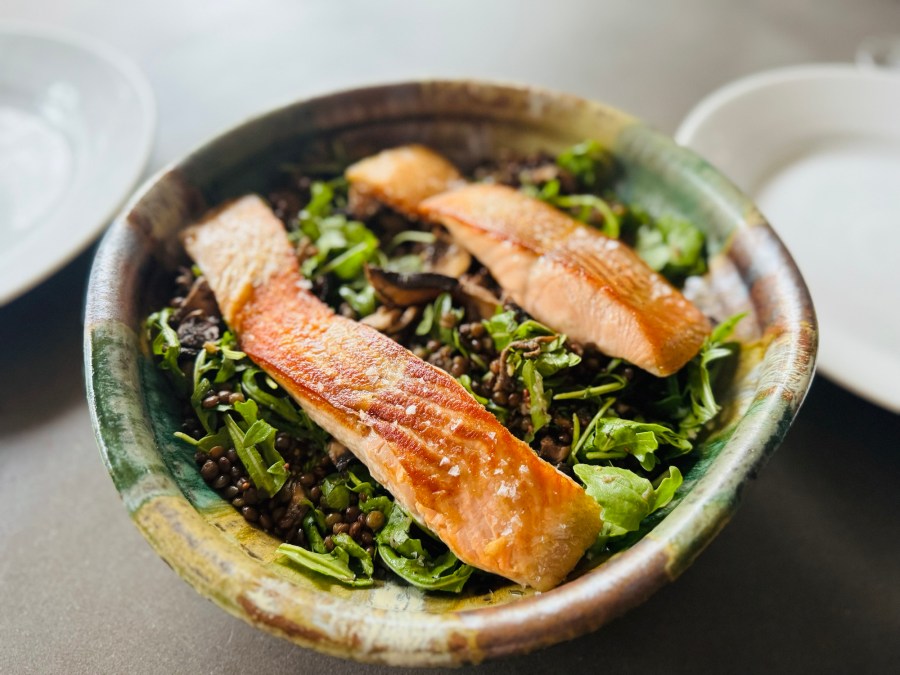
This is just such a bloody wonderful, obtainable, sorry not-sorry, simple dish.

It well crosses the line of effort and sophistication to smash the boring Chef’s salads I so often serve up on a Saturday after kids’ sport and shopping.

One hat, no. You won, yes.

(And yes: don’t eat farmed salmon. Wild caught salmon is out there and your kids will thank you for it.)

Ingredients

200gm Puy lentils
1 bay leaf
2 thyme sprigs
800ml vegetable stock
1 tbsp olive oil
200gm chestnuts mushrooms, cut into eights
200gm Portobello mushrooms, sliced
2 garlic cloves, peeled and finely chopped
4 x 100gm wild salmon fillets
100gm rocket leaves
Sea salt and freshly ground black pepper

For the dressing

1 garlic clove, peeled and crushed
2 tbsp white wine vinegar
1 tsp wholegrain mustard
1 tsp runny honey
1 tbsp extra virgin olive oil
1 tbsp water

Method

  1. Put the lentils into a saucepan along with the bay leaf, thyme and stock. Bring to the boil over a medium-high heat, then reduce to a simmer. Simmer for 15 – 20 minutes until tender.
  2. In the meantime, heat a large-based frypan over a medium-high heat and add the olive oil. Once hot, add the mushrooms with a pinch of salt and cook in the pan for 6 – 8 minutes stirring now and again, until soft and caramelised on the edges.
  3. Add the chopped garlic and continue to cook for 2 minutes, then remove from the heat.
  4. Once the lentils are tender, drain well and discard the herbs. Put the lentils into a large mixing bowl and add the mushrooms. Mix together gently to avoid breaking up the lentils too much.
  5. To make the dressing, put all the ingredients into a clean jar with a punch of salt and pepper. Close the jar, shake until the dressing comes together and emulsifies.
  6. Preheat the grill to high: grill the salmon for 6 – 8 minutes to your liking.
  7. Pout half the dressing over the warm lentils and toss gently to get everything coated. Fold in the rocket, place the salmon on top and pour over the remaining dressing. Serve immediately.

Christine Manfield’s Baked Fish with Mustard Cashew Masala

Serves: 6

The effort in this fish is not to be sneezed at, what with the preparation of tomato kasundi pickle.

Something I am not necessarily entirely convinced you need, though we were left with a jar the pickle and Nat made one of the world’s best cheese toasties the next night with a slathering of the pickle.

The end result of this curry is remarkable, however.

The flavours are gentle and yet so full of layers of flavour. This is not your cheat’s Tuesday night coastal Indian curry.

The evidence of the prep and time in this curry is clear.

This curry is a special keeper. Worth every minute.

Another Christine Manfield homerun.

Ingredients

3 tomatoes, grated
1 tbsp tomato kasundi pickle (see below)
3 tsp sea salt flakes
1 tbsp caster sugar
100ml vegetable oil
2 tsp coriander seeds, roasted and ground
2 tsp cumin seeds, roasted and ground
1 c fish stock
1 tbsp chickpea flour
1/2 c thick plain yoghurt
50ml cream
6 x 150gm mulloway cutlets*
1 tbsp mustard oil
25ml lime juice
2 tbsp chopped coriander leaves
1/2 long green chilli, finely sliced

Mustard Cashew Masala

2 tsp brown mustard seeds
1 tsp ground turmeric
1 tsp chilli powder
60gm grated fresh coconut
1 tbsp minced ginger
4 garlic cloves, chopped
3 small green chillies, chopped
1 brown onion, chopped
2 tbsp raw cashews, chopped
1 tbsp mustard oil

Tomato Kasundi Pickle (Makes 600gm)

1 tbsp brown mustard seeds
160ml malt vinegar
1 tbsp chopped fresh ginger
6 garlic cloves
8 small red chillies, minced
100ml mustard oil
1 tbsp cumin seeds, toasted and ground
1/2 tsp ground cloves
2 tsp ground turmeric
1kg ripe tomatoes, peeled and roughly chopped
50gm brown sugar
1 tbsp sea salt flakes

  1. Kasundi Pickle: heat a frying pan over a low heat. Add the mustard seeds and vinegar and cook for 5 minutes, taking care not to evaporate the vinegar. Set aside to cool.
  2. Place the mustard seed vinegar, ginger, garlic and chilli in a food processor until a smooth paste forms.
  3. Heat the oil in a heavy-based frying pan over a medium-low heat. Add the ground spices and cook for 15 seconds or until just fragrant. Add the mustard paste and tomato, stir to combine and cook, stirring occasionally for 45 minutes or until the tomato has broken down. Add the sugar and salt, stir to combine and cook for a further 5 minutes. Taste and adjust seasoning, if necessary. Transfer to a food processor and pulse briefly to form a coarse paste. Pour into a sterilised glass jar and seal with a tight-fitting lid. Store in the pantry for up-to 1 month and refrigerate once opened.
  4. To make the mustard cashew masala, place all the ingredients together in a food processor and blend to form a paste. Set aside.
  5. Place the tomato and tomato kasundi pickle in a frying pan over a medium heat and cook for 8-10 minutes or until reduced by half. Add 2 tsp of the salt and the sugar, stir to combine and set aside.
  6. Heat the vegetable oil in a wide-based pan over a low heat. Add the ground coriander and cumin and cook for 30 seconds or until fragrant. Immediately stir in the mustard cashew masala, increase heat to medium, and continue stirring for 5 minutes or until aromatic and starting to colour. Add the reduced tomato and the stock and cook for 10 minutes, Reduce heat to low.
  7. Meanwhile, combine the chickpea flour and yoghurt in a bowl, this prevents the yoghurt from splitting during cooking, and stir into the masala sauce. Add the cream and cook for 5 minutes. Remove from the heat while you cook the fish.
  8. To cook the fish, preheat the oven to 200c. Brush the fish skin with mustard oil and sprinkle with a little sea salt. Heat a heavy-based, ovenproof frying pan over medium heat. Add the fish skin-side down, and cook for 3 minutes or until golden and crisp. Turn the fish over, pour the mustard cashew sauce around the fish, transfer to the oven and cook for 4 – 5 minutes depending on the thickness of the fish, or until cooked through. Rest for 2 minutes to allow juices to settle.
  9. Carefully lift the fish from the pan and place on serving plates. Add the lime juice, remaining 1 tsp of salt, coriander and chilli to the sauce in the pan and stir to combine. Spoon sauce over the fish and serve with steamed basmati rice.

* Any deep-sea, firm-flesh fish will do, such as kingfish trevally, trumpeter or groper.

Adam Bush’s Grilled Scallops with ‘nduja Butter

Serves: 2

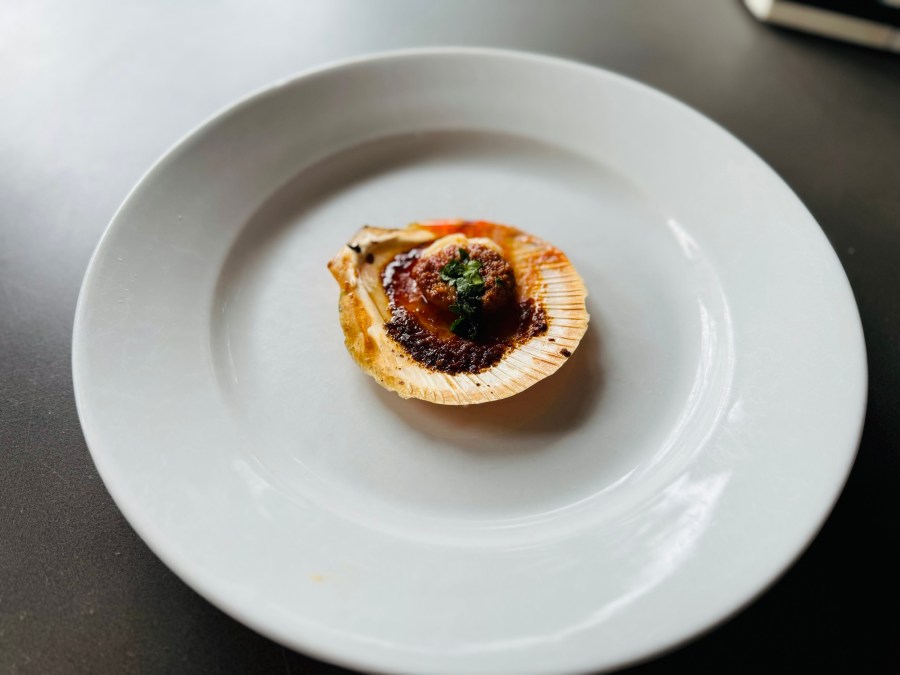
This is such a restaurant dish.

Really special. Really wow.

Cooked over charcoal, the addition of the smokiness just completed what was otherwise a brilliant starter to a late Sunday Italian lunch.

The sherry vinegar and eschalot cuts through the heat and fat from the ‘nduja butter. A real triumph and one I will repeat the next time we do a slow afternoon over charcoal grilling.

Ingredients

75gm ‘nduja
75gm unsalted butter, softened
1/2 eschalot, finely chopped
2 tbsp sherry vinegar
A small handful coriander, roughly chopped
6 large scallops in half shell

Method

  1. Put the ‘nduja into a small cold frying pan and break it up with the back of spoon over a medium heat, until its fat has rendered and is fairly smooth. Cool then put in a bowl with the softened butter and mix really well. Chill for 5 minutes to firm slightly. Tip into baking paper, form into a sausage and twist the ends to tighten. Chill until firm.
  2. In a small bowl, mix together the shallot, vinegar and coriander with a little seasoning.
  3. Heat the grill or charcoal. Put the scallops in their shells onto a large baking dish, then put a thick slice of the ‘njuda butter on top of each. Grill for 5 minutes until the butter is bubbling and the scallops are lightly caramelised.
  4. Serve with vinegar, herb and shallot mix spooned over the top.

Gourmet Traveller’s Kingfish Ceviche Tostada

Serves: 6

Leading up to Avalon’s (7 months as of today) birth, Nat and I talked of our first proper meal together. Being October, outside, put up the umbrella, Champagne and a slow afternoon of good food and baby talk.

Good times right.

I did a side of ocean trout over charcoal and a really aromatic Asian/South American salad, though we kicked it off with this tostada, a recipe I’d had in our worryingly big backlog of recipes to try.

Sure it’s simple and sure, Sydney has overdone kingfish ceviche to death the past few years, though what a great snack.

Just a lovely way to kick off a meal with a three-day-old and a glass of something French. And doesn’t it look the part!

(And 7-months later, Avalon has consistently remained the most happy, beautiful little girl and best-friend any father could ever hope for. And no, she is not named after the regional Victorian airport, and is instead a nod to the great Bryan Ferry and his greatest song of all time.)

Ingredients

400gm sashimi-grade kingfish, cut across the grain into 5mm slices
1/2 white onion, finely chopped
1/2 jalapeño, thinly sliced
Juice of 1/2 orange
1 tbsp olive oil (note: not extra virgin olive oil)
Juice of 2 limes
Vegetable oil for shallow-frying
6 – 8 small tortillas
1 large avocado, coarsely chopped
40gm sour cream
2 radishes, cut into julienne
1 c (loosely packed) coriander

Method

  1. Combine kingfish, onion, jalapeño, orange juice, olive oil and half the lime juice in a bowl, season to taste and refrigerate for 15 minutes to marinate.
  2. Meanwhile, heat vegetable oil (about 2cm deep) in a large frying pan over a medium-high heat. Fry tortillas one at a time, turning once, until golden and crisp (1 – 2 minutes each side). Transfer to a tray lined with paper towels. Season to taste with sea salt.
  3. Process avocado, sour cream and remaining lime juice in a blender or food processor until smooth and season to taste. Spread tostadas with avocado cream, top with ceviche, radish and coriander, season to taste and serve.

Gourmet Traveller’s Gremolata-crumbed Whiting with Warm Baked Potato Salad

Serves: 4

We love anything from Gourmet Traveller and I found this recipe in one of their books I picked up in a local community library.

And sure, it is a simple recipe though in fairness, the book is called ‘Simple’. Doh!

And excuse the photo which was more about the memory rather than publishing: for the fish is great though my goodness, we both agreed this is one of the best potato salads we have ever had. (And we didn’t see it coming.)

And of course, it is simple!

The next time we are asked to bring a salad to a BBQ, this is it.

Though do the fish as well. Just a cracking and special weekday meal.

Ingredients

1/4 c flat-leaf parsley leaves, chopped
Grated rind of 1 lemon
3 c day-old breadcrumbs, dried in oven until crisp
2 tsp capers, drained and chopped
12 whiting fillets (we used John Dory)
1/2 c plain flour
1 egg, lightly beaten with 1 tbsp water*
Vegetable oil, for shallow frying
Lemon wedges to serve

Dressing

2 tbsp sour cream
2 tbsp whole-egg mayonnaise
1 tbsp Dijon mustard

Warm baked potato salad

800gm chat potatoes, halved
2 tbsp extra virgin olive oil
1 small Spanish onion, thinly sliced
2 tbsp chopped flat-leaf parsley leaves
1 tbsp chopped sage leaves

Method

  1. For dressing, whisk all the ingredients with 1 tbsp water in a small bowl until well combined, then season to taste.
  2. For warm baked potato salad, place potatoes in a roasting tray, drizzle with the olive oil, season to taste, and toss gently to combine. Bake at 200c for 20 minutes, then add the onion, toss to combine and bake for another 10 – 15 minutes or until the vegetables are cooked. Just before serving, toss the potato mixture with dressing, then gently stir the herbs through.
  3. Meanwhile, combine parsley, lemon rind, breadcrumbs and capers in a shallow bowl and season to taste. Dust fish in flour, shaking away excess, and dip in egg mixture, then coat in breadcrumbs mixture, pressing crumbs onto the fish to coat evenly. Shallow-fry crumbed fillets, in batches, in hot vegetable oil for 2 minutes each side or until golden and cooked through, then drain on absorbent paper.
  4. Serve crumbed fish immediately with warm baked potato salad and lemon wedges to the side.

* It is a bit of a bugbear of ours, though you will always need at least twice the egg mixture called for so prepare yourself for this inevitability.

Sarah Akhurt’s Saffron Salmon Tagine

Serves: 4 – 6

I found this recipe last year in the online Sainbury’s Magazine.

It really is very good and very straightforward to prepare, especially the night before when the parents-in-law are coming for a weeknight dinner and the mother-in-law is essentially a pescatarian.

Reheat and throw in the chunks of salmon and boom, there is dinner served in record time after you get home from work.

We even prepared this amazing couscous, only needing the hot stock added to it; and only 10 minutes to have this great Moroccan orange and tomato salad if you make the vinaigrette the night before.

It isn’t the most sophisticated tagine I’ve cooked, though it’s a cracking weeknight dinner that ticks all the parents-in-law boxes.

Yum.

Ingredients

Pinch of saffron strands
300ml hot chicken or vegetable stock
1 tbsp rapeseed oil
2 red onions, finely sliced
2 garlic cloves, finely sliced
1 tsp ground cumin
1 tsp smoked paprika
1/2 tsp ground turmeric
1 tbsp rose harissa paste
500gm mixed colour cherry tomatoes, halved
2 preserved lemons, skin only, finely sliced
1 x 400gm tin chickpeas, rinsed and drained
50gm pitted green olives
4 large, skinless salmon fillets, chopped into large chunks
Handful of chopped coriander to serve

Method

  1. Add the saffron strands to the hot stock and set aside to infuse. Heat the oil in a tagine (or shallow casserole/heavy saucepan) and fry the onion for about 8 minutes or until very soft. Add the garlic and continue to cook for a further minute, before adding the spices and harissa paste. Continue to cook for a couple of minutes, stirring.
  2. Add the tomatoes and preserved lemons to the pan and cook for a couple of minutes before adding the saffron stock, chickpeas and olives. Continue to simmer uncovered for around 10 minutes, until the tomatoes have started to break down and the liquid has reduced slightly.
  3. Pause here if cooking the night ahead for the parents-in-law and refrigerate. Pour a glass of wine. You’ve earned it.
  4. With the sauce bubbling, add the salmon chunks to the pan, nestling them into the sauce. Cover with a lid and simmer gently for 7 – 8 minutes, or until the fish is cooked through. Season to taste and serve with the coriander.

Rosaria Ferrara’s Insalata di Polpo e Patate (Octopus and Potato Salad)

Serves: 6

Every time we cook octopus, Nat and I tell each other we need to do more.

This salad is why.

It is so classic, so fresh, so moorish. And that splash of white wine!

Do better at your next BBQ and present this. Level up!

Ingredients

1 stick celery, roughly chopped
1 carrot, roughly chopped
1 small white onion, roughly chopped
2 – 3 bay leaves
1 x 600gm octopus, well cleaned (ask your fishmonger to do this)
1 1/4 tbsp rock salt
400gm potatoes
100ml extra virgin olive oil
Salt and pepper
1 tbsp finely chopped flat-leaf parsley
1 clove garlic, finely chopped
Good splash of dry white wine

Method

  1. Put the celery, carrots onion and bay leaves in a large saucepan, add 2 litres of water and bring to the boil. Continue boiling over a medium heat for 10 minutes to make a broth.
  2. Take the octopus by the head, with four fingers into it like a handle, and dip it into the boiling broth for 30 seconds. Repeat this two or three times until the tentacles start to curl, then release the octopus into the broth (this process should stop the octopus becoming hard during cooking).
  3. Leave it to boil over a medium heat for 30 minutes, adding some rock salt to taste. Test by piercing with a fork – if it pierces easily, it’s ready; if its still hard, let it cook for a little longer. When it’s ready, remove it from the broth and set aside until it is cool enough to handle with bare hands.* Reserve about 250ml of the broth as you may need it later.
  4. Meanwhile, boil the potatoes in their skins until cooked but not too soft. Leave to cool slightly, then peel and cut into a 2cm dice, Set aside.
  5. Pull each cooled tentacle down lengthways, squeezing at the same time to remove the suction pads and gelatine coating. Chop the flesh into 2cm pieces.
  6. Combine the octopus and potato in a bowl and dress with the oil, salt, parsley and garlic. Mix well, then finish with a splash of white wine to give the salad perfume. If the salad seems a little dry, add some of the reserved broth and to see gently.
  7. “Serve with Amore!”

* When it comes to pulling down the tentacles and gelatine coating, the octopus must be warm or hot.

Josh Niland’s Salt and Vinegar Whole Coral Trout

Serves: 6

A few points here.

We used Rainbow Trout here and whilst it is likely a distance from the turbot Josh Niland originally cited as his inspiration for this dish, I think it is an acceptable distance.

Not coral trout sure, though who doesn’t love Rainbow Trout.

Fish over charcoal is always just bloody brilliant. The addition of the salt and vinegar spray misted over whilst we cooked was just an incredible touch.

Nat served it with a celeriac slaw and my goodness, this was two-hat simplicity. Just sublime. Sublime.

An incredible slaw, also from Josh Niland.

We should have dried the skin more and that would have seriously changed the profile. Next time.

The concept was not lost how good this simple approach to BBQing fish really could be.

Stunning.

Ingredients

1 x 1kg whole coral trout, gutted and pin boned
1/4 c best-quality seaweed vinegar or white wine vinegar (not too sweet)
1/2 c extra virgin olive oil
Sea salt flakes

Method

  1. About 45 minutes before grilling, remove the coral trout from the fridge and let it come to room temperature.
  2. In a spray bottle fitted with a misting nozzle, shake together the vinegar, olive oil and 1 tsp salt. Set aside.
  3. For the charcoal grill, make sure the grill is hot and the charcoal has cooked down to hot embers. Divide the coals across the floor to create a cooler side and a more intense side of the grill.
  4. Season the coral trout liberally with salt flakes, then either securely skewer lengthways, or place it in a grilling basket; set it over the hot side of the grill. Cook until the skin begins to blister slightly, about 4 minutes, then carefully tun the fish over and cook for another 4 minutes, generously misting the first blistered side with about one-third of the vinaigrette as you go.
  5. Flip the trout back over, and cook the first side for 3 – 4 minutes until the skin is well blistered and the flesh is opaque, misting the second side with half the remaining vinaigrette. The fish is ready when the skin is evenly coloured and the internal temperature registers 44c on a probe thermometer.
  6. Remove the coral trout from the grill and rest on a large serving platter for 8 – 10 minutes, then spoon over the remaining vinaigrette.
  7. Carve the trout, discarding the spine and reserving the collar and head, and transfer the fillets to serving plates. Pour the resting juice from the serving platter into a small saucepan and bring to a simmer, whisking to form a glaze. Spoon the glaze over the fillets and serve right away.