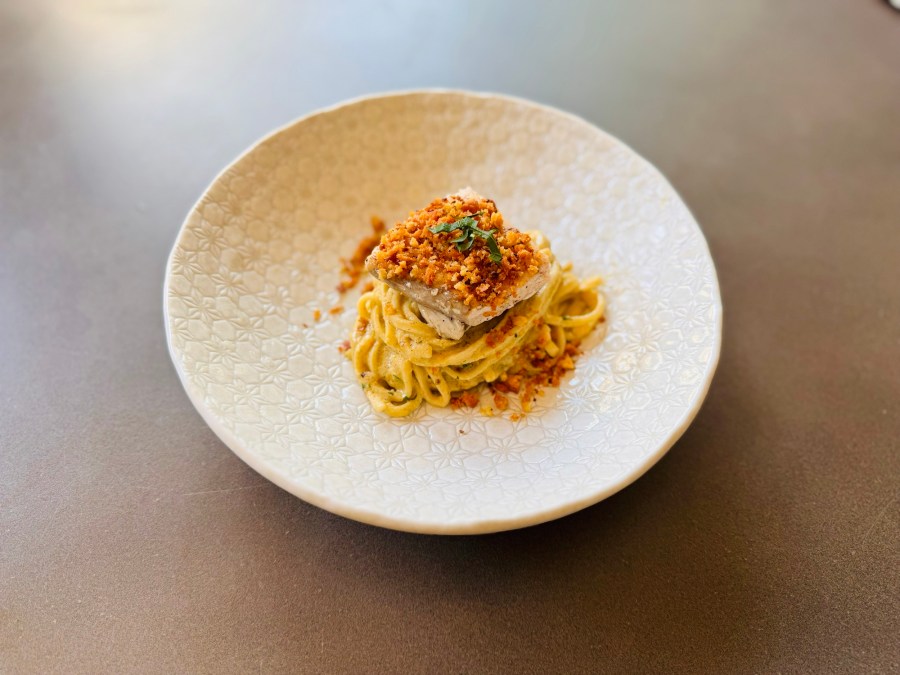
Paul Ainsworth’s Cornish Cod Loin with Spaghetti, Wild Garlic Pesto, Crispy Pancetta and Pangrattato

Serves: 4

It’s been a while since my last post, though this one is worth it. (We’ve been super busy with work and also travel – India and Fiji for four and a half weeks!).

Nat first cooked this pasta as part of a pasta-cook-off during Covid.

Judged by Nat’s sister Court and husband Greg, I was confident my pasta – Gordon Ramsay’s Lobster Ravioli with Lemongrass Veloute – was a shoe-in.

I almost felt sorry for Nat.

White fish piece perched on top of spaghetti. I of course urged her on, preparing myself for the accolades and retention of my crown in the kitchen.

It didn’t go to plan.

Court and Greg looked at each other and then me. We knew.

My abdication had in fact occurred years prior, though like that 46-year old guy still partying at Ibiza, I thought my old moves might reconquer. (46-year old RobbyDog should know by now he is on the wrong side of the slope.)

My pasta was excellent. A fine dining Gordon Ramsay recipe from his book ‘3 Star Chef’.

The only problem being the book was written in the 90s. (About the time I should have been in Ibiza).

I was bringing a 24 year old dish to a knife fight.

Nat’s dish – this pasta – was just so youthful in comparison. Subtle, fun, real 1-hat if not 2-hat cooking. It is sublime.

Nat can’t cook omelettes (something Gordon Ramsay uses as his baseline test of cooking) so maybe there is hope.

Truth is, I know Nat can cook omelettes. She is just humouring me.

(Nat just cooked this for a second time for a late Sunday lunch and wow – it’s still a complete winner!)

Ingredients

Cod Loin

600gm cod loin, cut into 4 equal portions
400gm of spaghetti
100gm of pancetta
200ml of fish stock (or vegetable stock)
60gm of pine nuts, toasted
1 lemon, juiced
100gm of crème fraîche
20gm of basil, chopped
20gm of parsley, chopped
20gm of wild garlic, chopped
50gm of butter, plus extra for greasing
25ml of vegetable oil

Wild Garlic Pesto

30gm of basil
30gm of wild garlic
100gm of pine nuts, toasted
10ml of lemon juice
30gm of Parmesan, grated
100ml of olive oil
Salt, to taste

Pangrattato

250gm of sourdough bread, broken into pieces
4 garlic cloves, finely grated
20gm of thyme leaves
1 lemon, zested
Salt, to taste
50gm of butter

Method

  1. To begin, make the pesto. Place the basil, garlic and pine nuts in a pestle, grind to a coarse paste then gradually grind in the rest of the ingredients until you reach a pesto consistency.
  2. To make the pangrattato, add all of the ingredients to a food processor and blitz until broken into fine breadcrumbs.
  3. Place a pan over a medium heat, add the butter and once foaming, add the breadcrumb mixture. Roast until the breadcrumbs are golden brown and have a nice crunch. Place on a tray and set aside.
  4. Preheat the oven to 180c.
  5. Place a large pan of salted water over a high heat and bring to the boil.
  6. When ready to cook, lightly season the cod loin and place on a buttered baking tray. Bake for 10 – 12 minutes, then remove from the oven and allow to rest in a warm place.**
  7. Cook the pasta. Meanwhile, add the vegetable oil to a heavy based pan and fry the pancetta until crispy and brown. Add the butter for an extra crisp finish, then deglaze with the stock. Allow to reduce slightly, then add 300gm of the pesto, the pine nuts, lemon juice and crème fraîche.
  8. Add the fresh herbs to the sauce. Drain the spaghetti, tip into the sauce and stir until everything is well coated.
  9. To serve, divide the spaghetti between plates and top with the baked cod. Add an even layer of pangrattato to the cod.

* You can’t really buy this in Australia. It’s widely regarded as a weed and banned in some States. Substitute garlic.

** Nat pan fried with a fish weight to get the skin super crispy.
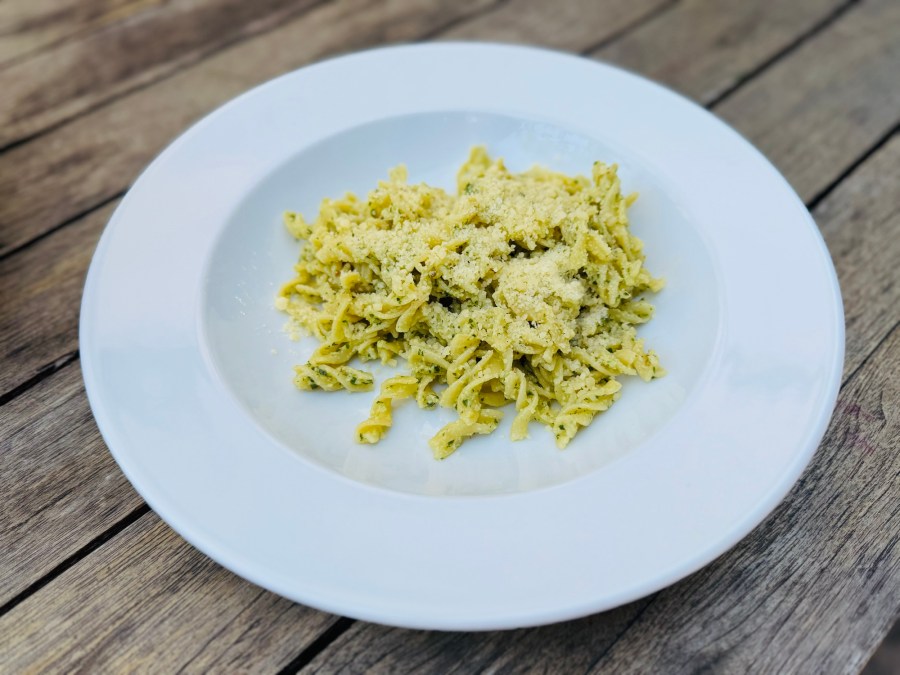
Jeanine Donofrio’s Basil Pesto Pasta

Serves: 1 cup/8

Traditional basil pesto is true comfort.

It’s simple. Moorish. Entirely satisfying.

There is nothing revolutionary in this recipe; it’s down the line.

Though in our search of the simplest – and greatest – pastas, I have no choice but to type it up.

As part of Nat’s search for the world’s best pasta, it’s not going to be a finalist.

Though that isn’t the point.

We all need a (growing) repitoir of simple pastas for a late Saturday lunch. Grab a few ingredients from the shops.

Even better, we have basil aplenty in our modest herb garden and we always have pine nuts and grated Parmesan in the fridge.

The point instead is that you can feed eight on a dime. And in a way that eyes will lock, people will smile, you did this on a whim and satisfaction levels are sky-high given the circumstances: dinner on a whim.

Ingredients

1/2 c toasted pine nuts
2 tbsp fresh lemon juice
1 garlic clove
1/2 tsp sea salt
Freshly ground black pepper
2 c basil leaves
1/4 c extra virgin olive oil
1/4 c fresh grated Parmesan cheese, plus extra to serve
Pasta, cooked al dente to serve

Method

  1. In a good processor, combine the toasted pine nuts, lemon juice, garlic, salt and pepper and pulse until well chopped.
  2. Add the basil and pulse until combined
  3. With the food processor running, drizzle in the olive oil and pulse until combined. Add the Parmesan cheese and pulse to briefly combine. For a smoother pesto, add more olive oil.
  4. Serve with al dente pasta, more Parmesan, open a red, sit back and smile.

Daniel Gritzer’s Fettuccini Alfredo

Serves: 4

I’ve read Alfredo recipes that add cream, which I think is akin to adding cream to Carbonara. It’s amazing in a dodgy pizza restaurant in Newtown or Brooklyn, though hardly traditional or subtle.

This recipe from Serious Eats goes back to the original recipe with nothing but pasta, Parmigiano-Reggiano, butter and salt: no pepper, nothing else.

In terms of pure joy, this is it.

As part of Nat’s search for the World’s Best Pasta and in a slipstream of cooking the simplest pasta, the original Alfredo made the cut and came out way ahead.

If you can make your own fettuccini, power to you.

It really is pure joy.

Use a younger Parmigiano-Reggiano, pour a glass of cold Riesling and sit in the sun with a bowl of this pasta and prepare to be amazed.

Pure joy.

Ingredients

115gm good unsalted butter, diced
115gm grated Parmigiano-Reggiano cheese plus more for serving
Salt flakes
500gm fresh fettuccine pasta

Method

  1. In a large heatproof bowl, combine butter and cheese.
  2. Cook the pasta in salted boiling water until al dente; drain, transfer the pasta to the bowl with the cheese, retaining 1/2 c pasta water.
  3. Add the pasta water to the pasta, butter and cheese and using tongs, toss the pasta repeatedly until the butter is melted and a creamy, emulsified sauce forms. Add more pasta water if the pasta seems too dry. Season with salt, sprinkling more cheese at the table.

Colin Fassnidge’s Pork, Marjoram & Parmesan Rind Rigatoni

Serves: 4 – 6

I was worried this wouldn’t be a special pasta, though there is something very special about it. There is a real nuance in the flavour and it’s just lovely.

Definitely the marjoram. Definitely.

Could also be the parmesan rind.

Could be that I really slowly cooked it down and then let it sit for a few hours.

Definitely was because it was a mid-week dinner.

We had dinner at Pelengrino2000 for Nat’s birthday earlier in the week and this is exactly what I would have expected from them.

1-hat stuff.

Hat’s off Colin Fassnidge. First recipe and it hit it out of the park.

Ingredients

1/2 c extra virgin olive oil
1 onion, finely chopped
3 garlic cloves, crushed
1/2 bunch marjoram, leaves picked and finely chopped, stalks finely chopped
1 red chilli, finely chopped
500gm pork mince
1/3 c white wine
700ml tomato passata
2 parmesan rinds (substitute 1/2 c finely grated parmesan) plus extra finely grated to serve
350gm spaghettini or rigatoni

Method

  1. Heat oil in a large skillet over low-medium heat. Add the onion, garlic, marjoram stalks and chilli, and cook, stirring occasionally, for 10 minutes or until the onion is softened. Increase heat to high, add pork and cook for 10 minutes or until evenly browned.
  2. Add the wine and cook, stirring regularly, for 2 minutes or until the liquid is reduced slightly. Add passata, parmesan rinds and 3/4 marjoram leaves, and bring to the boil. Reduce to a gentle simmer and cook, stirring occasionally, for 30 minutes to reduce slightly and develop flavour. Discard rinds.
  3. Meanwhile, cook your pasta al dente, reserving 1/3 pasta cooking water.
  4. Toss pasta and reserved cooking water through the tomato mixture. Scatter with remaining marjoram leaves and extra parmesan to serve.

Thomas Straker’s Baked Gnocchi with Beef and Pork Ragù (TikTok)

Serves: 6 – 8

The first Thomas Straker recipe I typed up a few weeks ago was extraordinary.

And no kidding, my traffic grew by a third almost overnight and the recipe became my second most viewed.

All of Thomas Straker’s recipes are contained in short-burst TikTok videos without the recipe. Totally viral and social content, though not very helpful regarding cooking.

For the second time, however, Nat was still determined.

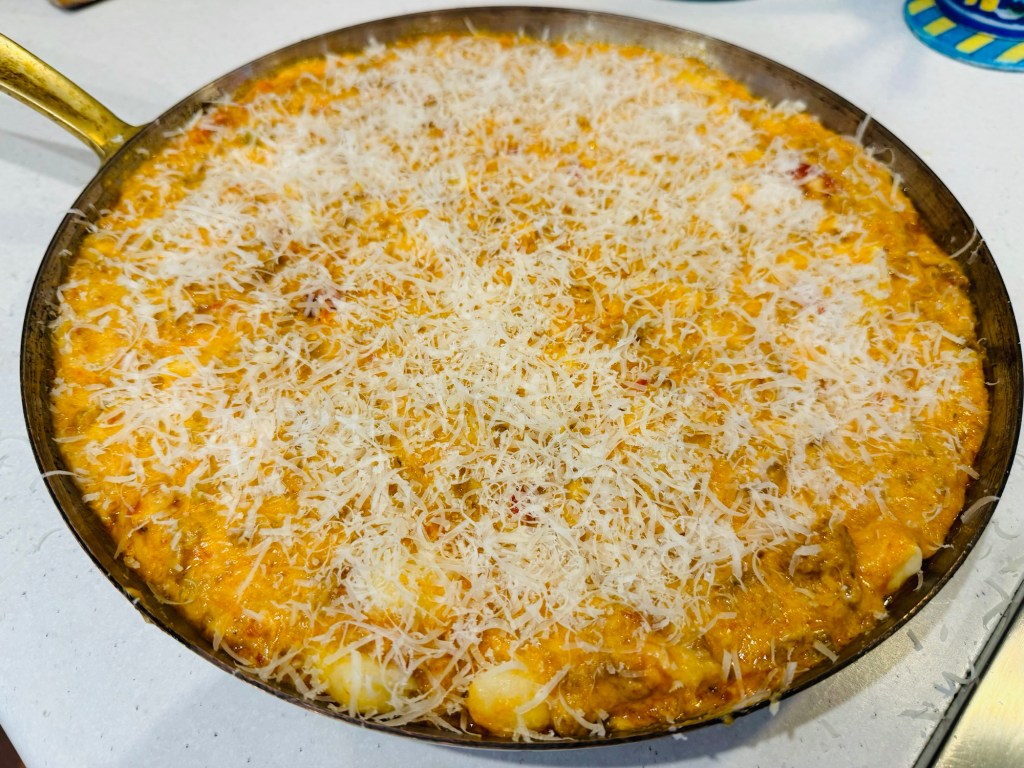
Introducing this totally nuts, baked gnocchi with beef and pork ragù!

On account of going up to Newcastle – two hours north of Sydney – for a 40th Saturday night, Nat started the ragù Friday. Gnocchi and béchamel on our return.

A triumphant, late Sunday winter lunch?

You absolutely bet!

What absolute luxury. Total, last meal decadence.

A dish that you’d drive across town for. Honestly, a dish you just can’t stop smiling about.

In a world of food complexity and pretence (and I am plenty guilty of that), this is a swinging boulder from the other direction to smash it all to pieces.

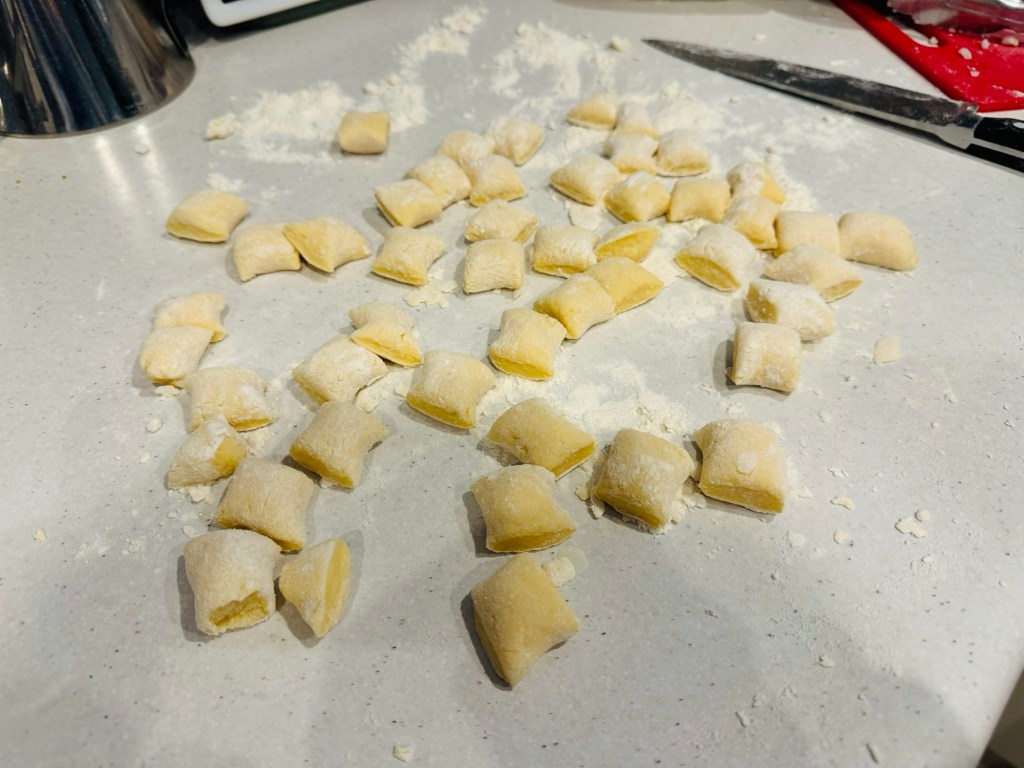
The beginning of homemade gnocchi.
Taking shape.
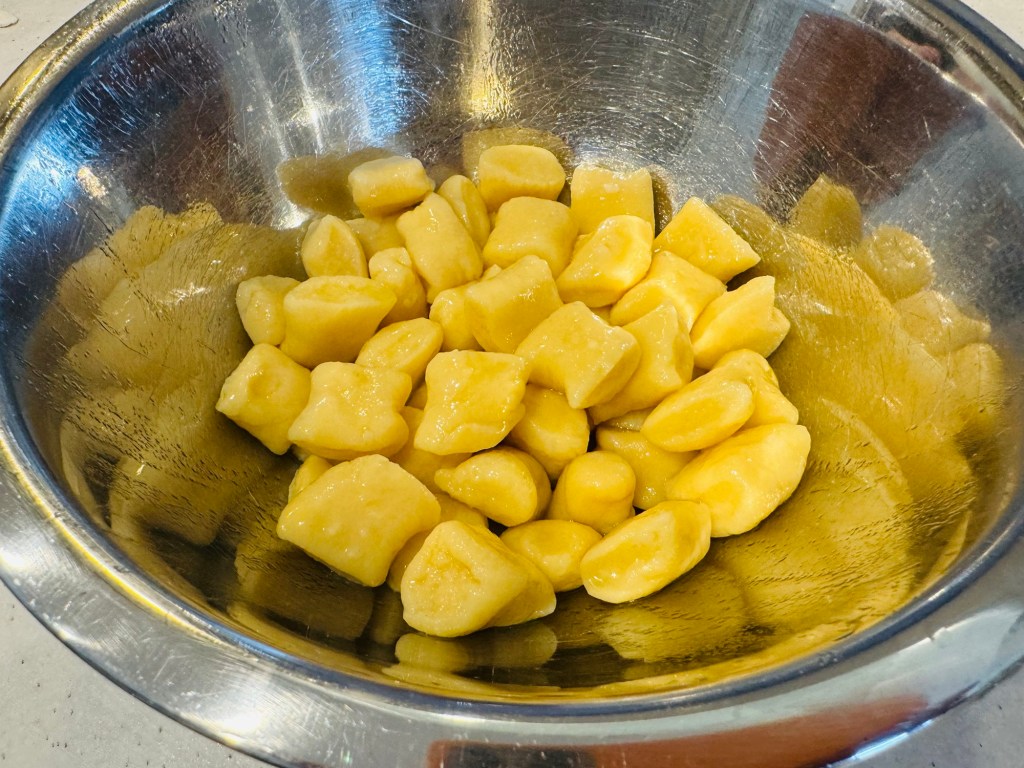
Plunged in an ice bath, reserved and tossed with olive oil.
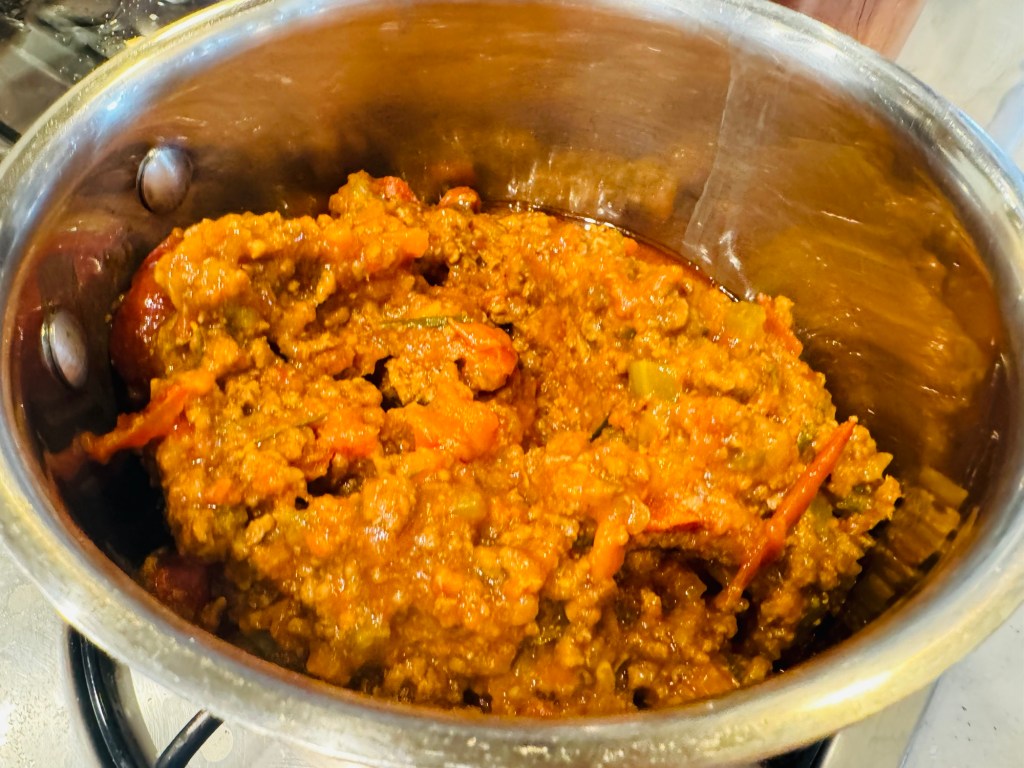
The incredible ragù.
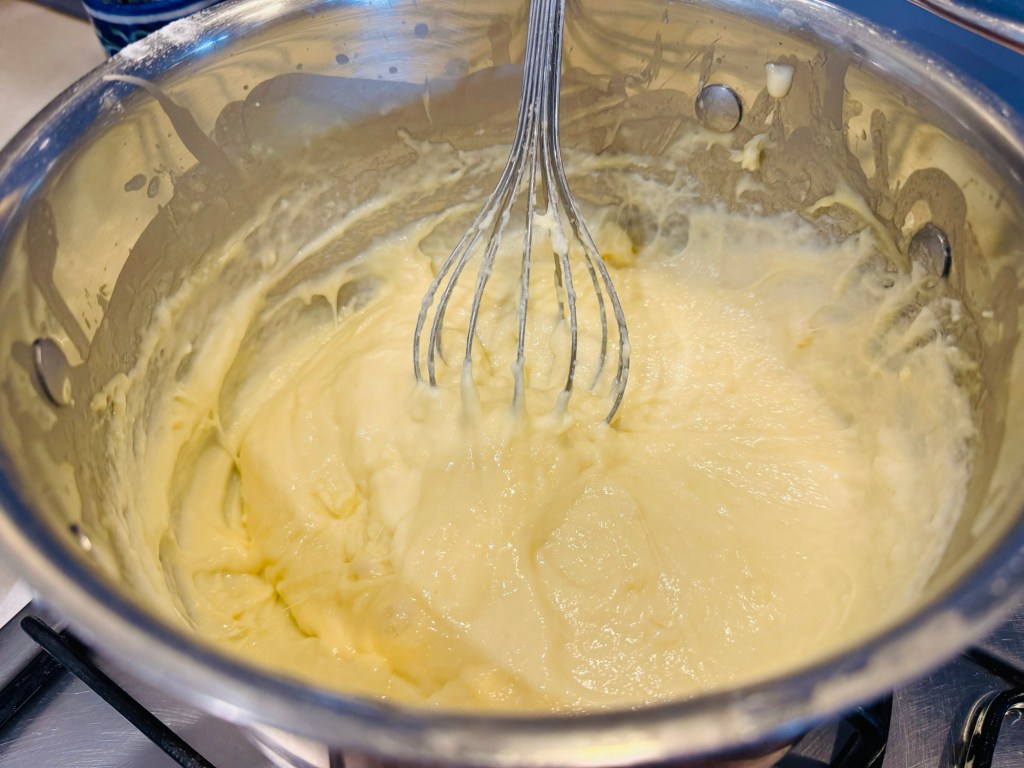
Béchamel with mozzarella and parmesan.
OMG. Combine the béchamel and ragù and two very good things have come together.
More parmesan and we are ready to bake.

Ironically, as we were leaving Newcastle this morning, Nat spotted an institution – Don Beppino’s House of Lasagne – a restaurant we had a late-night meal at 12 years ago. Already with a few drinks under our belt, we had the best night: the sort of food I am typing up here with too much Chianti and too many laughs.

About as old-school as it gets.

This is what life is all about.

Ingredients

Ragù

Extra olive oil
1 carrot, unpeeled, chopped finely
1 onion, finely diced
1 stick celery, finely diced
2 cloves garlic, finely chopped
1 sprig rosemary
1 tsp Italian herbs
1/2 tsp dry oregano
500gm beef and pork mince
1 tbsp tomato paste
Salt
1 tbsp sherry vinegar
3/4 c red wine
1 can cherry tomatoes
500ml chicken stock

Béchamel

2 tbsp butter
2 tbsp flour
1/4 c milk
1/2 mozzarella ball (175gm), chopped
1/4 c parmesan, grated
Salt

Gnocchi

6 baking potatoes
1 1/2 c plain flour (plus more as you need it)
2 egg yolks
1 tsp salt
Extra virgin olive oil

Pepper and extra parmesan to sprinkle before baking

Method

  1. Start by making a sofrito: heat some oil in a heavy pan and softly sauté the carrot, onion, celery and garlic until very soft though not golden.
  2. In a separate heavy pan, heat more oil over medium-high heat and fry the mince until browned. Add the tomato paste, salt and sherry vinegar and combine. Add the red wine, canned tomatoes and stock and bring to a boil, and then reduce the heat to a simmer adding the herbs. Cook for 30 minutes. Add the sofrito and combine, reducing the heat to low and cook for as long as you can. Taste and season and remove the rosemary sprig.
  3. For the béchamel, in a saucepan, heat the butter over medium-low heat until bubbling. Whisk in the flour until well combined and then add the milk, whisking until combined. Increase the heat and add the mozzarella and then Parmesan, whisking until well combined and fully melted.
  4. Slowly introduce the béchamel sauce to the ragù and stir to combine.
  5. To make the gnocchi, bake the potatoes at 180c until cooked through. Remove the flesh when cool and rice/mash. Combine with the flour, egg and salt and knead until combined. Set aside for 5 minutes.
  6. Heat a large pot of boiling water and separately, set up an ice water bowl to reserve the cooked gnocchi. Using a piping bag with no attachment, pipe long tubes of the combined potato mixture and then cut into 3cm gnocchi with a sharp knife.
  7. Cook the gnocchi rapidly for a few minutes until they float. Immediately transfer to the ice water bowl and allow to cool completely. When cooled, quickly drain and toss with oil.
  8. Heat an oven to 200c. Carefully combine the gnocchi with béchamel ragù mixture ensuring the gnocchi does not break up. Pour the gnocchi mixture into a baking pan; or several pans. Pepper, very liberally sprinkle over parmesan and bake until bubbling.
  9. Serve immediately with Chianti!

Valeria Necchio’s Duck Ragù with Bigoli

Serves: 6

Another absolutely incredible Valeria Necchio pasta.

Another pasta well at the peak of our ongoing ‘world’s greatest pasta challenge’ as we countdown the days to the arrival of Baby #4.

There is something so wonderfully subtle and scented about the ragù. This is class on a plate. 2-hat pasta class and I’m not overstating that.

Wow.

Nat made a nutty wholemeal pasta to go alongside and it just delivered that final, extra kick. If you don’t make your own pasta, try and find bigoli as your pasta.

I made the ragù ahead of time and reheated it with a knob of butter to add a little silk. I commend this to you.

Otherwise, this is the occasion to chill a good Vermentino, sprinkle plenty of Parmesan on the pasta, serve a side bowl of green leaves and enjoy.

This is why life is good.

Ingredients

500gm of minced duck, including fat and skin*
2 garlic cloves, slightly crushed
2 sprigs of fresh rosemary
240ml of dry white wine
480ml of duck stock or vegetable stock
2 juniper berries
2 tbsp of extra virgin olive oil
Sea salt and freshly cracked black pepper
Knob of butter when reheating

To serve

500gm of fresh bigoli pasta (or thick fresh spaghetti)
100gm of Parmesan

Method

  1. To make the duck ragù, heat the oil in a large, heavy-based pan over a medium heat. Once hot, add the garlic and rosemary and allow them to infuse in the oil for a few minutes, stirring often.
  2. Add the duck mince and increase the heat to a medium-high heat. Cook for 4 – 5 minutes, until evenly browned and season generously.
  3. Pour in the wine and stock and add the juniper berries. Bring everything to a simmer, then reduce the heat to low and cover with a lid. Cook the ragù for at least 1 hour, stirring occasionally and adding a little stock if the ragù becomes too dry.
  4. Once the liquid has reduced completely and only an oily sauce remains, remove from the heat and discard the rosemary, juniper and garlic. Cover and keep warm.
  5. Cook your pasta and drain. Reheat the ragù, adding a little butter. Toss through the ragù with the pasta and half the Parmesan. Serve with the rest of the Parmesan.

* I left the procurement of duck for this recipe quite late and only had the option of duck breasts with the skin and fat. I was concerned that this would not be fatty enough for a ragù, though after mincing and cooking, rest assured it is. 3 duck breasts is about what you need here.

Kitchenaid Wholemeal Flour Pasta Dough Recipe

Serves: 4 – 6

The result was a disaster when I first attempted wholemeal flour using my tried-and-true pasta dough recipe.

It didn’t bind. A crumbly mess.

Essentially, you can’t substitute wholemeal flour for 00 flour. The texture just doesn’t hold together.

In comes Nat of course and here you have the perfect recipe for wholemeal pasta dough.

I’ve written the recipe for the Kitchenaid and its dough hook. Kneading by hand will yield the same result of course.

Ingredients

1 3/4 c wholemeal flour
1/2 tsp sea salt
3 large eggs
1 tbsp extra virgin olive oil

Method

  1. Place the flour in the bowl of the Kitchenaid. Make a well and add the eggs, salt and olive oil.
  2. Using the dough hook, knead until the dough is smooth and no longer sticky. Don’t over-knead as it will become stiff.
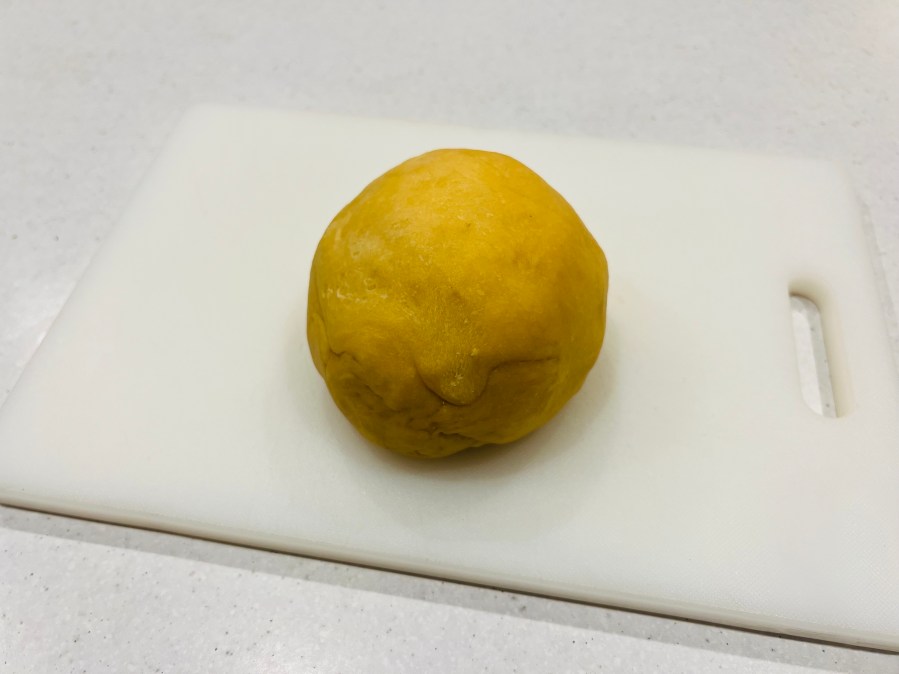
  3. Roll into a ball, cover tightly in cling wrap and set aside for 30 minutes.
  4. You must run it through the thickest roller on your pasta maker a few times when it comes to rolling: the texture of the flour just needs that extra work. Roll, fold on itself, roll again and repeat until you have a pliable dough.
  5. From here, roll to the point of thickness you desire and go from there.

Valeria Necchio’s Casoncelli – Pork, Beef, Raisin and Amaretti Ravioli

Serves: 6

Holy shit, this recipe is just incredible.

“Decident” said Nat. “Marvellous” I said. “I don’t want this to end” said Nat.

And boy, wasn’t that the truth.

Yes, in our pre-baby #4 quest to find the world’s greatest pasta, this is truly, truly in the running.

This pasta separates itself from the wonderful though simple Lidia Bastianich and Antonio Carluccio pastas we have been pushing, taking it up a level in finesse and clarity.

This pasta jumps over this otherwise incredible white ragu, being more sophisticated: less steam train, more race car.

And look, this Rodney Dunn Mushroom Cannelloni with fresh pasta sheets was one of the best pastas we have cooked.

Though in terms of peak genius, this Casoncelli is just so much more refined. Just so much more ‘in the moment’ special.

We used sliced roast beef from the supermarket. Otherwise, everything is straightforward.

Slightly depressed to read this is a common dish in the Bergamo and Brescia parts of Italy, though I guess we’ve always known the Italians have truly the best food lives. I guess we have our beaches here in Sydney however. (I know which I would take!)

If you are like us and want to chase the Saturday-night pasta hit, this my friend is unquestionably the next rung in the ladder.

Ingredients

Pasta dough

Make my Kitchenaid Pasta dough

Filling

1 tbsp unsalted butter
150gm Italian sausage meat, crumbled
100gm roast beef, minced
120gm breadcrumbs
1 medium egg
70gm Parmesean, grated
10gm Amaretti biscuits (about 3), crushed
10gm raisins, soaked, squeezed and then chopped
Fine sea salt
Freshly ground black pepper

Sauce

80gm unsalted butter
80gm pancetta, cut into thin strips
4 sage leaves
80gm Parmesean, grated

Method

  1. Make the pasta per my Kitchenaid Pasta Dough Recipe.
  2. Make the filling: brown the sausage meat with the butter over a medium heat, then add the roast beef and cook for a few minutes, stirring often, so the flavours can mingle together. Transfer to a bowl, then add the breadcrumbs, egg, Parmesean, amaretti and raisins. Season with salt and pepper and stir to combine.
  3. Roll the pasta in a pasta machine to setting 2. Using a round 7 – 8cm ravioli cutter, cut out as many circles of pasta as you can get.
  4. Place a tsp of the filling at the centre of each circle, then gently fold it over to form a half moon. Press the edges together using a fork.
  5. Bring a large pot of salted water to a rolling boil. Meanwhile, in a frypan set over a medium heat, melt the butter for the sauce. Add the pancetta and sage and fry for a few minutes, until crispy.
  6. Cook the casoncelli in boiling water for a few minutes until they float to the top. Drain with a slotted spoon and transfer to the frying pan with pancetta and butter sauce. Sauté for 30 seconds, until evenly dressed.
  7. Serve immediately with a dusting of grated Parmesean.

Kitchenaid Pasta Dough Recipe

Serves: 4

If you need a great Kitchenaid pasta dough recipe, bookmark this one.

Just don’t lose faith. It needs 8 – 10 minutes of kneading in the machine, though at that point, you’ll have a ball of delicious pasta dough, ready for resting, rolling and cooking.

Ingredients

2 c 00 flour
3 large eggs
1/2 tsp salt
1/2 tbsp extra-virgin olive oil

Method

  1. Place the flour in the mixing bowl and make a well in the centre. Add the eggs, salt and olive oil into the well and use a fork to gently break up the eggs.
  2. Knead the dough on a low setting for 8 – 10 minutes, ensuring all of the flour is pushed off the walls of the bowl. Once the dough is smooth, roll into a ball. If the dought is too dry, ad a few sprinkles of water. Wrap in plastic wrap and let rest at room temperature for 30 minutes.
  3. Roll and do whatever pasta you’re planning!

Lidia Bastianich’s Linguine with Bacon and Onions

Serves: 4 – 6

I described this recipe to a cooking mate and he said, “so you cooked Carbonara” and I said “sort of, though with onions and less egg yolks” and he said said “so you cooked Carbonara with onions”.

He’s right, though I’m typing it because it is a sensational pasta – one where Nat made our own linguini – as well that the addition of the onions really are lovely, especially with the size of the cut of the onion.

If making your own pasta, we always use this amazing Kitchenaid pasta dough recipe and suggest you do too!

Fresh pasta is your every-time trump card.

Find the thickest bacon you can find, crisp it up, open a good red and this is a thoroughly enjoyable lunch.

Another Lidia win.

Ingredients

Salt
180gm slab bacon, ideally in one piece – or thick bacon
2 tbsp extra virgin olive oil
2 large yellow onions, , sliced 1.5cm thick (about 3 cups)
1 1/2 c hot chicken stock
500gm linguini
3 egg yolks
1 c freshly grated Parmesean cheese
Freshly ground black pepper

Method

  1. Bring a large pot of salted water to the boil.
  2. Cut the bacon into 1cm slices and heat the olive oil in a large, heavy skillet over a medium-high heat. Add the bacon and cook, stirring, untilthe bacon is lightl browned, but still soft in the centre, about 6 minutes.
  3. If there is more and 3 – 4 tbsp of fat in the skillet at this point, pour off the excess. If less, top up to 3 – 4 tbsp with olive oil. Add the onions and cook until wilted though still crunchy, about 4 – 5 minutes. Add the stock, bring to the boil and adjust the heat to a lively simmer. Cook until the liquid us reduced by half.
  4. Meanwhile, cook the pasta until al dente reserving some pasta water.
  5. Laddle a cup of the pasta water and add it to the sauce along with the drained pasta. Bring to the boil, stirring to coat the pasta with sauce and adding stock or water as necessary to make it a generous coat.
  6. Remove the pan from the heat and add the egg yolks one at a time, tossing them through the pasta. Add the grated cheese and black pepper, toss through and serve.