Antonio Carluccio’s Tuscan Pasta with Pork Sauce

Serves: 6

This was a pretty astonishing pasta we cooked as part of a slow, Saturday-night in Italian date-night.

Astonishing for two reasons.

Firstly, Nat made fresh fettuccini and fresh pasta always gives you a major speed bump. (Note, this recipe calls for pici, a handmade, spaghetti like pasta. The flavours of the pasta call for a thicker pasta like this and so Nat kept our fettuccini thick and it was amazing. The sauce is substantial so you will want a substantial pasta to pair.)

If making your own pasta, we always use this amazing Kitchenaid pasta dough recipe and suggest you do too!

Homemade pasta; an automatic tick.

Secondly, the sauce is so strong, so nuanced, so restrained and subtle, all at the same time. Together with the fresh pasta, this is a dish that says, see what I can do?

We really were lost for words. Whereas the point of a ragu is to overwhelm with flavour, this ragu just swam under the surface is the most wonderful way. It was a bloody triumph.

We’ve fallen into a bit of a Saturday-night pasta habit. It’s not necessarily our evening of peak cooking, though it should be the most enjoyable.

Finding a new and genius pasta each time is hard. My fallback is so often Antonio Carluccio and he never fails.

Make your own pasta. Slow cook that ragu. Plenty of Parmesan. And I promise this will absolutely wow you. 2-hats.

I have slightly adjusted this recipe.

Ingredients

400gm pici or pinci (or the largest spaghetti as possible)
80gm pecorino cheese or Parmesan, freshly grated

Pork ragu

6 tbsp olive oil
1 small onion, finely chopped
1 celery stalk, finely diced
1 carrot, finely diced
500gm pork pork mince (not too fatty)
100ml dry red wine
500gm polpa di pomodoro or chunky passata
7 dry bay leaves
Salt and pepper

Method

  1. Heat the oil in a pan, add the onion, celery and carrot and fry gently until soft. Add the meat and cook until the liquid evaporates and then brown the meat slightly.
  2. Add the wine and let the alcohol evaporate. Stir in the tomato pulp and add the the bay leaves and some seasoning. Cook very slowly for two hours.
  3. Cook the pasta until al dente and then toss with the the sauce. Serve with grated cheese.

Lidia Bastianich’s Tagliatelle with Walnut Pesto

Serves: 6

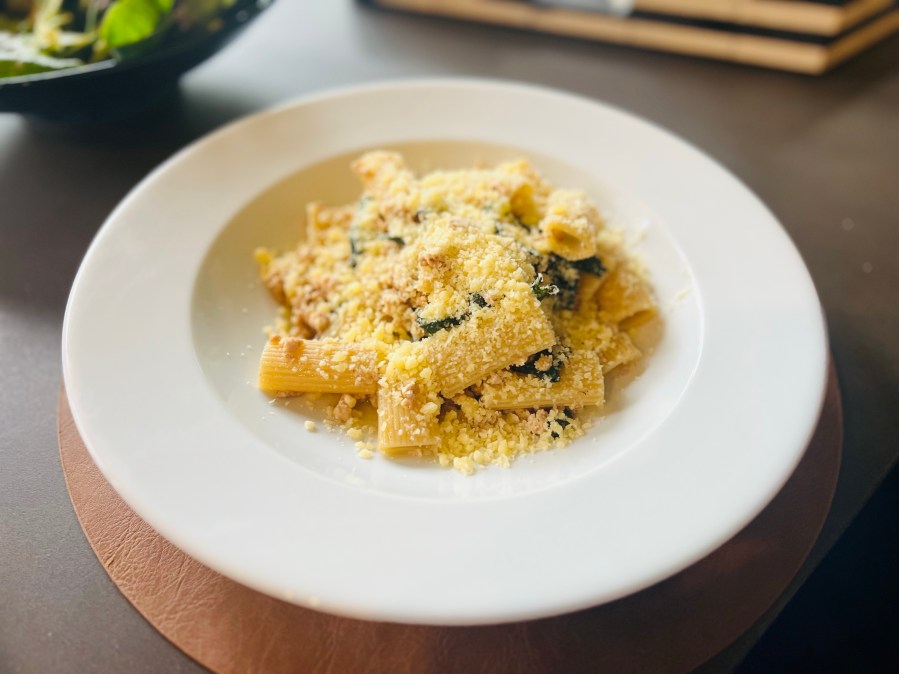
First, I used rigatoni here and I am really glad I did.

Secondly, I almost did not type it.

Initially at least, as a main, it was a bit overwhelming.

All those walnuts. Lovely, though unusual and together with the ricotta and the Parmesan and the butter, quite something.

Indeed, we both agreed lovely, though maybe as a starter.

The next day though, I took a box to work with some sprinkled Parmesan and wow. What a lunch.

Not a low-cal lunch by any stretch, though what a bloody treat. I couldn’t get enough.

And then Nat messaged me and whilst she had a mush smaller serve, also agreed that it was just bloody wonderful.

So do it with rigatoni. And let it sit in the fridge for a day.

Because as with every Lidia Bastianich recipe, you’re onto a winner. Even if it does take one more day to fully get there.

Ingredients

2 cups walnut halves or pieces, toasted
2 plump garlic cloves, peeled
1 1/2 c ricotta
6 tbsp extra-virgin olive oil
6 tbsp grated Parmesan plus extra for serving
3 tbsp chopped fresh Italian parsley
1 tsp salt
Freshly ground black pepper to taste

For the pasta

1 batch tagliatelle (use 500gm rigatoni)
3 tbsp soft butter

Method

  1. Heat the water to a boil ready for the pasta.
  2. Put the walnuts and garlic in a food processor and pulse until the nuts are chopped into very tiny bits, though not a powder. Scrape the nut-garlic mixture into a bowl and stir in the ricotta, olive oil, Parmesan, parsley, salt and pepper, until thoroughly blended.
  3. Cook the pasta and when cooked, working quickly, and add to the walnut pesto. Drop the soft butter into the mixture, stirring to combine.
  4. Serve immediately in warm bowls, with more grated Parmesan at the table.

Lidia Bastianich’s Shepherd’s Rigatoni

Serves: 6

I am now two for two with Lidia’s recipes.

Two pastas down – two incredible pastas down – and both needing to be typed up.

I’m going to put her into the Antonio Carluccio class of chefs where everything will be brilliant.

Indeed, his rustic pasta is yet more proof that the simplest pastas can not only be the best, though can be the most sophisticted. Long Sunday-lunch sort of stuff.

This will most definitely be cooked again.

Ingredients

500gm sweet Italian sausage, removed from casings
1/4 c extra virgin olive oil
1/2 tsp chilli flakes
500gm rigatoni
1/2 tsp salt
1/4 c grated Parmesan
1/2 c loosly packed basil leaves, shredded

Method

  1. Bring a pot of salted water to the boil to cook the pasta.
  2. For the sauce, crumble the sausage meat in a bowl, breaking into small clumps with your fingers. Pour the olive oil into a skillet and set it over a medium-high heat. Sprinkle in the chilli flakes and toast for a few seconds., then scatter the crumbled sausage meat in the pan. Cook the sausage, stirring and breaking up any clumps, for 10 minutes or so, as the meat juices are released and cook away, until it is all well browned and crispy.
  3. Meanwhile, while the sausage is cooking, drop the rigatoni into the boiling water, stir and cook to the boil. When the sausage is browned and crisp, laddled about 1/2 cup of the pasta cooking water into the skillet, and deglaze the pan bottom, scrapping up the browned bits. Season the sausage meat with the salt, and stir with the bit of moisture in the pan.
  4. When the pasta is al dente, lift it from the pot, drain briefly and drop in into the skillet. Toss the rigatoni and sausage together, then turn off the heat and stir in the ricotta and Parmesan. Scatter the basil on top and toss well to dress the pasta evenly. Heap the ragatoni in warm bowls and serve immediately with extra Parmesan.

Riccardo Momesso’s Chicken and Clove Ragù with Polenta Pasta

Serves: 6 – 8

This wonderfully aromatic pasta is really quite sophisticated and absolutely memorable. A great example of how simple yet elegant a white ragù can be.

I didn’t have the time to make the polenta pasta though I have no doubt that would even further the wow factor. Next time.

I freshly and coarsely minced chicken thigh to make the chicken mince and if you can do so, it is so much better than store bought.

Served alongside Rodney Dunn’s Leaf Salad with Anchovy Salad Cream, this was a perfect Autumn lunch.

Just add Pinot Gris or better, Pinot Noir!

Ingredients

1 bunch cavolo nero, trimmed, roughly cut and ribs removed (about 350gm)
60ml olive oil (1/4 cup)*
2 garlic cloves, thinly sliced
3 anchovy fillets
40gm finely grated pecorino, plus extra to serve (1/2 cup)

Polenta pasta

100gm polenta
500gm plain flour (3 cups)

Chicken ragù

60ml olive oil (1/4 cup)*
3 golden shallots, finely diced
1 garlic clove, finely chopped
1kg coarsely minced chicken
1ltr dry white wine
4 cloves, cracked

Method

  1. For the polenta pasta, bring 350ml of salted water to the boil in a saucepan over medium-high heat, then add polenta in a thin, steady stream while whisking continuously until all is incorporated. Reduce the heat to low and stir occasionally until the polenta is cooked and thick (35 – 45 minutes; you may need to add extra water). Spread thinly on an oiled tray, cover with plastic wrap and refridgerate to chill. Transfer polenta to a kitchen mixer fitted with a paddle and beat until smooth. Add flour and mix until a soft dough forms. Turn out onto a lightly floured surface and knead until smooth (8 – 10 minutes), adding extra flour if too sticky. Wrap in plastic wrap and set aside to rest (30 minutes).
  2. For chicken and clove ragù, heat oil in a saucepan over medium heat. Add shallot and garlic and sauté until tender (8 – 10 minutes). Add chicken and fry until juices reduce and chicken begins to brown (35 – 40 minutes). Add wine and cloves, and simmer until liquid is almost evaporated (30 – 40 minutes). Add 1 litre water and reduce by half (30 – 40 minutes). Season to taste and set aside**.
  3. Meanwhile, divide pasta into quarters and roll each out on a lightly floured surface to about 2mm thick. Cut into triangles of about 3cm and transfer to flour dusted trays.
  4. Cook cavolo Nero in a saucepan of boiling salted water until tender (2 – 3 minutes). Drain, refresh and set aside. Heat oil in a large frying pan over a medium-high heat, add the garlic and anchovies and cook until starting to colour (2 – 3 minutes). Add cavolo nero, season to taste and cook until starting to colour (2 – 3 minutes). Transfer to chicken ragù and stir to combine.
  5. Cook pasta in a large saucepan of simmering salted water until al dente (1 – 2 minutes). Drain, toss with ragù, sprinkle with pecorino and serve hot with extra pecorino.

* I used extra virgin olive oil and it was fine.

** I cooked the water down further though don’t push it. The liquid is wonderful when tossed through the pasta and it really is the wow factor I referred to!

Ada D’Urzo;s Pollo Alla Cacciatore (Hunter’s Chicken)

Serves: 4

This is an absolutely classic dish from Tuscany and I’m sure I’ve cooked various iterations over the years. Or at least eaten them.

This iteration is magic.

I added a sliced zucchini as the vegetable, though mushrooms or capsicum or really anything would work if you feel like the addition of a vegetable; though by its own, it is just so bloody good.

A big sprig of rosemary, the marjoram and the white wine. A slow braise of the chicken with the tomato. Stop!

Stretch for a parmesan polenta or a mash and this is just comfort and very simple comfort. Classic.

(I’ve very slightly adapted the recipe.)

Ingredients

4 tbsp extra virgin olive oil, plus extra to serve
1 large onion, roughly chopped
1kg chicken thigh cut into pieces
250ml white wine
10 cherry tomatoes, cut in half
1 rosemary sprig
1 marjoram sprig
Salt and pepper
Zucchini or vegetables of your choice

Method

  1. Gently heat the oil in a large heavy-based saucepan over low heat, add the onion and cook until transparent. Remove the onion and set aside. Increase the heat to medium, then add the chicken pieces and brown on all sides.
  2. Return the onion to the pan and add the wine, tomatoes, rosemary, marjoram, salt and pepper as well as any vegetables you want to add. Reduce the heat to low and cook, uncovered, for 1 hour, turning the chicken pieces occasionally.
  3. If it starts to dry out, add a little warm water, Serve with a drizzle of extra olive oil.

Lidia Bastianich’s Pasta with Baked Cherry Tomatoes

Serves: 6

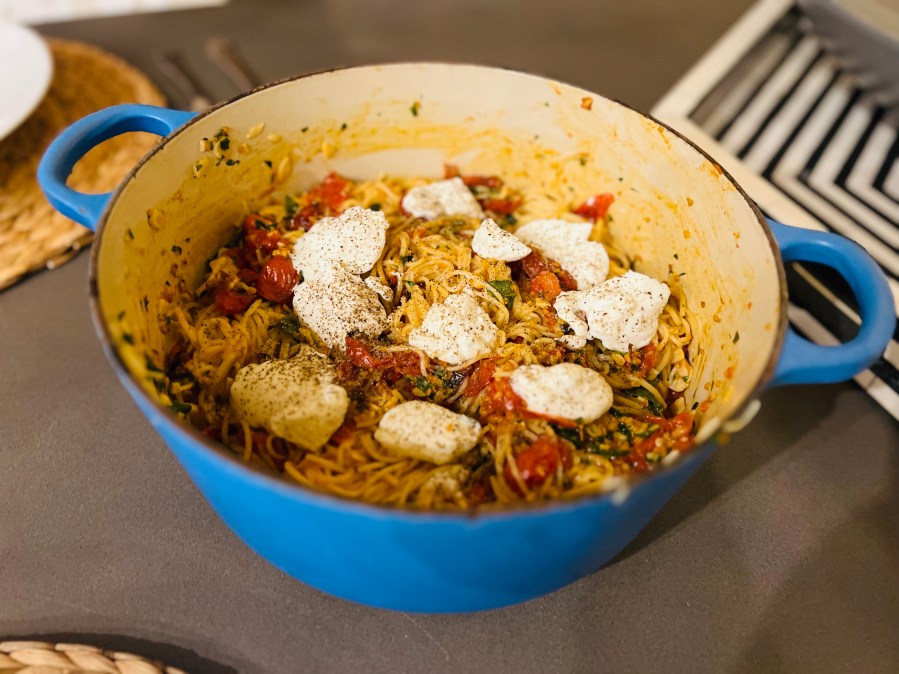
Goodness, I did not expect my first Lidia pasta to be this good.

As in, immediately one of Nat’s absolute favourites of all time and better than my abbriata which until then was the favourite of all time!

It’s much more than a baked cherry tomato pasta.

It’s all that garlic, fried and then fast boiled in the pasta water; the subsequent frying off of the parsley. The basil. The chilli, The parmesan.

And the addition of the ricotta adding all that creaminess.

Absolutely lovely.

Hats off Lidia. Your book will be revisited imminently

Ingredients

1.5kg cherry tomatoes, halved
1/2 c plus 1 tbsp extra-virgin olive oil
1/3 c fine dry breadcrumbs
1 tsp salt, plus more for the pasta pot
1/4 tsp chilli flakes, or to taste
500gm spaghetti, gemelli or penne*
10 plump garlic cloves, peeled and sliced
2 tbsp chopped fresh Italian parsley
1 c loosely packed basil leaves, shredded
1/2 c freshly grated parmesan
125gm ricotta

Method

  1. Heat the oven to 180c. Toss the cherry tomato halves in a large bowl with 3 tbsp of the olive oil. Sprinkly over the breadcrumbs, salt and chilli flakes and toss well to coat the tomatoes evenly. Pour the tomatoes onto a baking tray lined with baking paper and spread them apart in a single layer. Use a second tray if necessary. Bake until the tomatoes are shriveled and lightely caramelised (though not dried out), about 25 minutes in all.
  2. Meanwhile, fill a large pot with salted water and heat to a rolling boil. When the tomatoes are nearly done, drop the pasta into the pot, stir and cook.
  3. As soon as the pasta is cooking, pour the remaining olive oil into a big skillet, set over a medium-high heat and scatter in the sliced garlic. Cook for a minute or two, until it is sizzling and lightly coloured, then ladle in about 2 cups of the pasta cooking water, and bring to a vigorous boil, stirring up the garlic. Let half the water evaporate**, stir in the chopped parsley, and keep the sauce barely simmering.
  4. As soon as the tomatoes are done, remove them from the oven.
  5. When the pasta is al dente, lift it from the water, drain for a moment, and drop it into the skillet, still over the low heat. Toss the pasta quickly with the garlic-and-parsley sauce in the pan, then slide in the baked tomatoes on top of the pasta. Scatter the basil shreds all over, toss everything together well, until the pasta is evenly dressed and the tomatoes are distributed throughout. Turn off the heat, sprinkle on the grated parmesan, and toss once more.
  6. Mound the pasta in a warmed serving bowl. Shred the ricotta all over the top of the pasta and serve immediately.

* When our builder looks after our house when we are away, he always leaves some damn fine Italian staples he picks up in Five Dock, Sydney. Quite the foodie. Anyway, we used a beautiful packet of spaghettini and it was just lovely.

** I did not read this right and cooked it right down before adding the parsley. Worked, though you can’t go wrong with pasta water in pasta so go with Lidia’s instruction here.

Claudia Roden’s Sweet and Sour Minty Grilled Courgettes

Serves: 4

One of my favourite BBQ tricks is to toss sliced zucchini with oil, chilli and garlic and to grill alongside the chicken, pork, whatever.

It dials things up and shows a bit of effort.

This dish goes further and the addition of the ricotta is wonderful.

Nat absolutely loved the sweet and sour of the sauce and of course, it can all be prepared in advance.

Ingredients

3 courgettes (zucchini), cut lengthways into 1cm-thick slices
Olive or sunflower oil
100ml white wine vinegar
50gm sugar
1 tbsp dried mint
Salt and black pepper
Extra virgin olive oil, to serve

Whipped ricotta

250gm smooth ricotta
1 1/2 tbsp extra virgin olive oil
Grated zest of 1/2 small lemon
Salt and pepper, to taste

Method

  1. For the ricotta, whip the ricotta with the oil, lemon zest and season.
  2. Preheat a grill to high. Brush the courgettes with oil on both sides and sprinkle with salt. Grill on the BBQ or on a griddle pan for about 10 minutes until tender and lightly browned in places.
  3. Heat the vinegar and sugar with the dried mint and some pepper in a small pan over a medium heat, stirring until the sugar melts, then simmer for 2 minutes to reduce it a little. Arrange the courgette slices side by side on a serving plates pour the vinegar dressing over them and add a drizzle of extra virgin olive oil. Serve with the whipped ricotta.

Claudia Roden’s Tagliolini with Lemon

Serves: 2 – 4

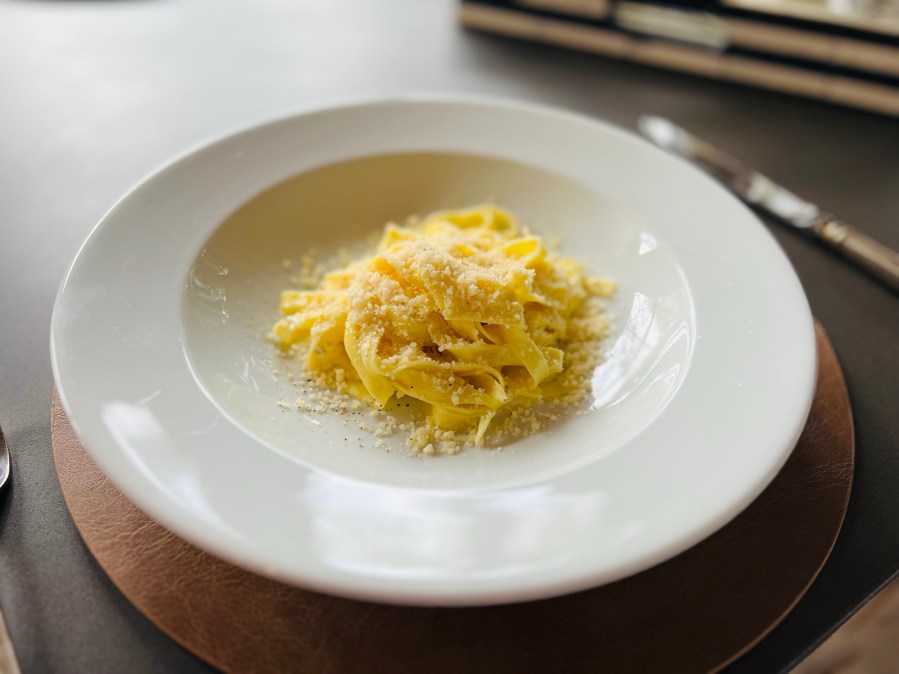
Nat and I had this Sicilian dish as the starter of a slow lunch and what a way to start.

It hero’s lemon and it is just “incredibly delicious” as Claudia puts it in her book Med. Absolute lemon simplicity, especially with a fresh pasta as we did.

And completely elegant.

P.S. Nat wasn’t entirely sure this dish was type-up-worthy. She very much liked it, though found it very much on the lemon side. Nat suggested adding some fresh chilli to cut through.

I absolutely love lemon so this was a home-run for me, though we both agreed, as a starter only.

Ingredients

200gm tagliolini
Salt
Grated zest and juice of 1 lemon
6 tbsp double cream
Salt and black pepper
Grated Parmesan to serve

Method

  1. Cook the tagliolini in boiling, salted water until al dente.
  2. In a serving bowl, mix the lemon zest and juice with the cream and add salt, to taste.
  3. When the pasta is cooked, drain and mix with the sauce.
  4. Serve with plenty of Parmesan and a few good cracks of pepper.

Gordon Ramsay’s Home-made Gnocchi with Peas

Serves: 4

Nat cooked this one for a simple lunch a little while back and the gnocchi is probably the best I have had.

Entirely incomparable to something you would get in a pack, dry or otherwise. We have previously used Anne Burrell’s gnocchi recipe as our go to, though the addition of ricotta here means that when pan fried, the creaminess against the golden, crunchy exterior is just melt-good mad.

The pea sauce is subtle and just a lovely pairing.

A few years ago, this is the sort of thing a hatted restaurant might put up. A real nod to simplicity.

Open a bottle of white, serve with a salad (we served it with this Gordon Ramsay salad) and you have a home lunch you’ll be grinning at.

Ingredients

2 large floury potatoes
50gm ricotta cheese
90gm plain flour
1 large egg, beaten
1 thyme sprig, leaves only
Sea salt and freshly ground white pepper
Grated Parmesan cheese to serve

For the sauce

Olive oil, for frying
Freshly ground black pepper
150gm peas, podded if fresh, defrosted if frozen
Butter
1 thyme sprig, leaves only
Zest of 1 lemon

Method

  1. Preheat the oven to 200c. Bake the potatoes in their skins for 1 – 1 1/4 hours until tender the whole way through. Remove the flesh from the skins (while still warm) and mash until spoon – use a potato ricer if you can. Mix in the ricotta, a pinch of salt and white pepper and the flour. Make a well in the middle, add the beaten egg and begin to combine the mixture with floured hands. Work in the thyme leaves and continue until a smooth dough has formed. (Be careful not to overwork the dough or it will end up too dense and won’t expand when it goes into the water.)
  2. Cut the dough in half and shape each piece into a long cigar shape about 1.5cm thick. Using the back of a floured table knife, cut each length into 2cm pieces to make ‘pillows’ of individual gnocchi. Gently press each one in the centre using your floured finger. The dent will hold more sauce and allow the gnocchi to take on more flavour.
  3. Bring a large pan of water to the boil. Add the gnocchi, tilting the pan from side to side briefly to stop them sticking together, then simmer for 1 1/2 – 2 minutes until they start to float. Drain the gnocchi and leave them to steam-dry for 1 – 2 minutes.
  4. Meanwhile, start to make the sauce. Heat a frying over a medium-high heat and add a little olive oil. Add the gnocchi to the hot pan with a pinch of salt and black pepper and sauté for 1 – 2 minutes on each side until nicely coloured.
  5. Add the peas to the pan with a knob of butter and the thyme leaves. Toss to heat through, then add the lemon zest. Serve with grated Parmesan cheese.

Marcella Hazan’s Tomato Sauce

Serves: 4

There was furious debate after I served this sauce and pasta in a pasta cook off with Nat.

Nat served the wonderful spinach ravioli and certainly, taking into account effort, presentation and overall yum factors, it nailed the brief and took out the day.

Except that it was a reluctant and technical tie.

Because the absolutely classic Marcella Hazan tomato sauce is simply so simple and classic, it is pretty much impossible not to give it the nod for doing so much more with so much less.

With a sprinkling of Parmesan. What on earth is not to love. It’s just not fair.

P.S. I did give the nod to Nat because hey, it’s 2022 and not 1962. Though Marcela sauce is no lemon at a knife fight.

Ingredients

2 cans of tomatoes and their juices
5 tbsp butter*
1 onion, peeled and cut in half
Salt
Pasta and Parmesan to serve

Method

  1. Combine the tomatoes, their juices, the butter and the onion halves in a saucepan. Add a pinch or two of salt.
  2. Place over the medium heat and bring to a simmer. Cook, uncovered, for about 45 minutes. Stir occasionally, mashing any large pieces of tomato with a spoon. Add salt as needed.
  3. Discard the onion before tossing the sauce with the pasta. Toasts through 500gm of cooked pasta and serve with Parmesan.

* Use a great butter like CopperTree Farms.