There is nothing revolutionary in this recipe; it’s down the line.
Though in our search of the simplest – and greatest – pastas, I have no choice but to type it up.
As part of Nat’s search for the world’s best pasta, it’s not going to be a finalist.
Though that isn’t the point.
We all need a (growing) repitoir of simple pastas for a late Saturday lunch. Grab a few ingredients from the shops.
Even better, we have basil aplenty in our modest herb garden and we always have pine nuts and grated Parmesan in the fridge.
The point instead is that you can feed eight on a dime. And in a way that eyes will lock, people will smile, you did this on a whim and satisfaction levels are sky-high given the circumstances: dinner on a whim.
Ingredients
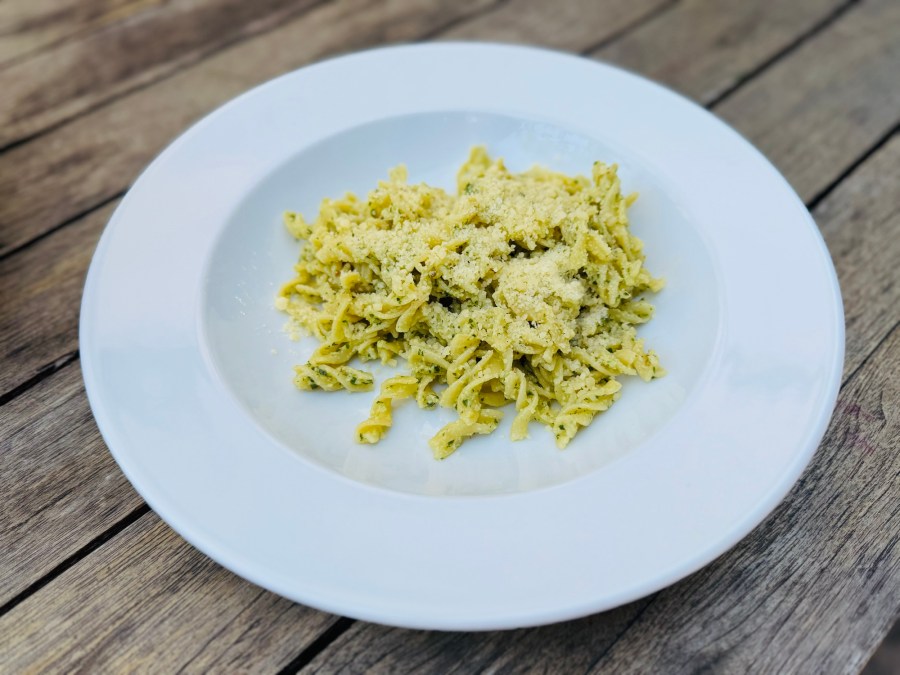
1/2 c toasted pine nuts 2 tbsp fresh lemon juice 1 garlic clove 1/2 tsp sea salt Freshly ground black pepper 2 c basil leaves 1/4 c extra virgin olive oil 1/4 c fresh grated Parmesan cheese, plus extra to serve Pasta, cooked al dente to serve
Method
In a good processor, combine the toasted pine nuts, lemon juice, garlic, salt and pepper and pulse until well chopped.
Add the basil and pulse until combined
With the food processor running, drizzle in the olive oil and pulse until combined. Add the Parmesan cheese and pulse to briefly combine. For a smoother pesto, add more olive oil.
Serve with al dente pasta, more Parmesan, open a red, sit back and smile.
I’ve read Alfredo recipes that add cream, which I think is akin to adding cream to Carbonara. It’s amazing in a dodgy pizza restaurant in Newtown or Brooklyn, though hardly traditional or subtle.
This recipe from Serious Eats goes back to the original recipe with nothing but pasta, Parmigiano-Reggiano, butter and salt: no pepper, nothing else.
In terms of pure joy, this is it.
As part of Nat’s search for the World’s Best Pasta and in a slipstream of cooking the simplest pasta, the original Alfredo made the cut and came out way ahead.
Use a younger Parmigiano-Reggiano, pour a glass of cold Riesling and sit in the sun with a bowl of this pasta and prepare to be amazed.
Pure joy.
Ingredients
115gm good unsalted butter, diced 115gm grated Parmigiano-Reggiano cheese plus more for serving Salt flakes 500gm fresh fettuccine pasta
Method
In a large heatproof bowl, combine butter and cheese.
Cook the pasta in salted boiling water until al dente; drain, transfer the pasta to the bowl with the cheese, retaining 1/2 c pasta water.
Add the pasta water to the pasta, butter and cheese and using tongs, toss the pasta repeatedly until the butter is melted and a creamy, emulsified sauce forms. Add more pasta water if the pasta seems too dry. Season with salt, sprinkling more cheese at the table.
I was worried this wouldn’t be a special pasta, though there is something very special about it. There is a real nuance in the flavour and it’s just lovely.
Definitely the marjoram. Definitely.
Could also be the parmesan rind.
Could be that I really slowly cooked it down and then let it sit for a few hours.
Definitely was because it was a mid-week dinner.
We had dinner at Pelengrino2000 for Nat’s birthday earlier in the week and this is exactly what I would have expected from them.
1-hat stuff.
Hat’s off Colin Fassnidge. First recipe and it hit it out of the park.
Ingredients
1/2 c extra virgin olive oil 1 onion, finely chopped 3 garlic cloves, crushed 1/2 bunch marjoram, leaves picked and finely chopped, stalks finely chopped 1 red chilli, finely chopped 500gm pork mince 1/3 c white wine 700ml tomato passata 2 parmesan rinds (substitute 1/2 c finely grated parmesan) plus extra finely grated to serve 350gm spaghettini or rigatoni
Method
Heat oil in a large skillet over low-medium heat. Add the onion, garlic, marjoram stalks and chilli, and cook, stirring occasionally, for 10 minutes or until the onion is softened. Increase heat to high, add pork and cook for 10 minutes or until evenly browned.
Add the wine and cook, stirring regularly, for 2 minutes or until the liquid is reduced slightly. Add passata, parmesan rinds and 3/4 marjoram leaves, and bring to the boil. Reduce to a gentle simmer and cook, stirring occasionally, for 30 minutes to reduce slightly and develop flavour. Discard rinds.
Meanwhile, cook your pasta al dente, reserving 1/3 pasta cooking water.
Toss pasta and reserved cooking water through the tomato mixture. Scatter with remaining marjoram leaves and extra parmesan to serve.
My father-in-law – also a Rob – and I have a shared passion for classic, old-school, home-cooked Italian.
If you follow my blog, you’ll know I have typed up many of Antonio Carluccio’s recipes, as just one example of the old-school Italian Rob and I enjoy so much.
I helped Rob with a few jobs at the start of the year and as thanks, he gave me Lidia Bastianich’s cookbook, ‘From Our Family Table to Yours’. (If you wanted to know the way to my heart, buy me a cookbook and preferably, one written by Lidia!)
Rob suggested I kick off the book by cooking Lidia’s Leek and Ricotta Tart.
To summarise the end-result, Tom, our 13-year old food critic simply said, “this is brilliant”. And he wasn’t wrong.
I love anything with ricotta and the leek is a wonderful addition.
For a long, homely Italian lunch or dinner, kicking-off the meal with this tart would very much set the scene for a special meal ahead.
Divertitevi!
Ingredients
For the dough
1 1/2 c all-purpose flour plus more as needed 1/2 c freshly grated Parmesean 2 tsp sugar 1/2 st salt 1 large egg yolk (save the white for the filling) 7 tbsp unsalted butter, cold, cut into bits
For the filling
3 tbsp unsalted butter, plus more for the baking pan 2 large leeks, white and light green parts, halved vertically, sliced 2cm thick 4 spring onions, chopped Salt and freshly cracked black pepper 1 large egg white (yolk used in the dough) 1 c fresh ricotta (I used smooth) 1/2 c freshly grated Parmesean, plus more for sprinkling 1/4 c chopped fresh Italian parsley Pinch of freshly grated nutmeg 1 large egg, beaten, for an egg wash
Method
For the dough: combine the flour, grated cheese, sugar and salt in a food processor, and pulse to combine. Beat the egg yolk in a spouted measuring cup with 1/3 water.
Scatter the butter pieces over the flour, and pulse until the mixture is lumpy. Drizzle in the egg-yolk mixture, and pulse until the dough comes together, adding a little more water or flour as needed. Move the dough to a floured counter, and knead it a few times to bring it together. Form it into a disk, wrap is plastic wrap, and chill until just firm, about 1 hour.
For the filling: melt the 3 tbsp butter in a medium skillet over a medium heat. Add the leeks, and cook, stirring often, until they’re tender: about 10 minutes. Add the scallions, and continue to cook until they are wilted but the green parts are still green: about 4 minutes. Season with 1/2 tsp salt and several grinds of pepper, and let it cool.
Beat the egg white in a large bowl until foamy. Add the cooled leeks, the ricotta, 1/2 c grated cheese, parsley, and nutmeg. Season with 1/2 tsp salt and stir to combine.
Preheat the oven to 180c with a rack in the bottom third. Butter a large 18cm cake pan. Roll the dough on a piece of baking paper to a circle about 30cm in diameter and lay it in the buttered pan. Add the filling, and spread it to an even layer. Fold the overhanging edges in to make a crust on the edges. Brush the crust with the egg wash, and sprinkle all over with the grated Parmesan.
Bake until the filling is set and deep golden brown and the crust is golden on the edges: 40 – 50 minutes. Remove to a rack to cool. Serve or warm or at room temperature, cut into wedges.
Thicker slices or potato and onion when compared to the far thinner slices of potato when we cook a French gratin.
The addition of the sage and bay leaves and the two types of cheese just adds to the comfort.
Nothing revolutionary here, though as a side, you’re just going to make people very happy.
Ingredients
2 tbsp unsalted butter plus more for the baking dish 2 large white onions, thickly sliced Sea salt 8 large, fresh sage leaves 1 c heavy cream 1 c whole milk 2 fresh bay leaves 1 kg medium potatoes, peeled and sliced 1cm thick 170gm Italian Fontina, grated (I substituted Gruyère) 3/4 c freshly grated Grana Padano or Parmesan
Method
Butter a large baking dish and set it aside. Preheat the oven to 200c.
Melt the 2 tbsp butter in a medium pan over medium heat. When the butter is melted, add the onions, season with 1 tsp salt and cook, stirring occasionally, until the onions are wilted, about 10 minutes.
Add the sage leaves, let them sizzle for a minute, then add the cream, milk and bay leaves. Bring to a simmer and season with 1 tsp salt. Add the potatoes, and simmer just to combine, 3 – 4 minutes.
Add the cheeses to a medium bowl and toss to combine them. Transfer half of the potato-cream mixture to the baking dish and spread in an even layer. Sprinkle with half of the cheese mixture. Repeat with the remaining potatoes, then the cheese. Cover the baking dish with foil, and bake until it’s bubbly and the potatoes are tender, about 30 minutes. Uncover, and bake until the top is golden brown and crusty and the potatoes have absorbed the cream and are no longer soupy (it will thicken up more as it cools as well), about 30 minutes. Discard the sage and bay leaves. Let cool for 10 minutes before serving.
I absolutely love porchetta: stuffed, rolled and roasted pork belly.
What isn’t to love?
Unfortunately, Nat doesn’t share my love for pork belly and so when we cook really any form of pork belly, it’s a treat: probably how it should be anyway.
Anyway, it was my turn to cook a late, Italian lunch and I nominated that a pork chop be at the centre. And I managed to get my nomination over the line!
Then I found this recipe on the New York Times: thousands and thousands of five-star reviews, always a reliable omen.
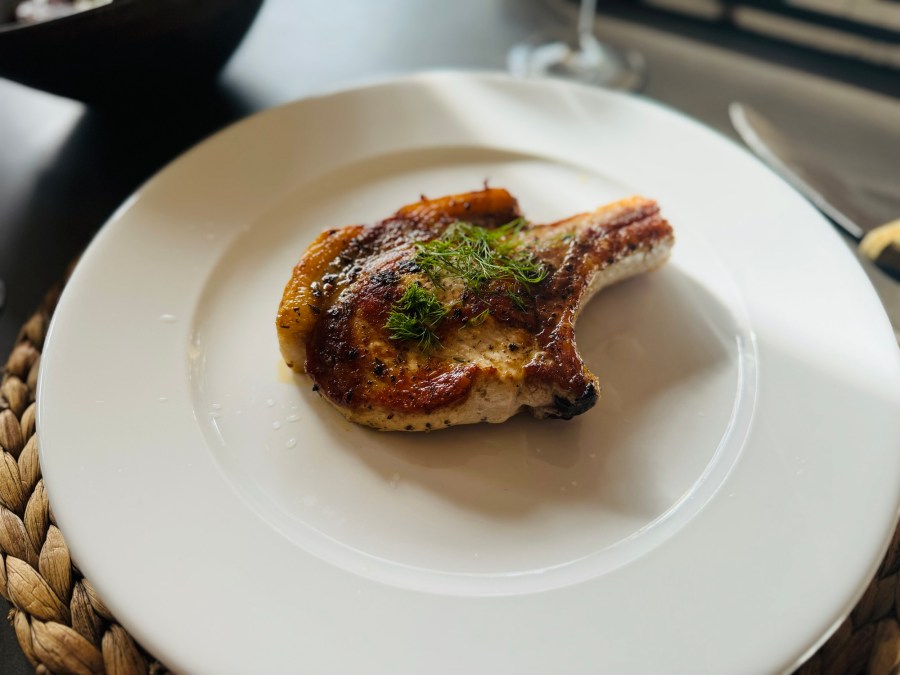
An absolutely excellent cheat’s porchetta. 1-hat Italian sort of stuff.
The flavour of porchetta, essentially the ease of cooking a pork chop.
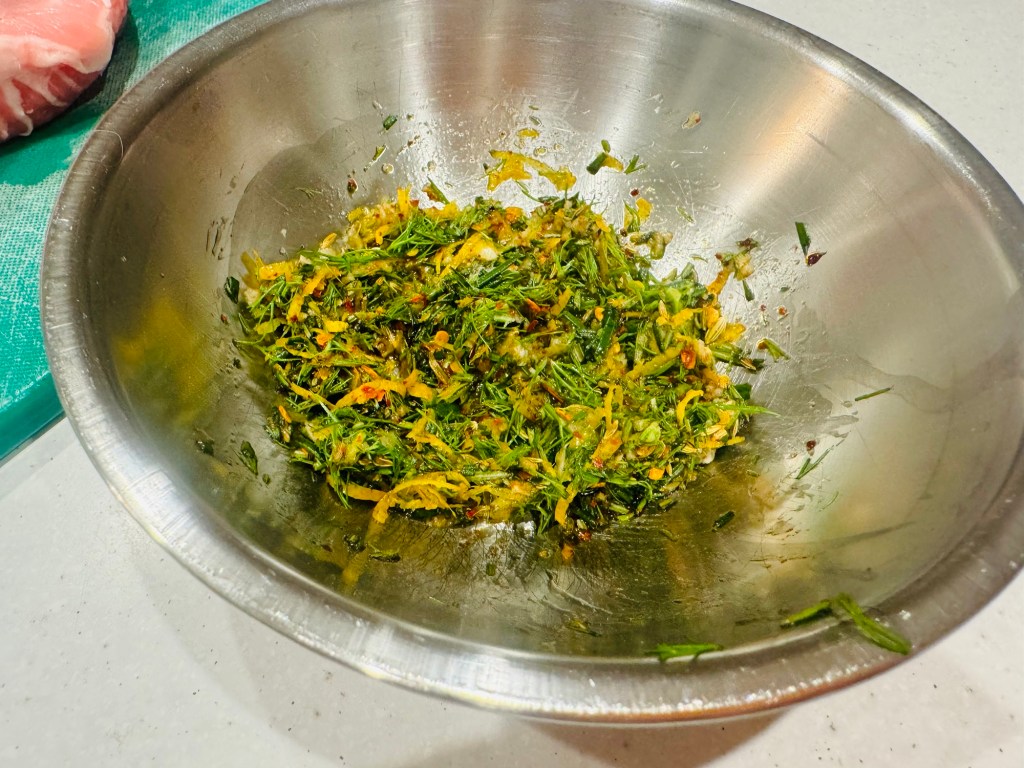
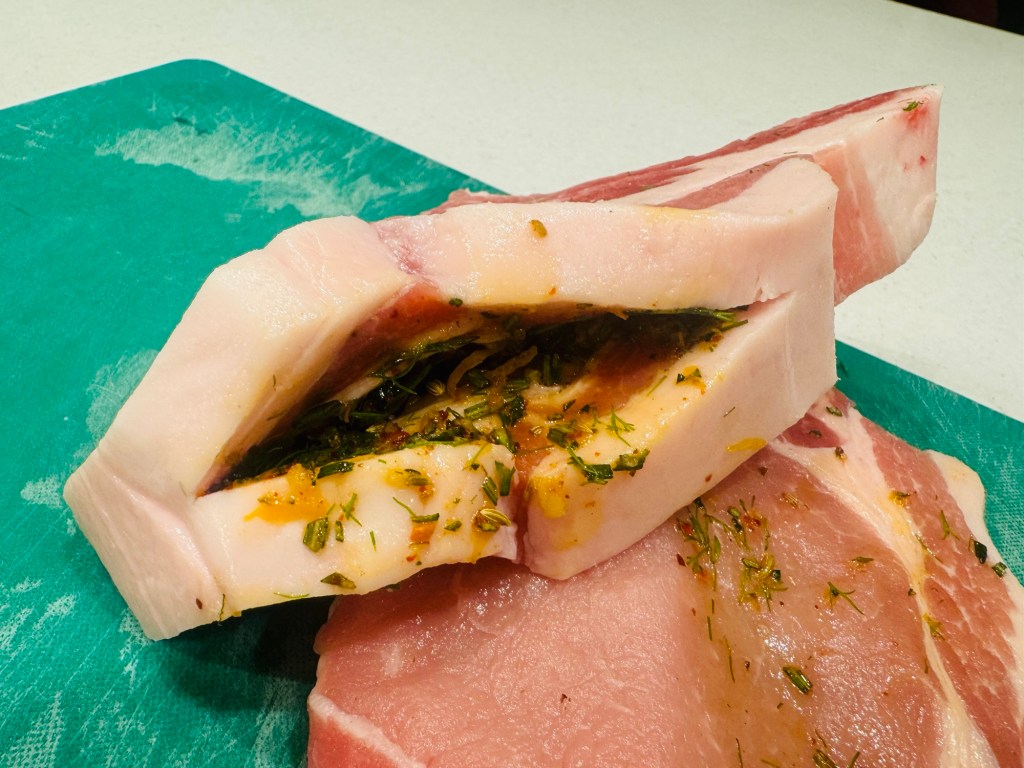
Such a classic porchetta filling.Stuff and rub those pockets!Ready to cook.25 or so minutes later, you’re ready to plate.
2 bone-in pork chops, 3cm – 4cm thick 1 tsp sea salt, plus a pinch 1 lemon 2 garlic cloves, minced 2 tbsp chopped rosemary Large pinch red pepper flakes 1/2 tsp fennel seeds, lightly crushed 2 tbsp chopped fennel fronds, more for garnish 2 tbsp olive oil
Method
Heat the oven to 180c. Pat the pork chops dry and using a very sharp paring knife, cut a large pocket into the fat-covered edge of the pork chop. Season chops all over with 1 tsp salt including inside the pockets.
Finely grate zest from the lemon and put in a small bowl. Cut lemon in half ready to juice over the cooked pork.
Using a mortar and pestle or the flat side of a knife, mash the garlic with a pinch of salt until you get a paste. Add to the bowl with the lemon zest and stir in the rosemary, pepper flakes, fennel seeds, 2 tbsp fennel fronds and 1 tbsp olive oil.
Divide the filling between the pork chops, filling the pockets and rubbing the rest on the outside.
Heat a large ovenproof skillet over a high heat and add 1 tbsp olive oil. Sear pork chops on one side for 5 minutes, or until golden brown. Gently turn over the chops and cook for a further 1 minute, and then transfer the skillet to the oven. Cook until the meat is just done, 5 – 10 minutes. Remove from the oven, tent with foil and let rest for 10 minutes before serving. Garnish with fennel fronds and a good squeeze of lemon juice.
This is an absolutely superb dish from The New York Times.
11,736 five stars and one more from me.
It is so simple. Caramelise the brussels sprouts and garlic in a completely set-and-forget manner. Transfer to the oven.
Add a tablespoon of balsamic vinegar and my word, you’re plating an absolutely brilliant side.
I can not overstate how good these are. As part of an amazing Italian lunch we had late one afternoon, we agreed that this was the winning dish.
And since when have brussels sprouts beaten a porschetta pork chop or a Lidia Bastianich potato and onion gratin?!
Must be good.
Ingredients
500gm brussels sprouts 4 – 6 tbsp extra virgin oil 5 cloves garlic, peeled Salt and pepper to taste 1 tbsp balsamic vinegar
Method
Heat the oven to 200c. Trim the bottom of the brussels sprouts, and slice each in half, top to bottom. Heat oil in a cast iron pan (skillet) over medium-heat until it shimmers: put sprouts cut side down in one layer in pan. Put in garlic and sprinkle with salt and pepper.
Cook, undisturbed, until sprouts begin to brown on bottom, and transfer to the oven. Roast, shaking pan every 5 minutes, until sprouts are quite brown and tender: about 10 – 20 minutes.
Taste and season as necessary. Stir in balsamic vinegar, and serve hot or warm.
Look, there is nothing special about the technique here.
A classic bruschetta is something you can do with your eyes closed. Arguably, you don’t even need this recipe to whip up an avocado bruschetta.
The reason for typing it?
We had a pile of avocados and as a starter for a casual at-home Italian lunch, I thought why not.
And why not indeed!
I’m not sure I’ll ever do a bruschetta that isn’t avocado again!
It is awesome.
Ingredients
1 baguette, sliced 1 1/2cm thick 1/4 c extra virgin olive oil, divided 2 cloves garlic, peeled and sliced in half 1 clove garlic, crushed 1 Roma tomato, diced 1 large avocado, peeled, seeded and diced 1 tbsp white balsamic vinegar 1/4 tsp sea salt 1/4 c sliced basil
Method
Preheat the oven to 180c. Place the bread slices on a baking tray and brush with a little olive oil. Toast until golden brown, and then rub the sliced garlic cloves over the warm toast.
In a small-medium bowl, gently combine 1 tbsp olive oil, the minced garlic, tomato, avocado, white balsamic, salt and basil. Season with more salt and/or vinegar if desired.
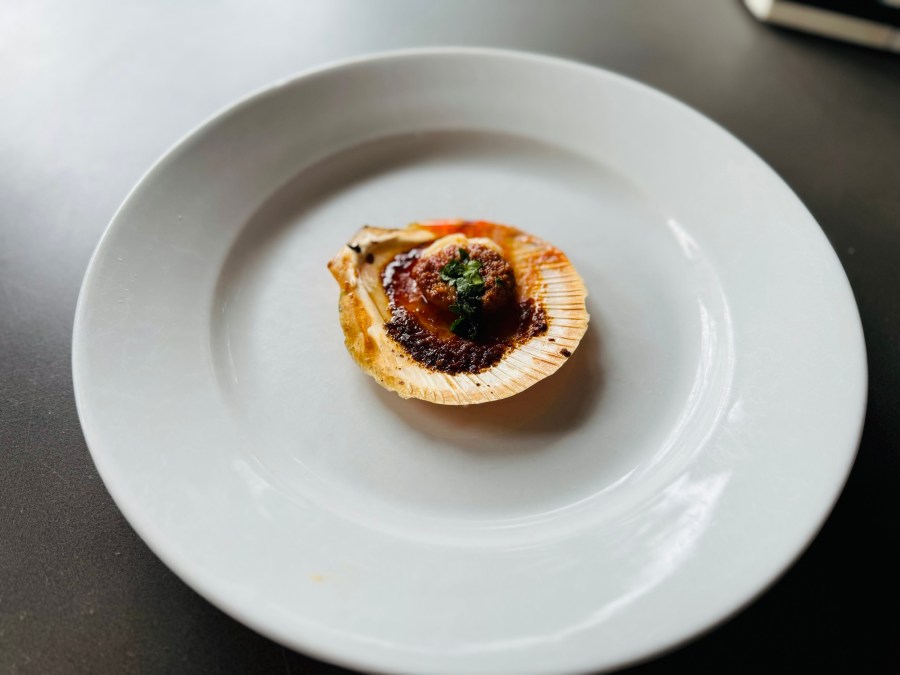
Cooked over charcoal, the addition of the smokiness just completed what was otherwise a brilliant starter to a late Sunday Italian lunch.
The sherry vinegar and eschalot cuts through the heat and fat from the ‘nduja butter. A real triumph and one I will repeat the next time we do a slow afternoon over charcoal grilling.
Ingredients
75gm ‘nduja 75gm unsalted butter, softened 1/2 eschalot, finely chopped 2 tbsp sherry vinegar A small handful coriander, roughly chopped 6 large scallops in half shell
Method
Put the ‘nduja into a small cold frying pan and break it up with the back of spoon over a medium heat, until its fat has rendered and is fairly smooth. Cool then put in a bowl with the softened butter and mix really well. Chill for 5 minutes to firm slightly. Tip into baking paper, form into a sausage and twist the ends to tighten. Chill until firm.
In a small bowl, mix together the shallot, vinegar and coriander with a little seasoning.
Heat the grill or charcoal. Put the scallops in their shells onto a large baking dish, then put a thick slice of the ‘njuda butter on top of each. Grill for 5 minutes until the butter is bubbling and the scallops are lightly caramelised.
Serve with vinegar, herb and shallot mix spooned over the top.
The first Thomas Straker recipe I typed up a few weeks ago was extraordinary.
And no kidding, my traffic grew by a third almost overnight and the recipe became my second most viewed.
All of Thomas Straker’s recipes are contained in short-burst TikTok videos without the recipe. Totally viral and social content, though not very helpful regarding cooking.
For the second time, however, Nat was still determined.
Introducing this totally nuts, baked gnocchi with beef and pork ragù!
On account of going up to Newcastle – two hours north of Sydney – for a 40th Saturday night, Nat started the ragù Friday. Gnocchi and béchamel on our return.
A triumphant, late Sunday winter lunch?
You absolutely bet!
What absolute luxury. Total, last meal decadence.
A dish that you’d drive across town for. Honestly, a dish you just can’t stop smiling about.
In a world of food complexity and pretence (and I am plenty guilty of that), this is a swinging boulder from the other direction to smash it all to pieces.
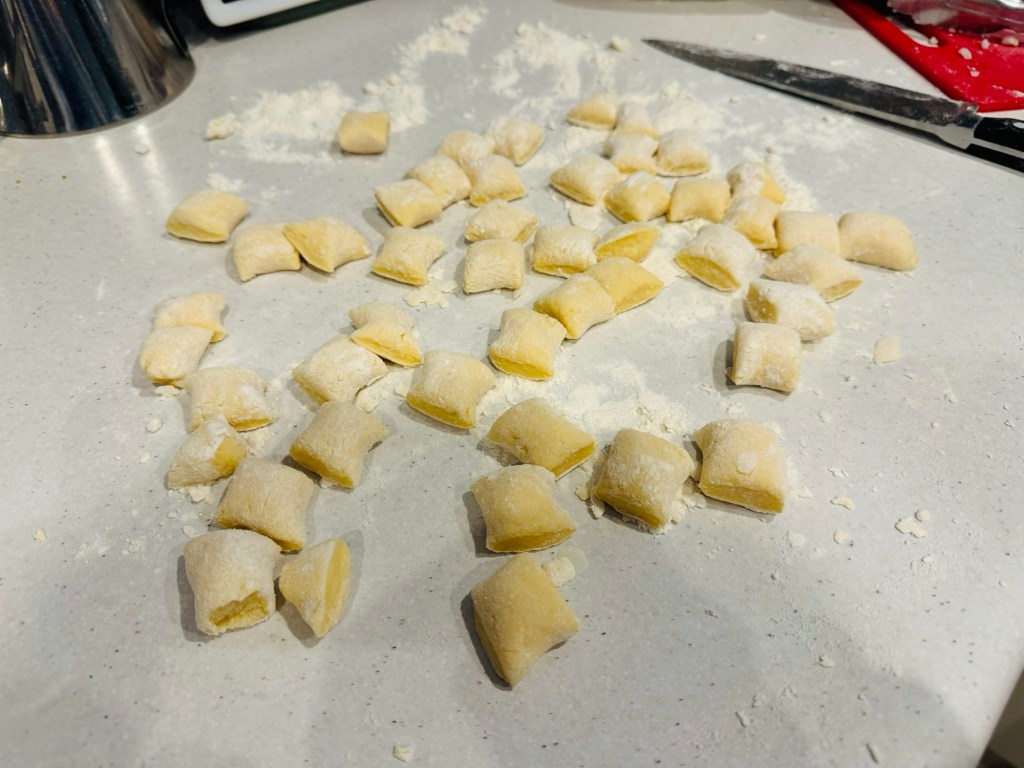
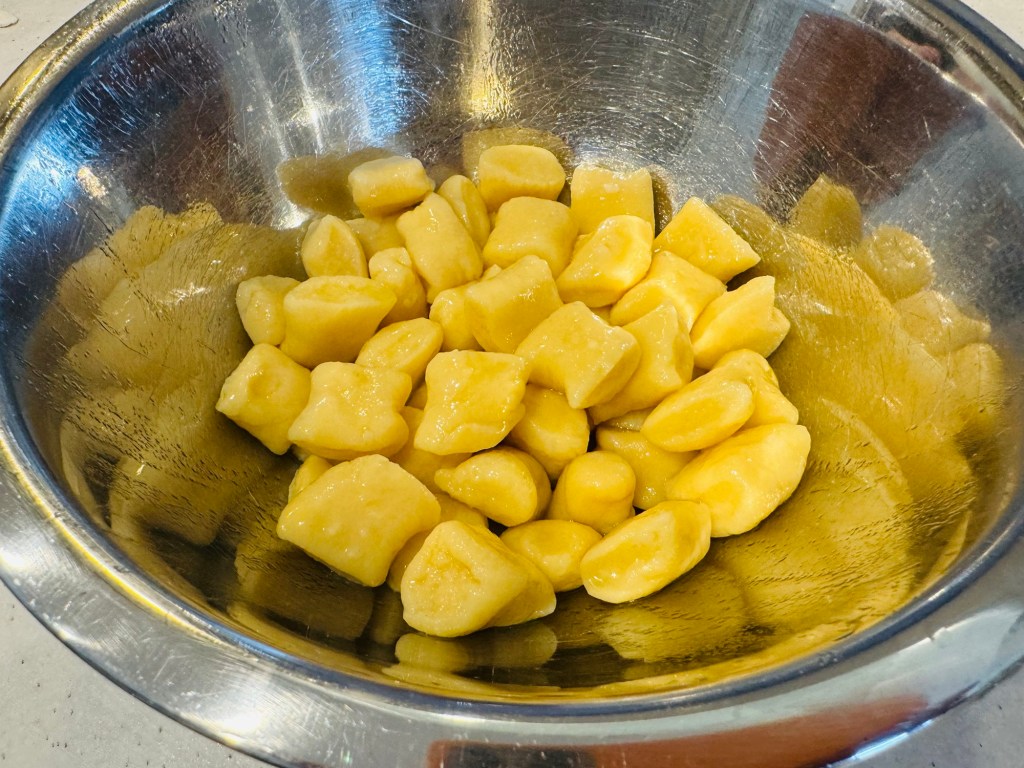
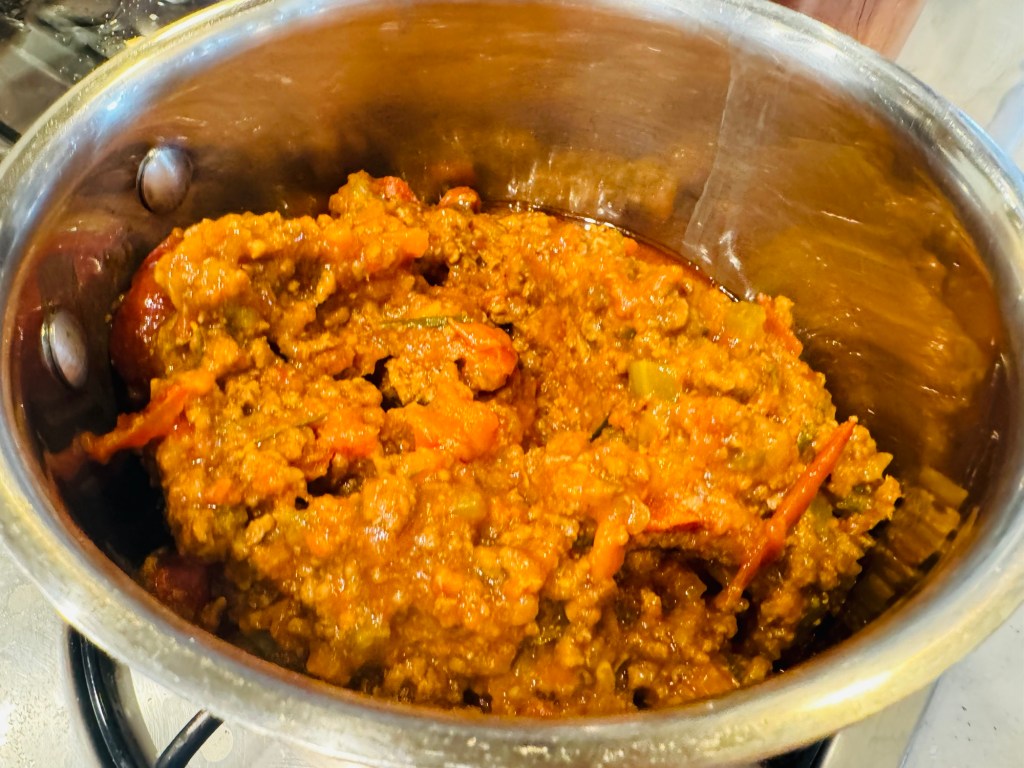
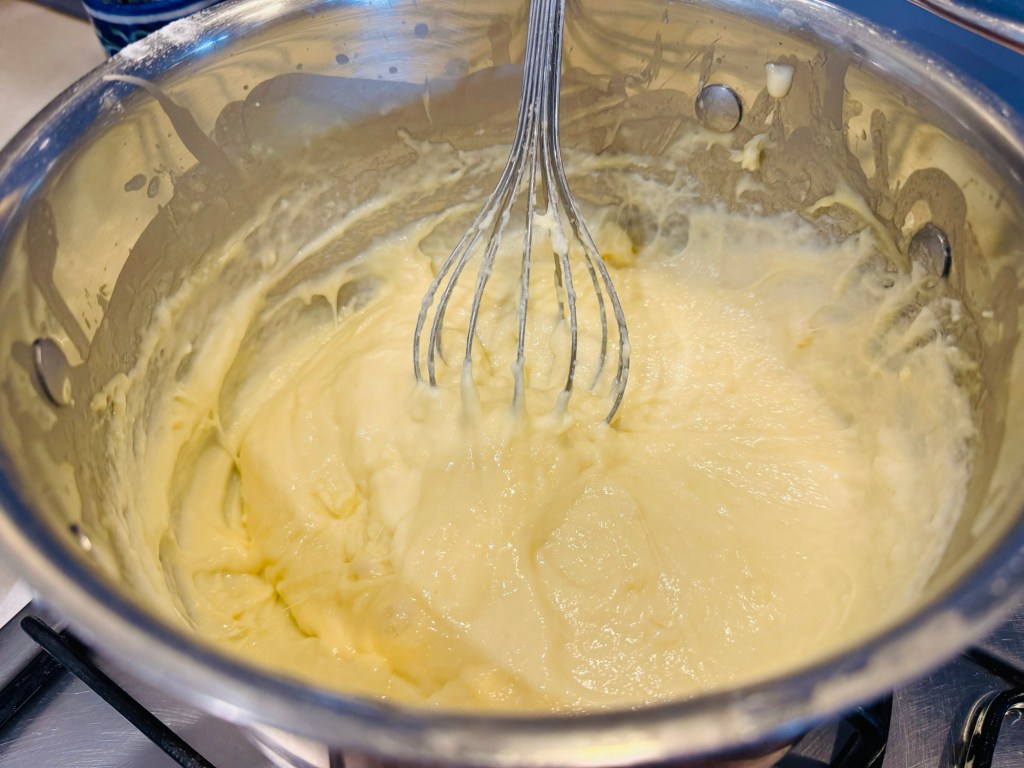
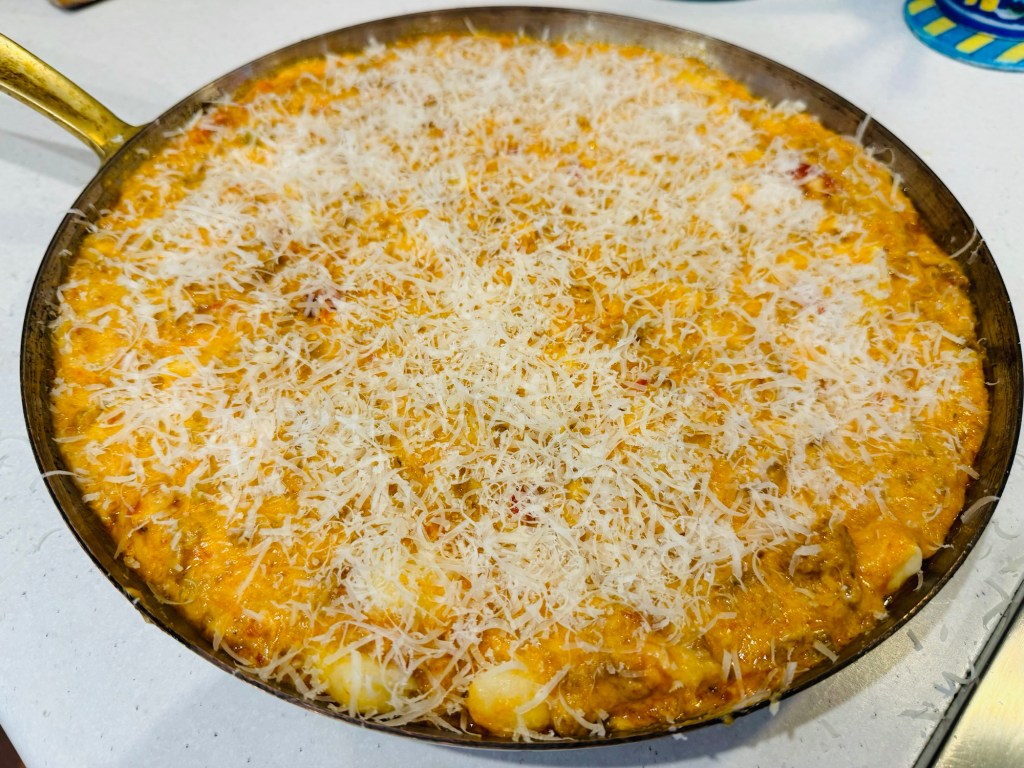
The beginning of homemade gnocchi.Taking shape.Plunged in an ice bath, reserved and tossed with olive oil.The incredible ragù.Béchamel with mozzarella and parmesan. OMG. Combine the béchamel and ragù and two very good things have come together.More parmesan and we are ready to bake.
Ironically, as we were leaving Newcastle this morning, Nat spotted an institution – Don Beppino’s House of Lasagne – a restaurant we had a late-night meal at 12 years ago. Already with a few drinks under our belt, we had the best night: the sort of food I am typing up here with too much Chianti and too many laughs.
About as old-school as it gets.
This is what life is all about.
Ingredients
Ragù
Extra olive oil 1 carrot, unpeeled, chopped finely 1 onion, finely diced 1 stick celery, finely diced 2 cloves garlic, finely chopped 1 sprig rosemary 1 tsp Italian herbs 1/2 tsp dry oregano 500gm beef and pork mince 1 tbsp tomato paste Salt 1 tbsp sherry vinegar 3/4 c red wine 1 can cherry tomatoes 500ml chicken stock
Béchamel
2 tbsp butter 2 tbsp flour 1/4 c milk 1/2 mozzarella ball (175gm), chopped 1/4 c parmesan, grated Salt
Gnocchi
6 baking potatoes 1 1/2 c plain flour (plus more as you need it) 2 egg yolks 1 tsp salt Extra virgin olive oil
Pepper and extra parmesan to sprinkle before baking
Method
Start by making a sofrito: heat some oil in a heavy pan and softly sauté the carrot, onion, celery and garlic until very soft though not golden.
In a separate heavy pan, heat more oil over medium-high heat and fry the mince until browned. Add the tomato paste, salt and sherry vinegar and combine. Add the red wine, canned tomatoes and stock and bring to a boil, and then reduce the heat to a simmer adding the herbs. Cook for 30 minutes. Add the sofrito and combine, reducing the heat to low and cook for as long as you can. Taste and season and remove the rosemary sprig.
For the béchamel, in a saucepan, heat the butter over medium-low heat until bubbling. Whisk in the flour until well combined and then add the milk, whisking until combined. Increase the heat and add the mozzarella and then Parmesan, whisking until well combined and fully melted.
Slowly introduce the béchamel sauce to the ragù and stir to combine.
To make the gnocchi, bake the potatoes at 180c until cooked through. Remove the flesh when cool and rice/mash. Combine with the flour, egg and salt and knead until combined. Set aside for 5 minutes.
Heat a large pot of boiling water and separately, set up an ice water bowl to reserve the cooked gnocchi. Using a piping bag with no attachment, pipe long tubes of the combined potato mixture and then cut into 3cm gnocchi with a sharp knife.
Cook the gnocchi rapidly for a few minutes until they float. Immediately transfer to the ice water bowl and allow to cool completely. When cooled, quickly drain and toss with oil.
Heat an oven to 200c. Carefully combine the gnocchi with béchamel ragù mixture ensuring the gnocchi does not break up. Pour the gnocchi mixture into a baking pan; or several pans. Pepper, very liberally sprinkle over parmesan and bake until bubbling.








 Robby Dog Cooks