Ajoy Joshi’s Murgh Hara Masala

Serves: 4 – 6

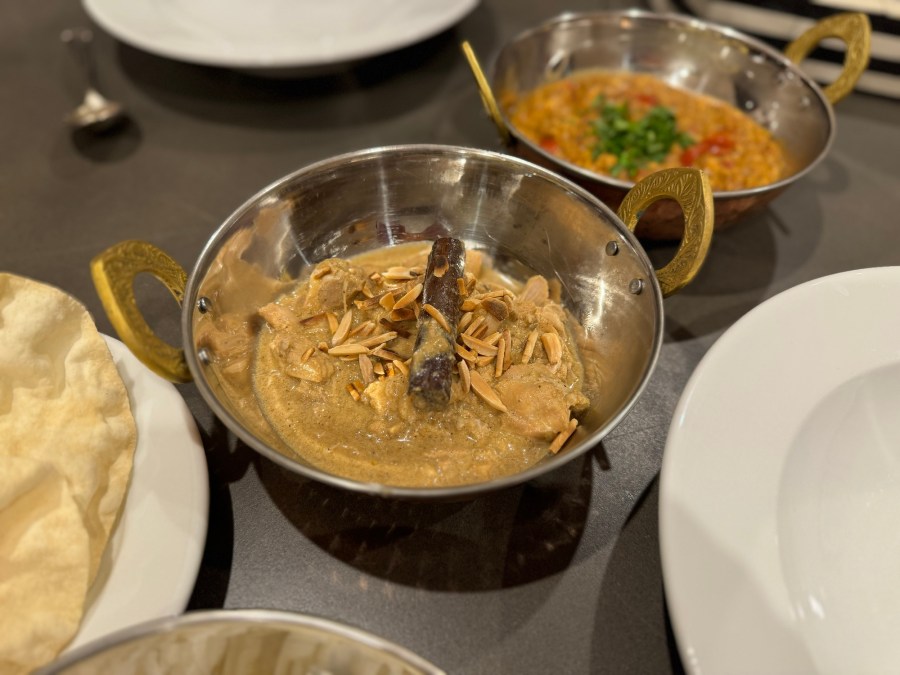
Here we are yet again with an Ajoy Joshi recipe.

Trademark whisked yoghurt. The browned onions. Roasted cashews.

But then we add the herbs and chilli.

It takes a trademark Joshi dish in yet another direction and it is predictably wonderful.

As Nat put it, the onions give a depth, then flipped on its head by the fresh green chilli.

You taste the hint of cashew.

And the sum of the parts of just a beautifully warm and complex curry, as unique as every Ajoy Joshi curry is.

Incredibly clever.

I’ve only adjusted by adding one extra tbsp of double cream and using 1kg of chicken thigh instead of a whole chicken.

Ingredients

5 tbsp vetegable oil
3 brown onions, thinly sliced
1 tsp salt
1kg chicken thigh cut into 3cm pieces
1/2 c plain whole-milk yoghurt, whisked until smooth
1 tsp fresh ginger, grated
1 tbsp garlic, minced
Cinnamon stick, broken into small pieces
8 whole black peppercorns
4 green cardamom pods
2 tsp coriander seeds
1 tsp cumin seeds
4 fresh mild long green chillis, roughly chopped
Leaves from 1 bunch fresh coriander
Leaves from 1 bunch fresh mint
1 tbsp unsalted roasted cashew nuts
1/4 tsp ground turmeric
3 tbsp double cream
Steamed basmati rice to serve

Method

  1. In a frying pan, heat 2 tbsp oil over a medium low heat, add the onions and salt and cook, stirring occasionally until the onions are dark golden-brown. Transfer to a plate.
  2. Meanwhile, in a bowl, combine chicken, yoghurt, ginger and garlic and stir to coat the chicken evenly. Set aside.
  3. In a spice grinder, process the spices to a fine powder.
  4. In a food processor, combine chillies, coriander, mint, cashew nuts and fried onions and process until well combined.
  5. In a large, heavy saucepan, heat remaining 3 tbsp oil over a high heat and add the chicken and cook, turning occasionally until all moisture evaporates and chicken is lightly browned.
  6. Add the turmeric and 1/2 c hot water and stir until almost evaporated. The chicken should be cooked and tender by now.
  7. Add the ground spices, stirring until fragrant. Add the chilli mixture and cream, stirring through until well combined and heated through. Season and serve with steamed rice.
  8. An ale, riesling or pinot a must at this point. Trust me on this one.

Ajoy Joshi’s Rich Chicken Curry

Serves: 4 – 6

I can’t tell if Ajoy Josh is having a laugh at our expense.

The techniques and ingredients he uses are not only different to other Indian recipes, each of this recipes are different.

The deep goldening of onions and the use of yoghurt marinades being two rare exceptions.

This recipe was true to Ajoy’s trick of throwing curve balls. The ground sesame seeds. The squeeze of lemon at the end.

And yet in true Ajoy style, it is absolutely beautiful.

Total luxury.

If Ajoy Joshi is having a laugh, good for him.

Note: I have slightly adjusted this recipe.

Ingredients

1kg chicken thighs, cut into 3cm pieces

1/2 c vegetable oil
3 onions, sliced
Juice of 1 – 2 lemons

For the marinade

2 c full-fat natural yoghurt
1 tsp crushed fresh ginger
1 tsp crushed garlic
1 tbsp crushed green chillies
1/2 tsp ground tumeric
1 tbsp white sesame seeds, ground
50gm cashew nuts, roasted and ground
Salt

For the spice mix

1 tsp cassia buds*
2 green cardamom pods
4 cloves
1/2 tsp black cumin seeds

Method

  1. Put all the ingredients for the marinade in a large shallow dish and mix together. Season with salt. Add the chicken and turn to coat, then cover allow to marinate in the refridgerator for 1 – 2 hours.
  2. To make the spice mix, put all the spices in a spice grinder, small food processor or mortar and pestle and grind together. Set aside.
  3. Heat the oil in a heavy-based pan over medium heat, add the sliced onions and saute until the onions turn golden brown. Add the marinated chicken and stir well. Cook for 30 – 45 minutes, or until the sauce has slightly thickened. Add the freshly crushed spices and sprinkle over the lemon juice.

* I substituted a cinnamon stick.

Kwality Restaurant’s Bhatoore

Serves: 4

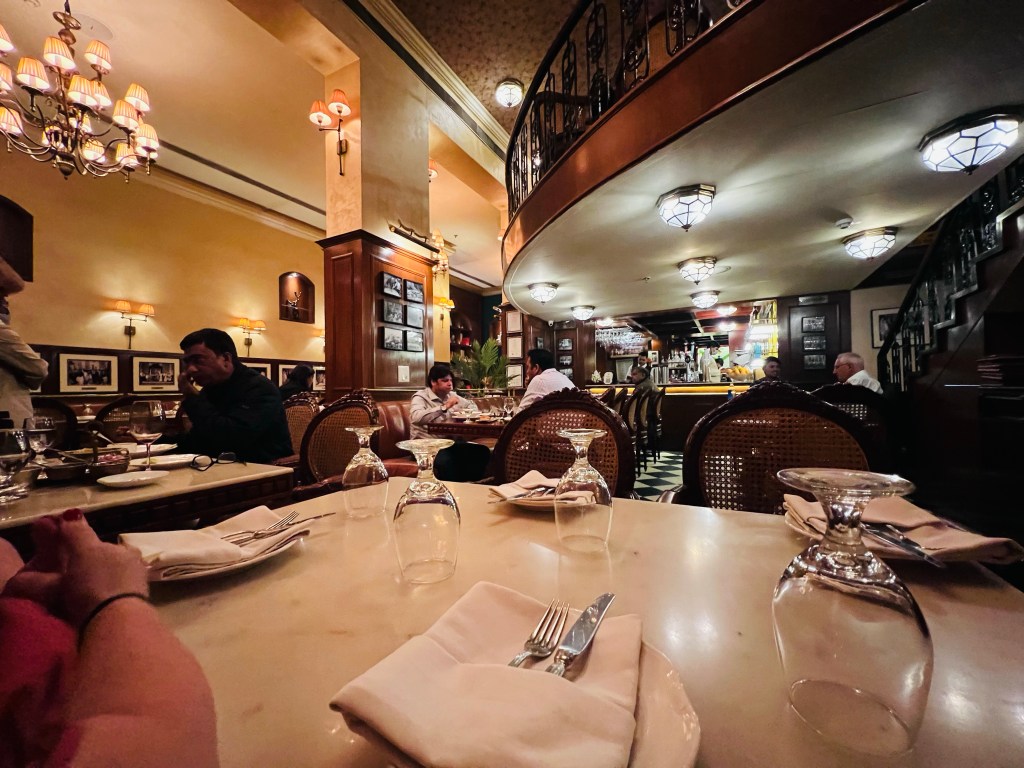
One of best meals Nat and I had in India on a recent trip, was a meal at Kwality Restaurant in Connaught Place, New Delhi.

We had spent days and days eating the most wonderful, traditional Indian foods. Incredible foods from the tandoor, delicate momos, street foods, incredible breakfasts of spiced puffed rices and eggs. And my goodness, the potato.

And yet here we were in a Colonial Indian restaurant for the first time, living our best 1950s life. An ornate, dark dining room with secluded tables and waiters in whites.

What fun.

1950.

1940 it seems!

We thought it might be a trap, though the food was incredible. We literally laughed at how good the whole sum of the parts was.

The food, the wine, the service, the ambience.

The starter – a subtle, spiced, chicken mince paddy shallow fried and finished in cream and butter – was a recipe they gave me, and one I will type up in due course.

Though their most famous dish – Chhloe Bhatoore – was a recipe they could not share.

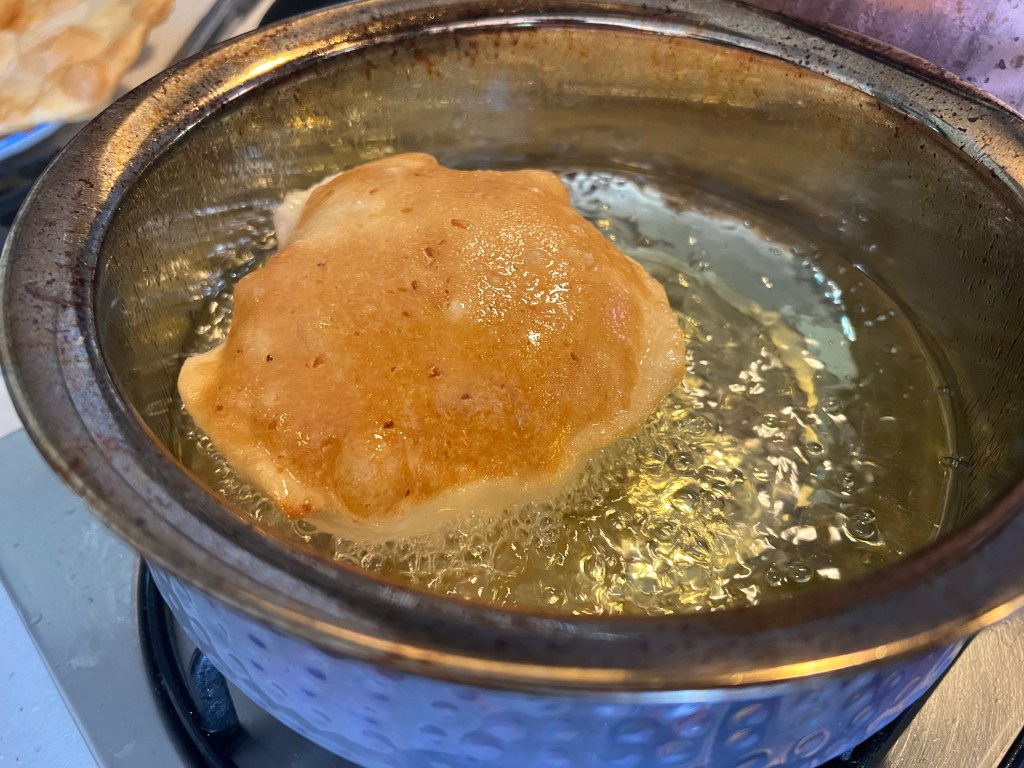
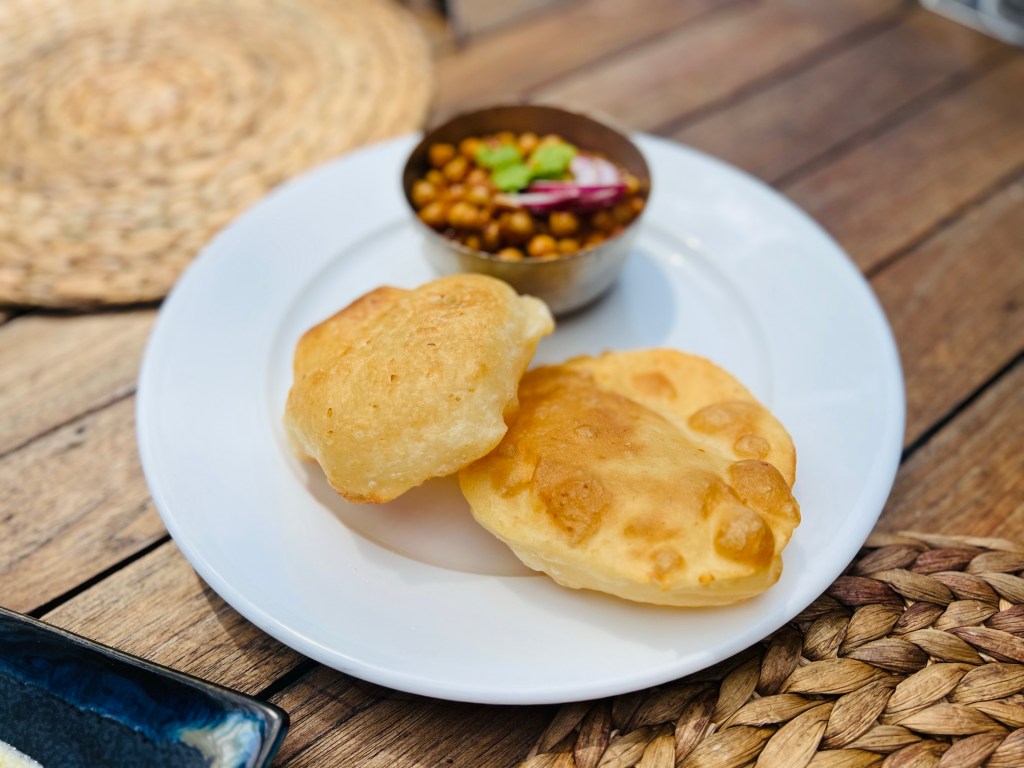
Bhatoore: a fried bread made with potato that blows up to be balloon of the most moorish pastry you can imagine. Sweet almost.

I mean, these people have had 60+ years to get this right. Right?

And then with the Chhloe – their signature twist on spiced chickpeas left overnight. Together, one of those seminal moments in food for us.

Incredible. Just perfection.

Plenty of recipes for both Chhloe and Bhatoore out there, though how to find the recipe of Kwality?

Well, Nat found it. And yes, it was the potato in the Bhatoore and not the traditional addition of yoghurt that made the difference.

Nat’s tips here are firstly to fold the dough before rolling to get as many air bubbles as possible. And to ensure your oil is bloody hot.

And a few test runs in, we were there. (Check out this guy’s video on the technique.)

Get the oil super hot.
And there you have it.

Nat has become the queen of bread in our house and this was her finest yet.

Our next Indian banquet, this is going to bowl people over.

Incredible.

Ingredients

1/2 c plain flour
1/2 c potatoes, boiled and grated
1 1/2 tsp vegetable oil
Salt
Oil for deep-frying

Method

  1. Combine the flour, potato, 1 1/2 tsp of oil and salt and need into a firm dough without using any water.
  2. Knead the dough very well until it is smooth. (We used a KitchenAid.) Cover with a wet muslin cloth and rest the dough for 10 minutes.
  3. Divide the dough into 4 equal parts and roll out into circles of 12.5cm diameter. (Nat’s tip, fold in on itself a few times to really help those air pockets form.)
  4. Deep-fry in hot oil until the bhaturas puff up and both sides are golden brown.
  5. Serve with chhloe, sliced red onion and lemon wedges.

Pushpesh Pant’s Prince-like Chicken Curry (Shahi Qorma)

Serves: 4

This a curry is total luxury.

Incredible.

I skipped the edible silver leaf, though the saffron infused milk and then the rose water? No way.

I’ve adjusted the recipe to use less ghee than originally instructed. You could also dial down the water added during the simmering stage, as you will need to cook it down, uncovered, after the 30 minutes of simmering. (I’ve typed up the recipe with 500ml vs the 750ml originally asked.)

Indeed, on the ghee front, once you’re close to the end of the simmer, if you see excess ghee, I would skim it off.

Nothing is more exciting to me than finding a new, home-run curry and this is just that. Absolutely fit for a prince.

Ingredients

Pinch of saffron threads
1 tbsp warm milk
2 tbsp ghee
10 green cardamom pods, bruised
5 cloves
2 cinnamon sticks
2 bay leaves
1 onion, chopped
3 tbsp ginger paste
3 tbsp garlic paste
2 tsp ground coriander
1 tsp chilli powder
1kg chicken thigh, cut into 3cm pieces
Salt
1 c hung plain yoghurt*
1 tsp Garam Masala
1 tsp ground mace (substitute nutmeg)
1 tsp ground cardamom
1 tsp ground white pepper
2 drops rosewater

To garnish

20 blanched almonds, cut into slivers**
Edible silver leaf

Method

  1. Put the saffron in a small bowl, add the warm milk and soak until required.
  2. Heat the ghee in a large, heavy-based pan over a medium heat, add the cardamom pods, cloves, cinnamon, and bay leaves and stir-fry for about 1 minutes or until they start to splutter.
  3. Add the onions and stir fry for about 5 – 7 minutes, or until golden brown. Add the ginger and garlic pastes and stir-fry for a further 3 minutes. Add the coriander and chilli powder, then season, stir and add the chicken. Stir-fry for about 5 minutes then add the yoghurt and bring almost to the boil. Pour in 500ml of water, cover and simmer for 30 minutes, or until cooked. Uncover and reduce until you have a gravy, adding the spices 10 minutes before the end of the simmering. Adjust the seasoning, then add the rosewater and soaked saffron and stir. Garnish with almonds (cashews) and silver leaf.

* Otherwise known as labneh, here is another blog of mine if you’re not across this.

** I’ve twice substituted slightly crushed cashews here and it is absolutely lovely.

Khan Lamb

Serves: 8

Nat and I recently stayed in Ranthambore in India for two nights; part of Rajasthan, a state in the North.

Ranthambore is a massive area of jungle, famous for its tigers, something we were lucky enough to see.

The property we stayed at was incredible and at night, we sat around a huge fire being fed the most amazing food from the tandoor whilst sipping on G&Ts. They never did give me the recipe for their stuffed potatoes, though my word, we would travel back just for those alone.

One of the staff was particularly passionate about food and he shared a YouTube clip with me of a lamb leg, marinated, buried with coals and cooked for hours.

Wrapped in roti, banana leaf, foil and a wet cloth, when revealed, the lamb was eaten with the soaked roti; a dish I just had to cook with a little assistance from Nat.

So last night, NYE 2022, we catered Nat’s family an Indian feast.

And this lamb was the second dish. Absolutely classic Rajasthan cooking.

The big unveil.
Look at that roti sopped with the ghee!

I cooked it medium rare. Wrapped in roti, a banana leaf, foil and then a wet cloth, placed in a cast iron pot and cooked in a BBQ over indirect heat until the centre reached 55c.

It was remarkable. Just remarkable.

Here is my translation of the video.

Ingredients

Leg of lamb
18 garlic, crushed (or 4 – 6 tbsp garlic paste)
4 tbsp Garam Masala
1 tbsp chilli powder
1 tbsp ground coriander
1 tbsp ground turmeric
1 tsp salt
1 c softened ghee
12 Indian roti
1 banana leaf

Method

  1. Score the lamb leg all over, about two centimetres deep. Rub the garlic and Garam Masala all over and into the scores. Wrap in foil and refrigerate for a few hours or over night.
  2. Mix the softened (though not melted) ghee with the chilli powder, ground coriander, ground turmeric and salt.
  3. Lay several sheets of foil. On top, place enough banana leaf to wrap the lamb. On top, lay enough roti to wrap the lamb.
  4. Cover the lamb in the combined ghee and then tightly wrap, starting with the roti, then the banana leaf and then the foil. Wet a cloth and wrap the parcel.
  5. Heat a BBQ (or oven) to 160c. Place the lamb parcel in a heavy, cast iron pot with a lid. Cook, over an indirect heat, until the centre of the lamb reaches 55c.
  6. Set aside for 20 minutes. Remove the cloth, foil and banana leaf and serve the slice lamb with the soaked roti.

Pushpesh Pant’s Eggplant in Mild Yoghurt Sauce (Dahi ke Baigan)

Serves: 2

This is just such a moorish dish.

The eggplant rounds, seasoned with spices and pan-fried.

The yoghurt, tempered with the oil, mustard seeds, dried red chillies and the fresh curry leaves.

Yum.

Another cracking addition to any thali. A dish on its own. A side you really should try as part of a long Indian banquet.

Oh, the dish perfectly doubles in size. I was worried it wouldn’t, though it very easily does.

Ingredients

250gm (1 small) eggplant, trimmed
1/2 tsp ground cumin
Pinch of chilli powder
Pinch of ground turmeric
1 tbsp vegetable oil, plus extra for frying
1 1/2 tsp ginger paste*
1 tsp garlic paste*
2 – 3 green chillies, de-seeded and chopped
200ml (1 cup) natural yoghurt

For the tempering

Pinch of asafoetida**
1/2 tsp mustard seeds
1 – 2 dried red chillies
Sprig of curry leaves

Method

  1. Cut the eggplant into round slices. Put the ground spices in a small bowl, season with salt and add 1 tbsp of water. Mix together.
  2. Coat. Non-stick pan with a thin film of oil over a medium heat. Add the ginger paste, garlic paste, garlic paste and green chillies and stir-fry for about 1 minute. Add the eggplant and cook for 3 – 5 minutes, stirring once with a wooden spatula, then remove from the pan an set aside. Put the yoghurt in another pan and mix with a little water, then bring almost to the boil, stirring constantly to ensure it does not curdle.
  3. Heat the remaining oil in a heavy-based frying pan (skillet) over medium heat, add the asafoetida and mustard seeds and stir-fry for 1-minute, or until the seeds start to splutter. Add the dried red chillies, if using, and stir fry for about 2 minutes, or until they turn a shade darker, then add the curry leaves. Pour the tempering over the yoghurt mixture, add the eggplant and simmer for a further 2 minutes, or until the yoghurt and the eggplant is hot.

* Essentially, lots of ginger and lots of garlic blended with water. We have jars of ginger, garlic and ginger/garlic paste from our local Indian grocer in the fridge for this, a pretty simple and convenient approach that doesn’t unduly undermine the flavour.

** We did a cooking class with the wonderful Ajoy Joshi of Nilgiris in Sydney and this spice doesn’t add flavour. It is for flatulence (!) and we have always skipped it.

Pushpesh Pant’s Peppery Cauliflower Curry (Gobi Kali Mirch)

Serves: 4

As part of an Indian feast, this is just so authentic.

The pan-fried mustard and cumin seeds and then the urad dal which turns crunchy and golden.

Super simple, very very good.

Ingredients

2 tsp vegetable oil
1 1/2 tsp mustard seeds
1 1/2 tsp cumin seeds
1 1/2 tsp ural dal, rinsed and drained
500gm (1 small head) cauliflower cut into small florets
1 1/2 tsp ground black pepper
Salt

Method

  1. Heat the oil in a large, heavy-based pan over a medium heat, add the mustard and cumin seeds and stir-fry for a minute, or until they start to splutter. Add the dal and stir-fry for a further 1 minute, or until they change colour, then add he cauliflower and just enough water to cook the vegetables.
  2. Reduce the heat and simmer for about 5 minutes, or until the cauliflower is almost done. Seas with salt, add the pepper and stir. Remove from the heat and keep covered for a further 5 minutes.

Vikrant Kapoor’s Pan-roasted Barramundi (Lasooni Tali Machli)

Serves: 4

We recently ticked another thing off the bucket list: India!

We spent two nights at the incredible Mountbatten Lodge in Ranakpur, jungles about two hours out of Udaipur. Four absolutely luxury villas, just incredible food, G&Ts until late by the fire. The local temple is absolutely extraordinary. We spent an hour and trust us, we aren’t temple people.

What an absolutely incredible country. The people, the culture, the history, the sheer size of it, the organised chaos and of course the food.

Walking through the spice markets of Old Delhi, trying the street food or eating a banquet by the fire after walking with the elephants. (Not on the elephants to be clear!)

Every meal was excellent. The spices sing. Course after course of okra and potato and eggplant and breads flat, puffed, crisped, fried. Oh, and don’t get me started on Colonial Indian food. Just incredible.

So, does Indian food in India taste different to Indian food in Australia?

Largely, yes.

It’s more unique. It’s more flavoursome. Techniques are rolled into techniques: steam, peel, fry, stuff and tandoor potatoes. Or tomatoes. As just two examples.

We looked in a few bookstores – chaos in themselves – for at least one book to take home and India Cookbook by Pushpesh Pant kept coming up. 1,000 recipes to be sure.

And after a cross check with the many memorable dishes we had had over our two weeks, it was a no-brainer.

The book contains some recipes from guest chefs and this barramundi from the man behind Sydney’s own Zaafran – Vikrant Kapoor – is just excellent. Like nothing you would otherwise eat in Sydney.

This is Indian food. As in Indian food you would eat in India.

(I have adapted the recipe slightly to serve 4; the other is that I baked the fish rather than frying. It was wonderful, though frying would have its own great outcome too.)

Ingredients

4 skinless, boneless barramundi fillets
Juice of 1 lime
Vegetable oil, for pan frying
Salt

For the marinade

Juice of 1 lime
3 tsp garlic paste*
2 tsp green chilli paste
2 tsp ground cloves
2 tsp cornflour
2 pinches of ground white pepper

Method

  1. Put the barramundi fillets in a shallow, non-metallic dish. Season with salt and sprinkle with lime juice.
  2. Mix all the marinade ingredients together in a bowl and then rub the marinade all over the fillets. Cover and leave to marinate in the refrigerator for 2 hours.
  3. Brush a little oil on a non-stick pan and heat the pan over a medium heat. Add the fish and pan-fry for 3 – 5 minutes on both sides, or until cooked.

* 5 heads of peeled garlic blended with 3 tbsp water; or use store bought from an Indian grocer as we now do.

Dan Toombs’ Malabar Fish Curry

Serves: 4

I wasn’t sure about this curry at first glance.

Though anyone doubting Dan Toombs when it comes to Indian is brave. And so on I went.

What threw me was that the ingredients are boiled in water. No oil except for the fried shallots which are a garnish.

Conclusion. Brilliant. Aromatic and a delicious sauce.

I simmered the coconut mixture for longer though not intentionally. Perhaps it added to it, perhaps not.

Check your salt though get this right and you have a wonderful, entirely unique fish curry on your hands. Absolutely top notch.

Ingredients

1 1/2 c fresh or frozen coconut*
1/2 ground turmeric
1 tbsp Kashmiri chilli powder
2 tbsp minced ginger
1 green chilli, finely chopped
3 kokum peels or 2 tsp tamarind concentrate
500gm cod or other meaty fish like halibut or ling, cut into medium chunks
1 tbsp rapeseed (canola) oil
1 tsp black mustard seeds
10 curry leaves
3 shallots, thinly sliced
Salt, to taste

Method

  1. Blend the coconut and turmeric into a fine paste or powder and set aside. **
  2. Bring 500ml of water to the boil in a pot (preferably a clay pot). Add the coconut mixture, chilli powder, ginger, green chilli and korum (or tamarind concentrate) and simmer for about 15 minutes.
  3. Add the fish and simmer with the pan covered for a further 7 minutes or until the fish is just cooked through.
  4. Meanwhile, heat the oil in a small pan over a medium-high heat, When visibly hot, add the mustard seeds and when they begin to pop (30 seconds), reduce the heat to medium and stir in the curry leaves and shallots and fry until the shallots are soft and slightly browned.
  5. Pour over the curry; leave as a garnish and/or stir the oil into the curry. Check for season and salt as needed.

* Easily sourced in the freezer of an Indian grocer.

** I didn’t process and left the grated coconut combined with the turmeric. We loved the texture though the smoothness of the curry processed would be an equally lovely experience.

Christine Manfield’s (Indian) Mustard Fish

Serves: 4

Occasionally after cooking a dish we are compelled to immediately type it; even at the table whilst we finish a wine.

This is one such dish.

From the book Christine Manfield’s Indian Cooking Class, this is a knockout.

I chose barramundi rather than Murray cod, though any freshwater white fish would do.

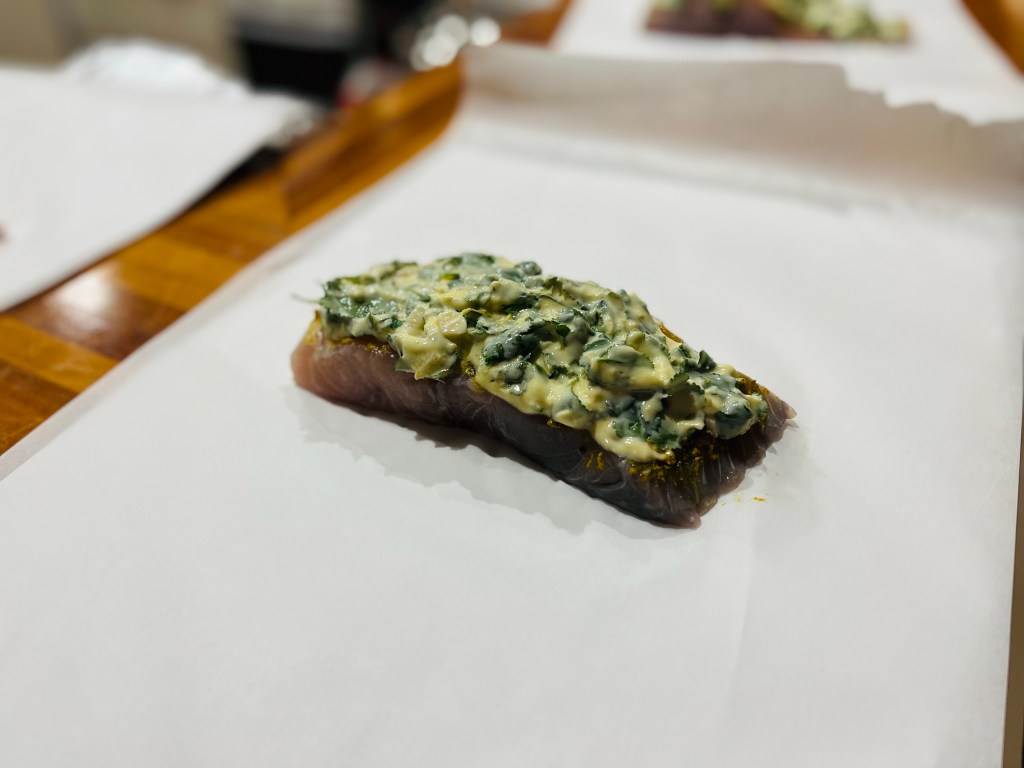
Paste away!
And yoghurt both sides!

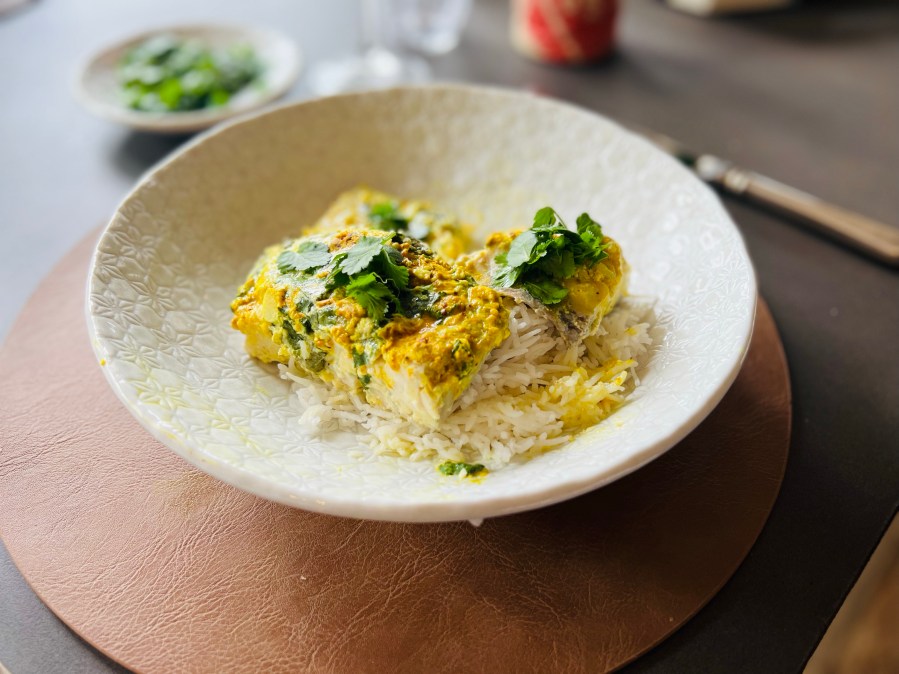
With some steamed rice and lots of coriander, wow. Subtle, sophisticated, just wonderful weekday cooking.

Ingredients

600gm (4 even fillets) of Murray Cod or similar
1 tsp ground turmeric
1 tsp ground cumin
1/2 tsp freshly ground black pepper
1 tsp black mustard seeds, coarsely ground
2 tsp sea salt flakes
2 tsp wholegrain Dijon mustard*
2 tsp chopped ginger
2 garlic cloves
2 small green chillies, chopped
1 cup coriander leaves
1 tbsp mustard oil
100gm thick plain yoghurt

Method

  1. Prepare 4 sheets of foil and 4 sheets of baking paper of the same size, ensuring the sheets are big enough to wrap around the fillets. Place the ground spices, 1 tsp salt and wholegrain mustard in a bowl and mix to combine. Rub spice mixture liberally over the fish and set aside.
  2. Place the ginger, garlic, chilli, coriander leaves, remaining 1 tsp salt and the mustard oil in a food processor and blend to make a paste. Place in a bowl with the yoghurt and stir to combine. Spread the yoghurt mixture over both sides of the mixture. **
  3. Preheat oven to 220c. Place one sheet of baking paper on top of each sheet of foil and top with fish fillet and its yoghurt coating. Wrap the fish in the paper to secure before enclosing with the foil. Don’t wrap too tightly, the parcels can be slightly loose, just make sure they’re sealed tightly at both ends.
  4. Place in an oven side-by-side and bake for 10 minutes or until the fish is tender and just cooked. (Test this.) Remove from oven for 5 minutes to allow the juices to settle. Unwrap the fish, discarding foil and paper. Garnish with chopped coriander and serve with steamed rice.

* I used straight Dijon. Nat feels I should have mixed in some wholegrain mustard. I disagree though will try next time and be found to be wrong.

** I didn’t blend the paste to make it a bit more rustic.