Potato Pallya

FullSizeRender (3).jpg
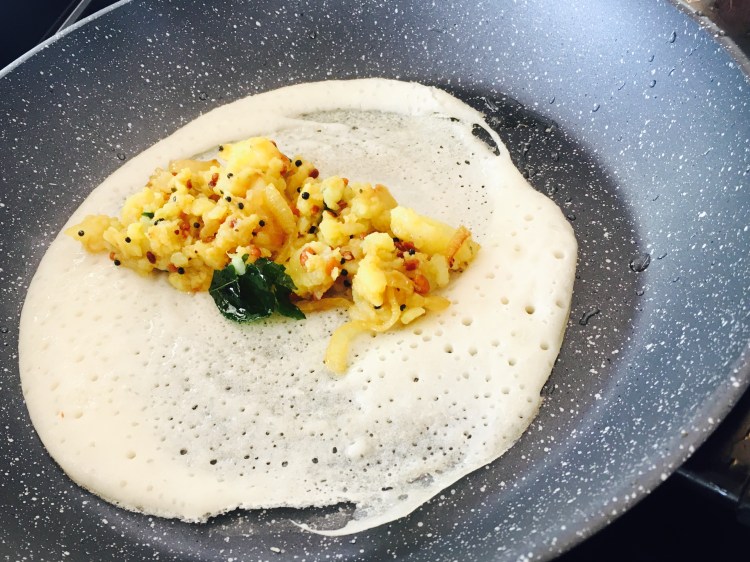
Potato Pallya, about to be folded into a dosai!

Potato Pallya

Serves: 4 – 8 dosai

Lordy, this is a seriously fine dosai filling.

In fact, it is as good as I have had at any restaurant.

The trick is to ensure that the final product is not too oily. If anything is going to kill the delicate shell of your dosai, it is oil.

Otherwise, be as adventurous with the spices as you want with this recipe. Make it sing with flavour, smoke, spice and flavour. And don’t worry that the lentils will be crunchy… that is half the fun.

Boom!

Ingredients

1 tbsp vegetable oil
½ tsp black mustard seeds
½ tbsp split chickpea lentils
½ tbsp split black lentils
1 – 2 dry chillis, torn
¼ tsp Asafoetida powder*
¼ turmeric powder
1 sprig fresh curry leaves
Half an onion, sliced
Salt to taste
250gm potatoes, boiled, peeled and roughly mashed
¼ bunch fresh coriander leaves, chopped

Method

  1. Heat oil in a saucepan. Add the black mustard seeds and allow to splutter.
  2. Add both the lentils and cook on a medium heat, stirring constantly until the lentils turn a light golden in colour.
  3. Add the chillis and the asafoetida powder and cook for a few moments.
  4. Add the turmeric and the curry leaves and cook for a few moments.
  5. Add the onions and salt and cook until the onions turn translucent. Add the mashed potatoes and mix well.
  6. Cook on a medium heat for a few minutes, checking the seasoning.
  7. Garnish with fresh coriander leaves.
  8. Use as the filling of a dosai. Or just eat it because it is seriously that good!

* I know, I had only heard of this once and I didn’t know what it was. Like turmeric which is really only used to enhance colour (and flavour), so too is Asafoetida powder. Though more so to reduce flatulence as far as I can tell. If you can get it, awesome, if not, not to worry.
Dosai

fullsizerender-4
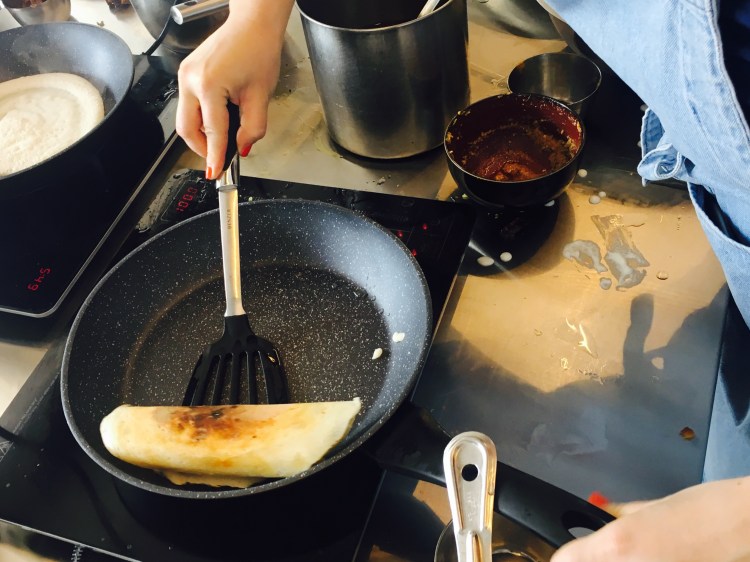
Nat skillfully folding a dosai. With the hands of Fred Flintstone, it was suggested I photograph. A good suggestion.

Dosai

Serves: As many as you need

If you haven’t had dosai, you’re missing out on one of the better Southern Indian delicacies.

If you have had dosai, you’ll know what I mean.

A wonderful, thin, crispy pancake with a glorious, soft, spiced filling of potato, mince or vegetables; the contrast of the incredibly light, incredibly thin, crunchy pancake against a wonderful filling is just awesome.

So much so, that learning how to cook them was on my cooking bucket list.

And two weeks ago, I ticked that box!

The batter itself is easy enough to prepare. The real trick is in making the dosai pancake, because unlike a Sunday-morning pancake, you need to spread out the dosai batter by hand as opposed to a breakfast pancake that does all the spreading for you.

The more you spread, the thinner the dosai, the better the dosai.

Oh, and the spread needs to be circular. Our boys might eat the strangely shaped pancakes we serve them on weekends, though dosais are about having a round, dinner-plate sized disc.

To do this, pour a ladle of the batter in the middle of the heated, dry pan.

You then spread the batter evenly in concentric circles until it reaches the edges of the griddle. Something with a small, flat-bottom will do this job just fine.

Your first few attempts will leave you with dosai far too small, thick in parts and with tears and holes, though you’ll get the knick of it.

And the batter lasts for 6-months, so you’ll have plenty of time.

It might seem an effort, though once you get the handle of it, you’ll be the master of one of the finer foods you can cook from Southern India. And seriously, the contrast in textures, is to die for.

Ingredients

3 parts fine to medium rice flour
1 part split black lentil flour
Water for the batter
Salt to taste
Vegetable oil or ghee to pan-fry the dosai

Method

  1. Mix the rice and lentil flours with just enough cold water to form a thick, fine paste. Don’t mix too heavily as the lumps will disappear overnight.
  2. Add salt to taste and leave the batter in a warm place overnight to ferment
  3. Mix the batter thoroughly the next morning.
  4. Heat the pan until it is hot; if you can hold your hand for 10 seconds around 4cm from the top of the pan, you’re at the right temperature.
  5. Pour a ladle of the batter in the center of the pan and spread evenly in concentric circles till it reaches the edges of the pan.
  6. Drizzle a small amount of the oil or ghee on the pancake to baste. Cook on a medium heat until the dosai is golden brown.
  7. Place the filling of your choice in center of the dosai and roll or fold the dosai as desired.
  8. Serve hot with fresh (coconut) chutney and sambhar.

(Not) Butter chicken

(Not) Butter chicken

Serves: 4

The last ‘generic’ curry I I typed up, I commented that I had always steered clear of the Indian take-away favourites – Rogan Josh, Tikka Masala, Butter Chicken – because, well, they’re the sold-out, hardly Indian curries. 

In fact, butter chicken was the worst of the lot.

Often a flavourless, nuclear yellow/orange goop, I literally only entertain it because the boys will eat it: validation that it must be bland. (Sorry boys).

So by typing this up, you must have guessed it.

This is a seriously good curry. A seriously good, rich, flavoursome, moorish butter chicken, so much so, that you’d say it isn’t butter chicken.

So maybe after-all I haven’t cooked butter chicken.

Either way, you will love it. Just tell them it’s not butter chicken.

Ingredients

1 kg chicken thighs
Salt and freshly ground pepper
1 tbsp oil
2 tbsp butter
1 onion, finely chopped
2 bsp grated fresh ginger
2 cloves garlic, crushed
3 stems, curry leaves
1 red chilli, chopped including seeds
1 tbsp garam masala
1 tsp turmeric
1 tsp ground cumin
1 tsp ground coriander
1 x 400gm can crushed tomatoes
1 tbsp tomato puree
165ml coconut cream
1 tsp golden syrup
½ concentrated chicken stock cube

Method

  1. Heat the oil in a large saucepan over a medium heat.
  2. Season the chicken thighs well and add to the pan; cook until golden brown. Set aside.
  3. Add the butter to the pan and when heated, add the onion and cook cover a medium heat until softened. Add the ginger and garlic and cook for 2 minutes.
  4. Reduce the heat to low and add the curry leaves, chilli and spices and cook for a few minutes until fragrant. Add the tomatoes, tomato puree and coconut cream; add the golden syrup and stock cube and stir to dissolve.
  5. Return the chicken and cook on a low heat for at least an hour; several more if you have the time.
  6. Check the seasoning and serve garnished with the fresh coriander and steamed white rice.

Chicken, Pumpkin and Cashew Curry

Chicken, Pumpkin and Cashew Curry

Serves: 4 – 6

This is a really neat curry from The Blue Ducks’ ‘Real Food’ cookbook, a book we really like and have had some early success from.

It is unusual, both in terms of the amount of curry powder you need for it, as well as the wonderfully fragrant paste of ginger, garlic, curry leaves, lime leaves, coriander roots and lemongrass; though it definitely, definitely pulls together.

Just ensure that you get the curry powder to a powder, even if it means a second vino whilst working the mortar and pestle.

It is warm, comforting, fragrant and fun to pull together. Comfort being the operative word; this is simply a great chicken curry you’d happily eat every night with rice – or cauliflower rice as we did.

The original recipe asks for a whole chicken cut up, though we used 1kg of chicken thigh.

Final point: Kashmiri chilli powder.

Most of Rick Stein’s curries ask for it. Among many others.

Sure, you can substitute other chilli powders, though if you can, make the effort and get some Kashimiri chilli powder from an Indian grocer. It is mild and adds a wonderful red hue rather than simply being the Sherman Tank so many chilli powders are. It is worth it.

Ingredients

3 tbsp ghee (or vegetable oil)
1 large onion, finely sliced
4 garlic cloves, chopped
5cm piece of ginger, chopped
10 – 15 curry leaves
3 kaffir lime leaves (remove the spine)
1 bunch of coriander, leaves picked and roots and stalks reserved
1 lemongrass stem, white part only, chopped
1 x 1.6 kg chicken, 10 – 12 pieces, skin on and bones in (or 1kg of chicken thigh)
200ml coconut milk
500gm peeled and deseeded pumpkin, cut into 5cm dice
400gm can diced tomatoes
100gm roasted cashews
1 heaped tsp salt flakes
Natural yoghurt

Curry Powder

75gm coriander seeds (yes, a lot!)
50gm cumin seeds (ditto)
8 green cardamom pods
1 cinnamon stick
4 cloves
6 black peppercorns
½ tsp ground turmeric
2 dried chillies
½ tsp Kashmiri chilli powder

Method

  1. For the curry powder, toast the coriander seeds cumin seeds, cardamom, cinnamon and cloves in a dry frying pan until fragrant and lightly coloured. Tip the spices into a spice grinder – or mortar and pestle – and grind until a fine powder.
  2. Place the garlic, ginger, curry leaves, lime leaves, coriander roots and stalks, and lemongrass in a blender or small food processor and blitz to a paste.
  3. Place a large saucepan over a medium heat, add the ghee and fry the onion until it is just turning golden. Add the curry powder and cook over a medium heat for 8 minutes, stirring frequently to ensure the spices don’t burn.
  4. Add the paste to the pan and fry for a few minutes until fragrant. Add the chicken, coconut milk, pumpkin, tomatoes, cashews, salt and half the coriander leaves. Slowly simmer over a low heat for 45 minutes, stirring occasionally.
  5. Sprinkle with the remaining coriander leaves and serve with steamed rice (or cauliflower rice) and a dollop of natural yoghurt.

Indian Beef Short Rib Curry

Serves: 4 – 6

This is a wonderful, western take on an Indian curry.

From the book – and restaurant – The Blue Ducks, it isn’t just the beef short rib that makes it so rich and special, though that is a pretty good start.

It’s that everything just works, right down to the late inclusion of the chickpeas, yogurt and coriander.

It really is wonderful.

I’ve written in the past about various curries that have changed the dial.

This is undoubtedly one of them and one that you should definitely try as a Sunday night treat.

Ingredients

1 tbsp vegetable oil
Salt flakes and freshly ground pepper
1.5kg – 2kg beef short ribs
2 onions, finely chopped
6 garlic cloves, finely sliced
1 tsp turmeric
1 tbsp ground coriander
1 tbsp ground cumin
2 star anise
½ tsp chilli powder
1 cinnamon stick
5cm piece of ginger, finely grated
400gm can diced tomatoes
1 tbsp honey
500ml chicken stock
400gm can chickpeas, drained
100gm natural yoghurt
½ bunch of coriander, leaves picked

Method

  1. Preheat the oven to 180c.
  2. Heat the oil in a large, heavy saucepan over a medium-high heat; season the ribs and brown on all sides. Remove the ribs and reduce the heat the medium. Add the onion and garlic and cook for 5 minutes until soft. Add the spices and ginger and cook for a few more minutes, stirring.
  3. Return the ribs to the dish, add the tomatoes, honey, stock and 400ml of water. Cover the pan and place in the oven for 3 hours; until the meat completely comes away from the bone.
  4. Remove the ribs from the dish and remove all bones, sinew and fat, discarding all but the meat; reduce the consistency of the remaining liquid on the stove until thickened. Once reduced, add the chickpeas to heat through and then the beef, half the yoghurt and half the coriander.
  5. Serve on rice with a dollop of the remaining yoghurt and coriander.

Egg Noodles with Rich Chicken Curry Sauce (Khao Soi)

Serves: 2 – 3 generous servings

This Burmese dish might seem unusual – curry and noodles – though could there be a better combination?

It isn’t a complex dish – just putting it out there – though that is its thing.

It is super easy to prepare, looks great, tastes great and the more crazy you go with the coriander, lime juice, peanuts, snow pea sprouts, fried shallots, spring onions…

You get the point.

Ingredients

2 tbsp vegetable oil
3 garlic cloves, roughly chopped
1 shallot, chopped
1 – 3 tbsp Thai red curry paste (2 is pretty darn hot)
2 tbsp curry powder
1 cup coconut milk
½ cup chicken stock
2 boneless skinless chicken thighs cut into bite-size pieces (we used 2 chicken breasts)
1 tsp fish sauce
1 ½ tsp sugar
250gm fresh or dried egg noodles

Garnishes

Thinly sliced shallots, raw or fried
Coriander
Roasted chopped peanuts
Lime wedges
Chopped spring onions
Dried chilies
Fried egg noodles

Method

  1. Heat the oil in a medium saucepan over medium heat.
  2. Add the garlic and chopped shallot and cook for about 30 seconds. Add the curry paste and curry powder and cook for another 30 seconds, stirring constantly.
  3. Add the coconut milk, chicken broth, chicken thighs, fish sauce, and sugar. Stir everything together, scraping up any curry paste that has stuck to the bottom of the pan. Bring to a boil, then lower heat and simmer uncovered for about 30 minutes. Taste and adjust seasoning.
  4. Meanwhile, bring a large pot of salted water to a boil. Cook noodles according to package directions, timing it so that the noodles will be cooked when the curry is done simmering.
  5. Drain and divide between two bowls. Top with curry and the garnishes of your choice.

Rick Stein’s British Beef Raj Curry

Serves: 4 – 6

This is a really great, Colonial-style curry.

The sultanas and coconut speak to the simplicity and innocence of the British influence – and love – of Indian curry. Something that is so wrong that it is right.

This was one of our many Sunday night curries and it’s spicy, sweet, moorish and just so good.

It has to be done with white rice and a glass of vino – we had a Pinot – and done right, it is the best way to end the week and start the next.

Rick Stein remains one of our favourite curry heros and this is why.

Ingredients

25gm butter
750gm chuck steak, cut into 4cm pieces
2 medium onions, sliced
3 garlic cloves, crushed
1 tsp Kashmiri chilli powder
1 tsp ground tumeric
1 ½ tbsp garam masala
1 ⅔ tsp salt
600ml beef stock
50gm desiccated coconut
100gm sultanas

Method

  1. Melt the butter in a large, sturdy pan over a medium heat. Add the steak, in batches, and fry for a few minutes until browned and then remove to a plate. Add the onions to the same pan and fry for 10 minutes, or until softened and golden-brown.
  2. Add the garlic and fry for one minute, then return the meat to the pan, along with any juices on the plate. Stir in the chilli powder, turmeric, one tablespoon of the garam masala, and the salt, and cook for one minute.
  3. Add the stock, followed by the coconut and sultanas. Bring to a simmer, cover and cook over a low heat for 45 minutes to an hour or until the beef is tender. Stir in the remaining garam masala and serve.

Beef and curry pie

Serves: 6

When Nat says ‘type this up’, it means we have a winner.

And this is truly a comfort food, bangers-and-mash winner.

For two reasons.

Firstly, because when I buy a pie, I always look for the curry beef.

Sure, a beef and mushroom pie is almost always amazing and sure, beef curry pies from a patisserie are usually not that great.

But they’re curry. And beef mince.

And there you have reason two.

This beef curry pie is amazing.

Simple yes, comfortable yes, world-changing no, but amazing nonetheless.

I had lunch at Mercardo in Sydney today and there was no end to the wonderful tasting plates and pops of flavour and so forth.

Give me a good damn curry pie however… and you’ve got me.

Ingredients

500gm (extra lean) mince
2 tbsp soy sauce
1 tsp sugar
½ tsp salt
2 tsp vegetable oil
2 medium onion, chopped
2 tbsp curry powder
2 large potatoes, peeled and cubed
12 tbsp water
1 cup frozen (baby) peas
Puff pastry; 2 – 3 sheets
1 large egg, lightly beaten

Method

  1. Heat the oven to 180c.
  2. Mix together the beef, soy sauce, sugar and salt until well combined
  3. Heat a heavy saucepan, medium heat and ten add the beef and cook, stirring occasionally to break up the beef until browned and all the liquid has evaporated.
  4. Reserve the beef.
  5. In the saucepan, heat the oil over a low-medium heat and add the onion, stirring until softened; 5 – 10 minutes. Add the curry powder and potatoes and cook until the potatoes are translucent. Add water if the pan dries out, scraping any brown bits from the bottom. Cook until the potatoes are tender.
  6. Return the beef and the the peas to the pan, stir to combine and then cool, stirring the mixture every so often. 30 minutes or so.
  7. Fill a half-size casserole dish with the mixture and then cover with the pastry sheets.
  8. Brush with the egg wash and cook for 30 minutes until golden and puffed.
  9. Enjoy the comfort.

Christine Manfield’s One Hundred Almond Curry

One Hundred Almond Curry

Serves: 8

This is an absolute pearler of a curry.

Just wonderful.

Unique, hot, creamy, moorish and all at the same time. That we had it with an indulgent medium-grain rice made it all the better.

From Christine Manfield’s Tasting India, it is one of those curries we have been lucky enough to cook that you will never have at a takeaway or your local Indian restaurant. It is far too good and sophisticated for that.

Not that you would get that from the ingredients at first glance.

It is the almonds that make it so special – something I have written about in the past – and it is their slight crunch, the flavour, the colour and again, the creaminess that makes it work just so damn well.

This recipe from the Himalayas is unquestionably worth doing. Another example of a curry you’d never know existed until you tried it and one you will absolutely love.

Ingredients

2kg lamb leg on bone, cut into pieces
1 tbsp black peppercorns
6 slices ginger
2 bay leaves
1 tsp salt
3 litres chicken stock
1 ½ cups (240gm) blanched almonds, skins removed
1 onion, finely sliced
2 tbsp ginger garlic paste (essentially, half/half ginger and garlic)
12 dried Kashmiri chillies, broken into small pieces
2 tsp cumin seeds
1 tbsp coriander seeds
2 tbsp white poppy seeds (we substituted white sesame seeds)
3 tbsp ghee (we substituted canola oil)
300ml coconut milk
70ml Tamarind Liquid
3 tomatoes, quartered, seeled and sliced lengthways

Method

  1. Put the lamb, peppercorns, ginger, bay leaves and salt in a large, heavy saucepan and pour in the stock. Bring to boiling point over a medium heat, reduce the heat and simmer for at least an hour until the meat is very tender. This could take up to an extra hour so be prepared.
  2. Remove the lamb from the stock and set aside. Strain the stock, discarding the solids.
  3. Blend the almonds with the onion, ginger garlic paste, chilli and cumin, coriander and poppy seeds to make a fine paste.
  4. Heat the ghee in a large pan and fry the almond paste over a low heat for a few minutes until it starts to colour. Add the coconut milk, tamarind liquid and 2 cups of the strained stock, stirring to combine. Simme for 15 minutes until it has reduced and thickened slightly. Taste and adjust the seasoning if necessary.
  5. Add the lamb and the tomato to the gravy and stir well to combine. Simmer for 10 minutes or until the tomato breaks down.
  6. Serve with rice.

Christine Manfield’s Black Pepper Chicken Fry

Serves: 4

This recipe is from Christine Manfield’s gorgeous book, Tasting India.

If you ever needed convincing to visit India, leaf through her book and you have it; an afternoon with this wonderful book was enough to seal it for us and in 2017, we’re heading there!

This dish is from the Chettinad region and is as unusual as it is tasty. It isn’t spicy, though the pepper gives it a lovely peppery taste. Really unique.

It’s also pretty easy to prepare, something we did for an Indian-dinner at Nat’s sister’s place.

If you love curry like we do, this is definitely one to try.

Ingredients

5 cloves garlic, peeled
1 tbsp minced ginger
2 tbsp vegetable oil
3cm piece cinnamon stick
2 green cardamom pods, cracked
2 white onion, finely sliced
2 ripe tomatoes, diced
2 tsp salt
1kg chicken thigh fillets, chopped into 3 cm pieces

Pepper Masala

3 tsp fennel seeds
3 tsp cumin seeds
3 tsp coriander seeds
1 tbsp black peppercorns
4 small dried red chillis

Method

  1. To make the pepper masala, dry roast the spices over a gentle heat. Cool, then grind to fine powder.
  2. Using a mortar and pestle, pound the garlic and ginger to a smooth paste. Heat the oil in a heavy-based saucepan and fry the cinnamon and cardamom over a moderate heat for 30-seconds until fragrant. Add the onion and stir for a few minutes until golden. Add half the pepper masala and stir until fragrant. Add the ginger garlic paste and the tomato and fry for a few minutes, then season with the salt and cook, stirring, for a minute or two.
  3. Add the chicken pieces and stir until they are coated. Fry for 3 – 4 minutes until the chicken is beginning to colour. Add 2 cups (500ml) water, then cover the pan with a tight-fitting lid. Reduce the heat and simmer for 20 minutes or until most of the liquid has been absorbed and the chicken is cooked and tender; remove the lid, and cook down any remaining liquid until you have a thick gravy. Serve.